/family-airport-guide

Flying with Kids at Baltimore/Washington International Airport (BWI): Nursing Rooms & Family Essentials

Traveling with children through BWI? Find Mamava lactation pods, baby changing stations, family restrooms, stroller-friendly routes, and child-friendly dining options.

Reviewed by:

D. Goren

Head of Content

Updated March, 30

👉 Download Velivolo Before Your Next Flight

Because airline child policies change — and parents shouldn’t have to hunt for answers.

Traveling with Children Through Baltimore/Washington International Airport: A Family Overview

Baltimore/Washington International Thurgood Marshall Airport (BWI) is one of three major airports in the DC-Baltimore metro area and the primary hub for Southwest Airlines on the East Coast. BWI is known for being efficient and approachable — qualities that make it a popular choice among families who prefer a less hectic airport experience.

BWI for Families

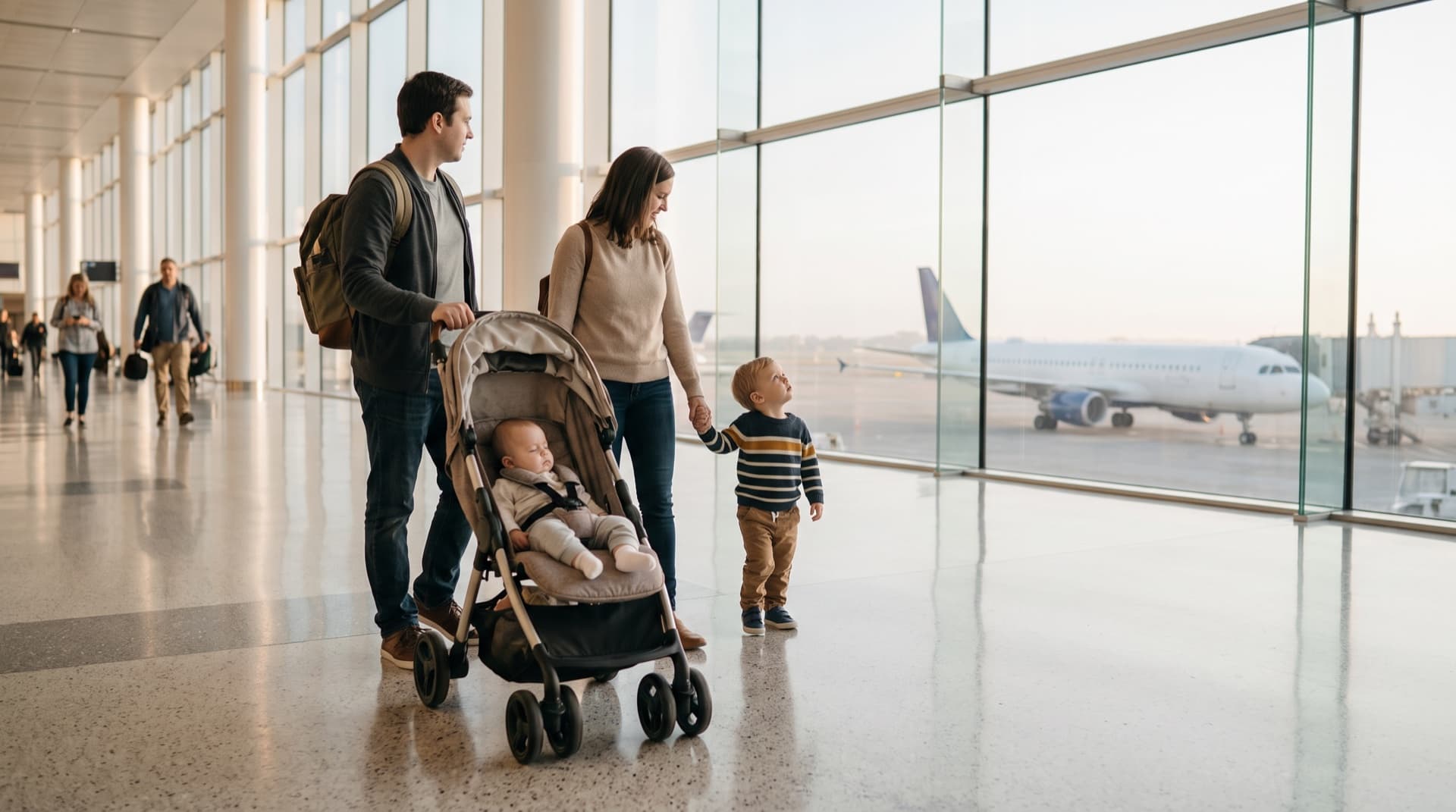
BWI offers a solid range of family amenities in a single-terminal layout with concourses arranged in a pier configuration. Nursing rooms and baby changing stations are distributed across the concourses, family restrooms provide extra space for parents, and the airport's security process moves relatively quickly at non-peak hours. Dining options are spread throughout the concourses and include a mix of fast-casual and sit-down options — several of which welcome children with dedicated menus or high chairs.

Read on to find everything you need to know about traveling through BWI as a family.

Nursing Rooms and Baby Care Facilities at Baltimore/Washington International Airport


Nursing rooms and breastfeeding facilities


Baltimore/Washington International Airport (BWI) provides options for parents who want a quieter, more private place to breastfeed or pump. In most airports, including BWI, these spaces are typically located inside the secure (airside) terminal so you can use them after you’ve cleared security and don’t have to leave your gate area. Privacy usually varies by room type and may include a lockable door or curtained area, a chair or bench, and an outlet for a breast pump. When a dedicated room is busy or temporarily closed for cleaning, many families use a family restroom for extra space and privacy.

Because layouts can change, the most reliable way to find the nearest nursing space while you’re on the move is to check terminal maps/airport info screens or ask an airport representative once you’re in the concourse. You can also ask any restaurant or shop staff to point you toward the closest family restroom if you need an immediate, private option.


Baby changing stations


Baby changing tables are commonly available in restrooms throughout BWI’s terminal, and you’ll usually find them both before security (landside) and after security (airside). In most airports, changing stations are placed in:

  • Family restrooms, which offer more space for a stroller and siblings
  • Women’s and men’s restrooms (availability can vary by restroom, but modern terminals increasingly include them in both)
  • Accessible restrooms where extra room makes diaper changes easier

For accessibility, family/companion restrooms are especially helpful if you’re traveling solo with more than one child, need room for a stroller, or prefer a single private space. If you can’t spot a changing table right away, look for restroom signage indicating a baby changing icon, or ask nearby staff for the closest family restroom.


Baby care centers (what they usually include)


BWI has family-friendly facilities, and in many U.S. airports the closest equivalent to a “baby care center” is a combination of nursing/pumping rooms plus family restrooms. When an airport does offer a dedicated baby care or lactation space, it typically includes:

  • A private or semi-private nursing area (sometimes with a lock)
  • A changing surface or changing table nearby
  • A sink or easy access to one for handwashing
  • Seating that’s more comfortable than standard terminal chairs
  • Electrical outlets for a breast pump

Even when a room does not have a full sink inside it, you can usually find one close by in the nearest restroom. For many families, a family restroom plus a nearby sink is the most practical “one-stop” setup for feeding and diaper changes.


Bottle warming and formula preparation


Dedicated bottle-warming machines are not consistently provided at most airports, and BWI is no exception in typical practice. Families usually rely on a few realistic options in the terminal:

  • Ask a café or quick-service restaurant for a cup of hot water to warm a bottle (you can place the bottle in the warm water rather than microwaving)
  • Use room-temperature water and mix formula according to the instructions, then warm using hot water from a food outlet if needed
  • Use a sink in a family restroom to rinse bottles or parts (note: sinks are for rinsing; thorough washing is best done later)

For safety, microwaving bottles is generally discouraged because it can heat unevenly. If you need warm water, requesting hot water from a food vendor is typically the most straightforward approach.


High chairs in restaurants


Most sit-down restaurants and many family-oriented food outlets in large airports like BWI keep a limited number of high chairs available. Availability depends on the specific restaurant and how busy the terminal is at that time. Quick-service locations may offer high chairs or booster-style seating in shared dining areas, but it can be first-come, first-served. If you don’t see one, asking staff directly is usually the fastest way to find out what’s available.


Notable family-friendly features to know at BWI


BWI is a full-service airport with multiple concourses, and parents generally benefit from having family restrooms and changing stations spread throughout the terminal rather than concentrated in one area. This makes it easier to handle diaper changes and quick clothing clean-ups without a long walk. As with any busy airport, facilities can be temporarily closed for cleaning or maintenance, so having the backup option of a nearby family restroom is helpful when you need privacy quickly.

TSA Security Tips for Families at Baltimore/Washington International Airport


Traveling with a Stroller


You can bring a stroller through the airport, but at the security checkpoint you will usually need to take your child out and send the stroller through X-ray screening or have it inspected. Foldable strollers are typically asked to be folded and placed on the conveyor belt; larger or non-folding strollers may be screened by hand and swabbed for additional testing. Any items stored in the stroller (bags, blankets, toys, snacks) may need to be removed so the stroller can be screened clearly. If the stroller does not fit in the X-ray machine, TSA will screen it separately, which can take a little extra time. Expect TSA to ask you to carry your child through the metal detector while your stroller is being screened.


Baby Formula & Breast Milk Rules


Baby formula, breast milk, toddler drinks, and baby food are allowed in quantities greater than 3.4 oz (100 mL) in your carry-on when traveling with your child. Tell the TSA officer at the start of screening that you have these items, and remove them from your bag so they can be screened separately. These liquids may go through X-ray, and TSA may also use additional screening such as visual inspection, swabbing the outside of containers, or asking you to open the container; you can request alternative screening if you prefer not to have them X-rayed, but extra screening may be required. Keep formula and milk in clearly labeled containers and make them easy to reach to reduce delays, and remember that ice packs, freezer packs, and gel packs are allowed in your carry-on to keep them cool (even if they are partially frozen or slushy) when used for baby items. You can bring these items even if you are not traveling with your child, but you should still declare them for separate screening.


Dedicated Family Lanes


Some airports offer dedicated family lanes at TSA security, designed to give parents with young children a little more space and time to get organized. These lanes are not available at every airport or every checkpoint, and they may be open only during certain hours depending on staffing and crowd levels. If your airport has one, you’ll usually see signs for “Family Lane” or a staff member directing families, and you can expect a calmer pace while you fold strollers, manage diaper bags, and handle items like bottles or toddler snacks. Even in a family lane, the same TSA screening rules apply, and you will still need to place belongings on the belt and follow officer instructions. To keep things moving smoothly, be ready to separate items that need extra screening (like liquids for babies) and remove children from strollers before going through the metal detector or body scanner.


Children's Footwear at Security


At TSA screening, children 12 and under can usually keep their shoes on while adults typically must remove theirs. Your child may still be asked to remove footwear if it triggers the alarm, has thick soles or metal parts, or if additional screening is needed. For the smoothest process, choose easy-on, easy-off shoes and avoid footwear with lots of metal (like some light-up sneakers or boots with buckles). If shoes do need to come off, place them in a bin (or directly on the belt if bins aren't used) and help your child step forward quickly after removing them. Keep socks handy in case your child needs to stand briefly on the floor during screening.

Keeping Kids Busy at Baltimore/Washington International Airport


What to expect at BWI: dedicated kids’ play areas


Baltimore/Washington International Airport (BWI) is a busy, family-friendly airport, but it is not widely known for having multiple large, dedicated children’s playrooms like some mega-hub airports. Families should plan for a mix of options: occasional small play features where available and informal spaces (open seating areas and quieter corners) that can work well for quick “wiggle breaks” before boarding.

In many U.S. airports, when play spaces do exist, they are most often located airside (past security) so families can use them while waiting near gates. If you don’t spot a marked play zone at BWI on your travel day, you can still create a kid-friendly stop by choosing a gate area with extra open floor space, a less-crowded end of a concourse, or seating away from the main foot traffic.


Where play areas are generally located (airside vs. landside)

 
  • Airside (past security): This is the most common place airports put children’s play features because families typically spend the most time waiting at gates. If BWI has a designated play spot available during your visit, it is more likely to be in a concourse/gate-area setting rather than before security.
  • Landside (before security): Landside areas at major airports usually focus on ticketing, baggage, and transportation, so dedicated play zones are less common. Landside can still be useful for short movement breaks if you arrive very early, but you’ll want to stay close to check-in and security timing.

Practical note: Once you’re through security with snacks, water, and any comfort items, it’s usually easier to settle in and let the kids play without worrying about re-clearing security.


Typical play features you might see


When airports provide children’s play installations, they’re usually designed for short bursts of activity rather than long play sessions. Features commonly found in airport play zones include:

  • Soft play elements: padded benches, small foam shapes, or low-risk climbing pieces intended for quick movement and safe bumping-around.
  • Climb-and-crawl structures: small ramps, tunnels, or mini climbing panels designed to burn energy in a compact footprint.
  • Interactive panels or screens: touch-activated games or “busy boards” with lights, shapes, and moving parts (often quieter than running games).
  • Themed décor: aviation/airplane imagery, local touches, or playful graphics that make the space feel welcoming even if the equipment is minimal.

Because airport layouts and amenities can change over time, it’s best to treat these as typical possibilities rather than guaranteed items at BWI on every concourse.


Best ages for airport play zones


Most airport play areas are designed with toddlers through early elementary ages in mind—roughly preschoolers to around age 7 or 8—because the equipment tends to be small, low to the ground, and built for quick, supervised play.

  • Babies and young toddlers: These spaces can work for crawling or standing practice if the area is calm, but many families prefer a quieter corner with a blanket and close supervision.
  • Toddlers and preschoolers: Usually the best fit—short climbs, crawl-throughs, and simple interactive panels match their energy and attention span.
  • Older kids: They may outgrow the equipment quickly; they often do better with a brisk walk along the concourse, a window view for plane-spotting, or a calm activity at the gate.

Supervision is always needed. Airport play zones are not staffed like daycare spaces, and they’re often close to busy walkways.


Quiet or calm options for overstimulated kids


If your child gets overwhelmed by noise, crowds, or bright lights, a dedicated play area may feel like “too much.” While BWI may not offer a single, famous “quiet playroom,” you can often find calmer spots that work well for resets:

  • Quieter gate areas: Look for gates that are not actively boarding and sit farther from the main concourse crossroads.
  • End-of-concourse seating: The far ends of hallways often have less foot traffic, which helps sensitive kids decompress.
  • Window seating: Watching aircraft can be calming and provides a natural, screen-free focus for many children.

For younger children, a calm “mini-break” can be as simple as sitting together with a snack, reading a short book, or doing a quiet lap-and-hug moment away from loud announcements.


Notable kid-specific attractions


BWI does not have a widely recognized signature children’s attraction on the level of large themed playgrounds found at a few destination airports. The most reliable “kid highlight” at BWI tends to be the airport experience itself: big windows, ramp and runway views in some areas, and the excitement of watching aircraft movements while waiting to board.


Parent tips for using play time before flights

 
  • Plan play before boarding starts: Aim for a movement break earlier in the wait, then transition back to the gate area with enough time to regroup, use the restroom, and pack up calmly.
  • Keep shoes and socks in mind: Some families prefer socks for soft-play areas; having a spare pair can help if one goes missing or gets damp.
  • Use a simple “play boundary”: Point out a clear rule like “we stay where I can see you” to prevent darting toward walkways or boarding lanes.
  • Wipe hands afterward: Airport surfaces get heavy use. A quick hand wipe (or a restroom handwash) helps before snacks and after play.
  • Balance active and quiet time: A short play burst followed by a calm activity at the gate (story, small toy, coloring) often works better than trying to keep kids playing right up to final boarding.
  • Have a backup plan: If the play spot is crowded or not available, a “walk-and-look” routine—slowly strolling, spotting planes, and doing a few gentle stretches—can still burn energy without needing a dedicated play area.

Make Every Family Flight Stress-Free

From car seat policies to packing tips — Velivolo gives traveling families everything they need in one app. Built by parents, backed by certified safety experts.

Family Dining and Kids' Menus at Baltimore/Washington International Airport

1

Obrycki's Crab House

Obrycki’s Crab House at BWI brings a taste of Baltimore’s classic seafood tradition to the airport, trading on the city’s long love affair with steamed crabs and Chesapeake Bay cooking. The Obrycki’s name is well known in the Baltimore area as a longtime, old-school crab house, and the airport outpost is geared toward travelers who want that Maryland flavor without a long sit-down downtown. For families, it’s an easy fit: the setting is casual and lively enough that kids won’t feel out of place, and you can ask about a kids’ menu and simple, familiar options when available. Parents typically gravitate to Maryland crab specialties like crab cakes, while kids often do best with straightforward picks such as fried seafood, sides, or soup-and-sandwich type meals that don’t require the full “crab feast” workout. Service is standard airport sit-down pacing—order at the table, food comes out reasonably quickly, and portions tend to be hearty for one adult meal. Expect a mid-to-high price range (about $20–$40 per adult, less for kids), which can feel like a splurge but is often worth it if you’re specifically craving local seafood before takeoff or after landing.

2

Phillips Seafood

Phillips Seafood at BWI brings a taste of Maryland to the terminal, serving the brand’s well-known Mid-Atlantic seafood in a casual airport setting backed by a long-running Baltimore-area reputation for crab-focused cooking. Families tend to find it an easy stop because the vibe is relaxed and lively enough that kids don’t need to whisper, and staff are generally used to quick-turn airport dining; many Phillips locations offer a kids’ menu, which helps when you need something familiar alongside seafood. The can’t-miss order is the crab cake—Phillips is closely associated with Maryland-style crab cakes—and you’ll usually see kid-friendly options like fried shrimp or fish-and-chips-style plates that go down easily with younger travelers. Service is typically counter-order or fast-casual compared with a full sit-down restaurant, so you can expect a reasonably quick pace and portions that feel hearty for an airport meal. Pricing lands in the mid-range for airport dining (roughly $15–$30 per adult, less for kids), and it can be good value for families when you share a basket or pair a crab-focused entrée with simpler sides. As a local institution with national reach—Phillips operates beyond Maryland, including destinations like its long-standing presence in Ocean City—it’s one of the more recognizable names for travelers who want a straightforward “Maryland seafood” meal before takeoff.

3

Grotto Pizza

Grotto Pizza at BWI brings a taste of Delaware’s beach-town pizza tradition to the terminal, best known for its signature swirl of sauce on top of the cheese and a straightforward, family-friendly menu of pizza, subs, and casual Italian-American favorites. The vibe is relaxed and casual—exactly the kind of place where kids can be kids without parents worrying about a little chatter—and it typically works well for families looking for a quick sit-down bite between flights. For children, there’s usually plenty of easy wins like cheese or pepperoni pizza, and parents can round things out with slices, a whole pie to share, or a warm sub; ask about a kids’ menu or smaller portions depending on what’s available that day at the airport location. Service is counter-order or fast-casual in feel (built for airport timing), with food coming out quickly and portions that are easy to split among siblings. Expect a mid-range airport check: about $12–$20 per adult depending on whether you’re doing slices, a personal meal, or sharing a pie, which can be solid value for families who order to share. Outside the airport, Grotto is a longstanding regional brand with deep roots in Delaware resort areas like Rehoboth Beach, and for many Mid-Atlantic travelers it’s a nostalgic “vacation food” stop that also happens to be convenient on the way home.

4

Applebee's

Applebee’s at Baltimore/Washington International Airport (BWI) is the airport outpost of the widely known American casual-dining chain, built around familiar “neighborhood grill & bar” comfort food like burgers, sandwiches, salads, and hearty entrées that feel easy and approachable for travel days. For families, it’s a reliable pick with a casual, come-as-you-are vibe, and a kids’ menu that sticks to kid-friendly basics; in most locations, high chairs are typically available, and the generally lively, bar-and-grill energy helps parents worry less about normal kid noise. Crowd-pleasers often include boneless wings, mozzarella sticks, straightforward burgers, and pasta options that work well for picky eaters and hungry adults alike. Service is full-service sit-down, so it’s a better fit when you have a bit of buffer before boarding, and portions tend to be generous for the category. Expect a midrange airport check—roughly $15–$30 per adult (kids less)—with value coming from the familiar portions and broad menu rather than fine-dining polish. As a long-running U.S. chain with locations nationwide, Applebee’s has a steady reputation for consistency and convenience, making it a predictable, low-stress stop when you want a recognizable meal at BWI.

Family Airport Guide FAQ

Where are the baby changing rooms at Baltimore/Washington International Airport?

BWI provides private lactation rooms called Mamava pods inside the terminal. Locations can change, but pods are typically placed in post‑security concourses near restrooms and seating areas for easier access. For the most current locations on the day you travel, check the BWI airport map/listings or ask an information desk.

Can I bring breast milk through BWI security?

Yes. TSA allows formula, breast milk, and related feeding items in carry‑on bags in quantities greater than 3.4 oz, and you do not need to be traveling with your child to bring breast milk. You can also bring a breast pump and pump supplies through security; they are treated as medical/infant items and allowed in addition to other carry‑ons in many cases, but airline carry‑on rules still apply. Be prepared for possible additional screening, and tell the TSA officer you’re carrying these items before screening begins.

Is there a play area for children at BWI?

BWI has had kid-focused play areas in the past, but availability can vary over time due to renovations and airport changes. If a dedicated play zone is not currently operating, families generally use open seating areas in the concourses for stretching out and letting kids move around close by. Check the current airport amenities listing or the terminal directory on arrival for the latest status.

Can I gate-check a stroller at Baltimore/Washington International Airport?

You can use a stroller through the terminal and up to the security checkpoint, and most airlines allow strollers to be gate‑checked so you can use them until boarding. At TSA, strollers must go through X‑ray screening; you’ll remove the child and place items from the stroller on the belt, and larger strollers may need additional inspection. Whether you can bring the stroller back to your arrival gate at your destination depends on the airline’s gate‑check process and your stroller’s size/weight.

Does BWI have family-friendly restaurants?

BWI does not consistently advertise dedicated “family” security lanes the way some airports do, and availability can depend on the checkpoint and time of day. Security screening is handled by TSA, so procedures are the same for families, though officers may provide accommodations as needed. Checkpoint staffing and lane types can change, so confirm at the terminal entrance signs or with TSA staff on site.

Planning more trips with kids?

Explore our complete list of family airport guides

View all airport guides →

Join the Travel Revolution

Whether you're a first-time flyer or seasoned jet-setter, Velivolo makes family travel simpler, safer, and more joyful.