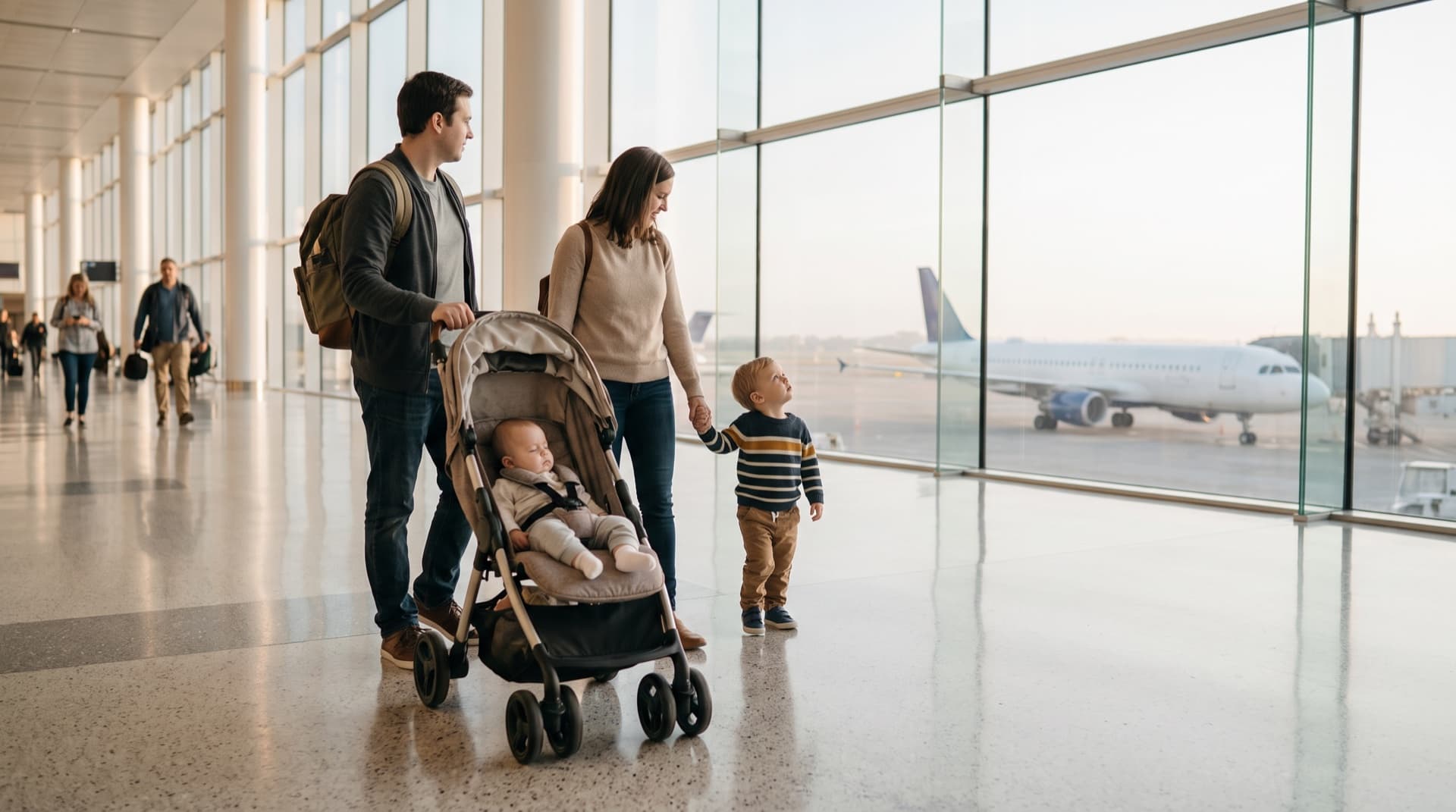
/family-airport-guide

Flying with Kids at Dallas/Fort Worth International Airport (DFW): Nursing Rooms, Stroller Tips & Family Guide

Your complete family guide to DFW — nursing and lactation rooms across all terminals, baby changing stations, stroller-friendly access, and kid-friendly dining options.

Reviewed by:

D. Goren

Head of Content

Updated March, 30

👉 Download Velivolo Before Your Next Flight

Because airline child policies change — and parents shouldn’t have to hunt for answers.

Navigating Dallas/Fort Worth International Airport with Kids: A Parent's Overview

Dallas/Fort Worth International Airport (DFW) is one of the largest airports in the world by area, covering more ground than Manhattan. It serves as a major hub for American Airlines and handles a high volume of family travelers year-round. With five terminals connected by the Skylink train, getting around is manageable — but knowing the layout in advance makes a real difference when you're traveling with kids.

Family Amenities Across DFW's Terminals

DFW has invested in family-focused infrastructure throughout the terminal network. Nursing suites and baby care rooms are located in all five terminals, and family restrooms offer extra space for parents managing young children. Kids' play areas can be found in select terminals, providing a welcome outlet for energy before long flights. Dining options across DFW range from quick bites to sit-down restaurants, many with children's menus.

This guide covers every family-relevant resource at DFW — terminal by terminal — so you arrive prepared and confident.

Nursing Rooms and Baby Care Facilities at Dallas/Fort Worth International Airport


Nursing rooms and breastfeeding facilities


Dallas/Fort Worth International Airport (DFW) is generally family-friendly, and you can expect to find dedicated nursing spaces in the terminal areas. At large U.S. hubs like DFW, these rooms are typically located airside (past security) so parents can use them without leaving their gate area, though some family restrooms and support spaces may also be available landside in public areas.

In terms of comfort and privacy, nursing rooms are designed to be separate from the main restroom area and more private than a standard seating area. Privacy features vary, but commonly include a lockable or enclosed space, a chair/bench, and a calm environment intended for feeding or pumping.


Baby changing stations


Baby changing stations at DFW are typically found in most public restrooms throughout the terminals. You’ll usually see them in:

  • Women’s restrooms and men’s restrooms
  • Family restrooms (single-occupancy, helpful when traveling with multiple children)
  • Accessible restroom areas, where layout allows easier stroller and caregiver movement

Changing stations are generally fold-down style with a flat surface. Since availability can vary by restroom and area, using a family restroom can be a good option when you need more space for a stroller or a sibling who needs supervision.


Baby care centers (what they usually include)


DFW is known for offering family-focused amenities, and airports of this size commonly provide baby care or nursing rooms designed specifically for infant care tasks. When available, a baby care center or designated nursing room typically includes:

  • Changing table (often sturdier and more comfortable than a standard restroom fold-down)
  • Sink for handwashing and quick cleanups
  • Private nursing area with seating
  • Counter space for organizing diapers, wipes, bottles, and pump parts
  • Trash disposal intended for diapers and wipes

These spaces are especially helpful if you need a quieter spot to feed a baby, manage a diaper change without balancing bags, or take a short break from the busy concourse.


Bottle warming and formula preparation


In most airports, including large terminals like DFW, dedicated bottle warmers are not guaranteed in public baby rooms. However, parents commonly manage bottle and formula needs using a few reliable options available in-terminal:

  • Restroom or baby room sinks for washing hands and rinsing items (when sinks are provided)
  • Restaurants and cafes may be willing to provide a cup of hot water to warm a bottle (availability varies by location and food-safety rules)
  • Comfortable seating areas and nursing spaces for feeding and preparing bottles more calmly than at the gate

For formula preparation, a clean surface and handwashing access are the most helpful features. If you need warm water, asking a food outlet for hot water is often the simplest approach, but it depends on staff policy and how busy they are.


High chairs in restaurants


Across a large airport like DFW, many sit-down restaurants and some quick-service dining areas typically have high chairs available, especially in family-heavy travel periods. Availability can vary by restaurant size and how quickly high chairs are claimed during peak times. If you don’t see one, staff can usually tell you whether they have any on hand and if they can be brought to your table.


Notable family-friendly features you may notice at DFW


DFW is a major, modern airport with multiple terminals and a wide range of services. Families often appreciate that the airport commonly provides family restrooms alongside standard restrooms, which can make diaper changes and quick clothing changes easier when you’re traveling with more than one child. Because many areas are airside and spread across multiple concourses, having baby facilities distributed throughout the terminal areas helps reduce the need for long walks when you’re juggling a stroller and carry-ons.

TSA Security Tips for Families at Dallas/Fort Worth International Airport


Stroller Check-In & Gate Check


Stroller check-in means you hand your stroller to the airline at the ticket counter so it rides in the plane’s cargo area, and you pick it up at baggage claim after landing. Gate check means you keep the stroller with you through the airport and to the boarding gate, then leave it with airline staff just before you step onto the plane, and it is usually returned to you at the gate area after you land (sometimes it may be sent to baggage claim). At TSA security, you will need to take your child out and send the stroller through the X-ray if it fits; if it does not fit, TSA will screen it by hand, and you may be asked to fold it. Expect to remove items hanging from the stroller and place loose bags, blankets, and accessories into bins so they can be screened separately. It helps to know how to fold your stroller quickly and to have any small parts in a carry-on so nothing gets lost during screening or gate check.


Carrying Formula & Breast Milk


You may bring breast milk, formula, toddler drinks, and baby food through TSA security in quantities over 3.4 oz/100 mL when traveling with your child. These items are considered medically necessary liquids and do not have to fit in your quart-size liquids bag. Tell the TSA officer at the start of screening that you have formula or breast milk, and be ready to take it out for inspection. Expect TSA to perform additional screening, which may include visual inspection, testing the outside of containers, or X-ray screening; you can request that breast milk be screened without X-ray, but other screening steps may still be required. Keep liquids in sealed, clearly labeled containers when possible to make inspection quicker and easier.


Priority Lanes for Families


Some airports offer a designated security lane for families, sometimes marked “Family Lane” or “Assistance,” to help parents with strollers, car seats, and young children move through screening with a little more space and time. These lanes are not guaranteed at every airport or every checkpoint, and staff may open or close them depending on crowd levels and staffing. If a family lane is available, an officer or signs will direct you; otherwise, you’ll use the standard lines, and you can still ask an officer which lane is best for strollers or extra items. Expect the same security screening rules as other lanes—items still go through X-ray, and everyone is screened—just with a setup that’s often more manageable for families. Having your child’s items organized and keeping small essentials together helps you load bins more smoothly if your lane uses them.


Kids and the Shoe Rule


At TSA security, children 12 and under can usually keep their shoes on during screening, while most travelers ages 13 and up must remove them. Even when kids keep shoes on, TSA officers may still ask for shoes to be removed if additional screening is needed, so be ready for that possibility. For faster screening, choose easy-on, easy-off shoes and avoid complicated laces or boots for little ones. If your child is wearing shoes with metal parts, lights, or bulky soles, those may set off the alarm and lead to a quick extra check. If you’re using TSA PreCheck, eligible travelers generally keep shoes on, but children without PreCheck may be directed to follow the standard rules depending on the lane and officer instructions.

Keeping Kids Busy at Dallas/Fort Worth International Airport


What to expect at DFW for kids’ play areas


Dallas/Fort Worth International Airport (DFW) is a large, family-friendly airport, but it is not especially known for having big, signature children’s playgrounds like some theme-style airports. Families should plan for a mix of airport open space, seating areas, and occasional kid-focused spots rather than assuming there will be a large, dedicated playroom in every terminal.

In most major U.S. airports (including hubs like DFW), any children’s play features—when available—are typically found airside (past security) so families can use them during a layover without needing to re-clear screening. They are often placed in common concourse areas near clusters of gates, where there is more room for seating, strollers, and supervision.


Where play areas are generally located (and why that matters)


At DFW, your best approach is to look for play options after you’ve gone through security, especially if you have a connection. If an area is available, it will usually be set up in a shared space along the concourse rather than hidden inside a lounge-like room. Landside (before security), space tends to be more focused on check-in lines and traveler flow, so kid play zones are less common there.

  • Airside locations: Most convenient for layovers, because you can keep your place “in the secure area” and still let kids move around.
  • Landside areas: If anything kid-friendly is present, it’s usually informal—near seating or wider corridors—rather than a dedicated playground.


Typical play equipment you may see


When airports provide dedicated children’s zones, the equipment is usually designed to be compact, easy to clean, and safe for a quick energy burn. At DFW, if you find a kid-focused area, it’s most likely to be the same style used across many large airports, such as:

  • Soft-play elements (padded shapes, small crawl-through features) suited to toddlers and preschoolers
  • Small climbing structures with low steps and rails (typically not tall like a park playground)
  • Interactive wall panels (spinners, sliders, simple puzzles) that keep little hands busy without needing lots of floor space
  • Themed graphics (aviation or local imagery) that make the area feel “kid-owned,” even if it’s modest in size
  • Open space for movement where children can stretch, do a quick walk, or play simple games close to the seating area

Interactive screens can exist in some airports, but parents should expect that any screens near gates are primarily for flight information; kid-specific digital games are less consistent and vary over time.


Best-fit age groups


Airport play zones are usually designed for younger children because the equipment must be safe, visible, and suitable for quick supervision. If you locate a play area at DFW, it will most likely work best for:

  • Toddlers (about 1–3 years) with supervision—simple soft-play and sensory panels are common
  • Preschoolers (about 3–5 years)—low climbing features and interactive walls tend to hold attention
  • Early elementary kids (about 6–8 years)—may enjoy it briefly, but may outgrow the equipment quickly

Older kids often do better with a purposeful walk through the terminal, a snack break, or a spot to sit and recharge, since airport play equipment rarely caters to big-kid climbing or running.


Quiet, calm spaces for overstimulated kids


Even without a formal “quiet room,” most families can find calmer pockets at DFW. Look for areas that are naturally lower-stimulation, such as seating zones set slightly away from busy food courts, or less-crowded stretches of concourse. These calm spots are especially helpful if your child is overwhelmed by announcements, crowds, or bright lights.

  • Choose a corner seating area with fewer screens and less foot traffic for snacks, reading, and cuddles.
  • Pick seats near windows for quiet plane-watching—often soothing and a good reset between busy moments.
  • Use stroller time as “quiet time” if your child is overstimulated; a light cover and a familiar toy can reduce distractions while you stay close to your gate.


Notable kid-specific attractions at DFW


DFW is widely recognized for its size and connectivity rather than headline children’s attractions. Unlike airports with famous playground installations or large themed play zones, DFW’s family “wins” tend to be practical: plenty of facilities spread across multiple terminals, many dining choices, and space to move. Families should plan on finding a suitable spot rather than expecting a single must-see children’s feature.


Parent tips for using play areas during layovers


Play areas can be a lifesaver before boarding, but a little planning makes them work better—especially when you’re traveling with carry-ons and strollers.

  • Go after snacks, before boarding: A quick snack first helps avoid meltdowns when it’s time to leave the play area for the plane.
  • Build in a buffer: Leave extra time to clean hands, repack bags, and do a bathroom stop before heading to the gate.
  • Keep shoes rules simple: Many families choose to keep shoes on unless the space is clearly padded and clean; if you do take them off, keep socks handy.
  • Stay close and visible: Airport play spaces are designed for supervision; choose a seat where you can see the full area and your belongings.
  • Have a “leaving routine”: Give a clear two-minute warning, then transition to an easy next step (“stroller ride” or “window seats”) to reduce tears.

If you don’t immediately spot a dedicated play area, a short, purposeful “terminal walk” can work just as well—especially at a large airport like DFW—followed by a calm reset near the gate.

Make Every Family Flight Stress-Free

From car seat policies to packing tips — Velivolo gives traveling families everything they need in one app. Built by parents, backed by certified safety experts.

Family Dining and Kids' Menus at Dallas/Fort Worth International Airport

1

Mi Cocina

Mi Cocina at DFW brings a taste of North Texas’ beloved Tex-Mex mainstay into the terminal, serving the same crowd-pleasing mix of enchiladas, tacos, fajitas, and chips-and-salsa that made the brand a Dallas-area institution. It’s known for a polished, upbeat vibe—more “neighborhood cantina” than fast food—so parents can expect a lively dining room that’s forgiving of kid energy and airport bustle. For families, kids’ menu staples like simple tacos, enchiladas, or quesadillas (restaurant offerings can vary by airport) make it easy to keep picky eaters happy, and the casual table service setup generally accommodates strollers and quick in-and-out needs. Adults often gravitate to the classics, especially fajitas and other combo plates, while kids tend to do well with cheesy, mild options and plenty of chips. Service is typically table-service and fairly efficient for an airport restaurant, with portions that skew generous and are easy to split or box up for the flight. Expect a mid-range price of about $15–$30 per adult (less for kids), which can feel like solid value when you want a sit-down meal that satisfies both grown-ups and little travelers. Mi Cocina is a well-known regional brand in Dallas–Fort Worth (with locations around the Metroplex and beyond), and for many locals it’s a familiar “welcome to home” bite before takeoff.

2

Reata

Reata at Dallas/Fort Worth International Airport brings a taste of Texas with the brand’s well-known West Texas–inspired cuisine, a style Reata built its reputation on at its flagship restaurant in downtown Fort Worth. The airport location is a comfortable sit-down spot that works well for families thanks to its casual-polished vibe, steady restaurant bustle that can cover kid noise, and generally accommodating service; ask for high chairs if you need one. While a dedicated kids’ menu may vary by airport location and season, the kitchen’s straightforward Texas staples and familiar sides make it easy to find something approachable for picky eaters. Parents typically gravitate to Reata’s classics like tenderloin tamales and hearty chili-style dishes, while kids often do best with simpler grilled items, mac and cheese–style sides, or shareable appetizers when available. Service is table-service and paced like a proper meal, with portions that are usually generous enough for sharing—helpful if you’re trying to keep things easy before a flight. Expect $20–$35 per adult (more with cocktails), which is on the pricier side for an airport but can feel like solid value for a filling, distinctly local Texas meal.

3

TGI Fridays

TGI Fridays at Dallas/Fort Worth International Airport (DFW) brings the familiar, upbeat American casual-dining vibe the chain is known for—comfort food, a full bar, and a menu built around crowd-pleasing classics. For families, it’s an easy fit because the dining room is typically lively and forgiving of kid noise, and you can usually count on a kids’ menu plus family basics like boosters or high chairs depending on the unit. Many parents gravitate to shareable starters and reliable mains, while kids often go for chicken tenders, burgers, or mac and cheese-style comfort options that feel like a safe choice between flights. Service is table-service and generally paced for travelers—quick to get orders in and food out when the kitchen isn’t slammed—while portions tend to be generous and easily split with younger children. Expect about $15–$30 per adult before drinks and tip (kids less), which can feel like decent value at an airport when you want a sit-down meal and predictable quality. As a long-running, widely recognized chain that began in New York City, Fridays has built its reputation on a fun, casual “get a bite and relax” experience, which translates well to the pre-flight reset many families need.

4

Chili's

Chili’s at Dallas/Fort Worth International Airport delivers the familiar, crowd-pleasing Tex-Mex-and-American-bar-grill formula the chain is known for: big flavors, classic comfort food, and a lively, casual vibe. For families, it’s an easy choice because the dining room energy is forgiving of kid noise, and you can typically count on a kids’ menu plus family-friendly basics like booster seats or high chairs when available. Parents and kids alike usually gravitate to fajitas, burgers, chicken tenders, and quesadillas—simple, shareable options that travel well at the table. Service is sit-down and generally quick by full-service standards, with generous portions that make splitting plates a practical move when little appetites fade mid-meal. Expect a midrange airport check—roughly $15–$25 per adult (plus drinks and tips), which can feel like decent value for families given the portion sizes and the reliability of a well-known chain. Chili’s is a Texas-born brand (founded in Dallas) that grew into a national staple, so seeing it at DFW feels like a home-market comfort stop with predictable flavors.

Family Airport Guide FAQ

Is Dallas/Fort Worth International Airport good for families with babies?

DFW Airport has lactation (nursing) rooms labeled “Lactation Rooms” in multiple terminals, usually near restrooms; exact locations vary by terminal/concourse—use DFW terminal maps/app or ask guest services/information desk; confirm day-of due to renovations.

Can I bring baby food through security at DFW?

TSA permits breast milk, formula, and baby/toddler food in quantities over 3.4 oz when traveling with a child; remove for screening; may be tested; ice/freezer/gel packs allowed even if partially melted; notify TSA officer before screening.

Does Dallas/Fort Worth International Airport have activities for kids during a layover?

DFW doesn’t have widely published permanent indoor playgrounds across all terminals; some concourses may have kid-friendly areas but not consistent—check DFW maps/amenities for your terminal/gates or ask information desk.

Is Dallas/Fort Worth International Airport stroller-friendly?

Strollers are generally allowed through TSA but must be screened (X-ray if fits or manual screening); most airlines allow gate-checking strollers; policies vary (esp. large/jogging/wagons)—confirm with airline; allow extra time.

What food options are there for kids at DFW?

DFW doesn’t consistently offer dedicated family security lanes; availability varies by checkpoint/staffing; families use standard lanes or PreCheck if eligible; any family-specific check-in lines are airline-dependent, not airport-wide.

Planning more trips with kids?

Explore our complete list of family airport guides

View all airport guides →

Join the Travel Revolution

Whether you're a first-time flyer or seasoned jet-setter, Velivolo makes family travel simpler, safer, and more joyful.