Reviewed by:

D. Goren
Head of Content
Updated March, 30
Because airline child policies change — and parents shouldn’t have to hunt for answers.
El Paso International Airport (ELP) serves the westernmost point of Texas and the broader El Paso–Juárez metropolitan region on the US-Mexico border. A small, single-terminal airport, ELP is valued by families for its simplicity and efficiency — getting from curb to gate typically takes a fraction of the time it takes at larger regional airports.
ELP provides nursing rooms, baby care stations, and family restrooms within its terminal, and the airport's compact layout means everything is within easy reach. Security processing is generally fast, and the short walk between gates is manageable even with a stroller and multiple children. Dining options include Tex-Mex staples and national brands, with family-friendly choices available throughout the concourse.
Use this guide for a quick overview of family facilities at El Paso International Airport.
El Paso International Airport is a smaller, easy-to-navigate airport, and families generally find it manageable for feeding breaks. Dedicated nursing or lactation rooms are not always clearly advertised at every airport of this size, so availability can vary over time and by renovation. What you can usually expect is that staff can help direct you to the most private option available that day, such as a designated wellness/lactation space (when provided) or a quiet area away from heavy foot traffic.
Baby changing stations are typically available in public restrooms throughout the terminal. At airports like ELP, you’ll most often find them in:
Accessibility: Changing tables are commonly installed at a height that works for most caregivers, and accessible restrooms may offer more turning space for strollers. If you can’t locate a changing station in a nearby restroom, airport or cleaning staff can usually confirm which restroom closest to you has one.
Some airports provide a dedicated “baby care” or “family” room. At airports where these are available, they generally include:
Because dedicated baby care centers are not universal and can change with terminal updates, the most reliable approach is to assume that restrooms with changing stations are the primary diapering option, with any private nursing/baby room treated as an added extra when available.
Airports generally do not provide communal bottle warmers for public use, and this is mainly for cleanliness and safety reasons. At ELP, families should plan for simple, practical options:
Tip for expectations: You’ll usually find better support for feeding needs after security, where the larger concentration of food and drink vendors is located.
Many airport restaurants and cafés carry a small number of high chairs, but availability can depend on crowd levels and the type of outlet (quick-service spots may have fewer). Since ELP is a smaller airport, choices may be limited compared with large hubs, so it’s best to expect that:
ELP’s main family-friendly advantage is its smaller terminal layout, which usually means shorter walks between restrooms, seating, and gates. While specialized baby facilities may not be as extensive as at major hub airports, parents can typically count on the basics—restrooms with changing stations, food outlets for warm water on request, and seating areas for feeding breaks. For the most up-to-date direction to any dedicated nursing or family room (if available at the time of travel), airport staff at the information desk or nearby gate areas are usually the quickest way to confirm what’s currently open and where it is located.
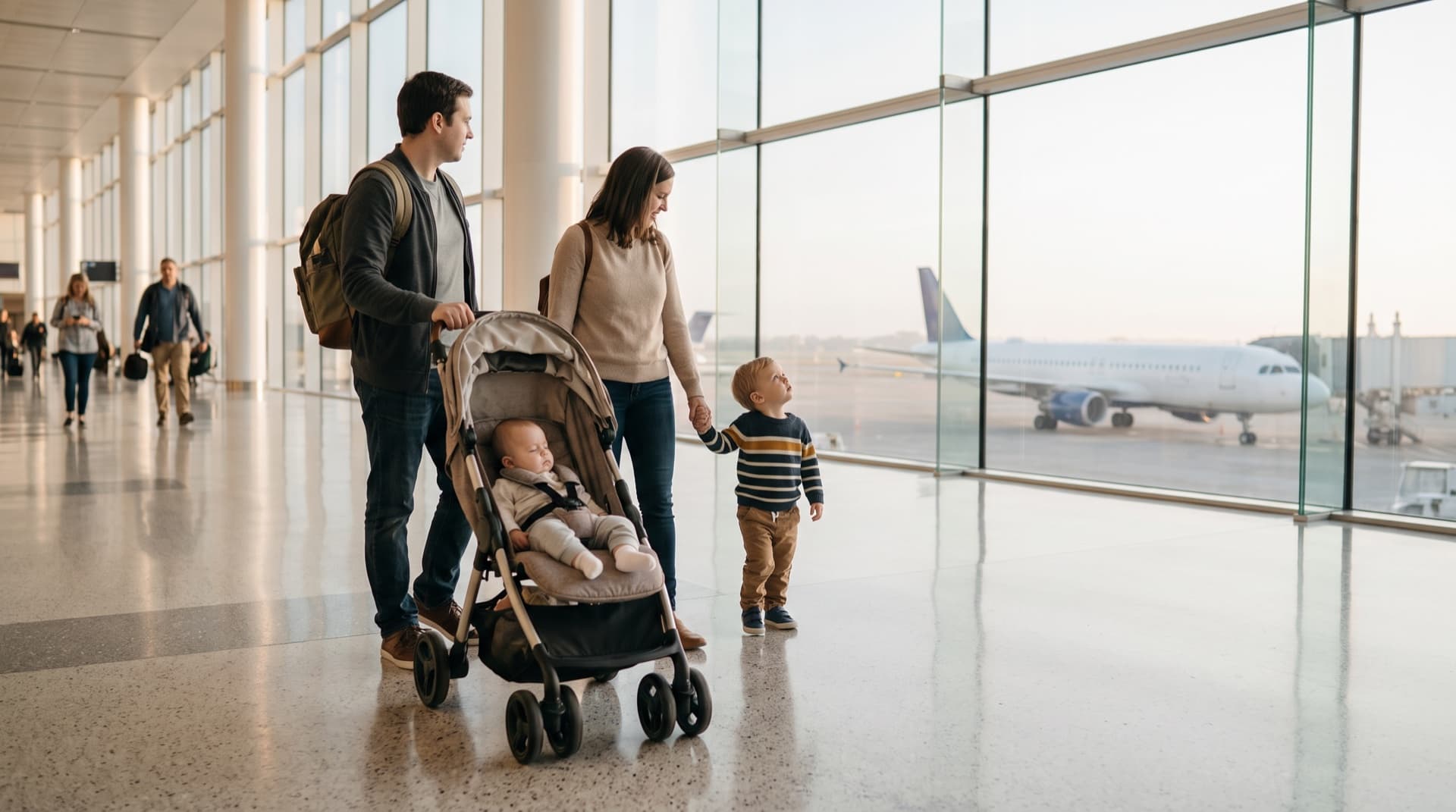
You can bring a stroller to the TSA checkpoint, but it must be screened like other carry-on items. In most cases, you will need to take your child out, place the stroller on the X-ray belt if it fits, or allow TSA to screen it by other methods if it does not. Expect to fold the stroller and remove any loose items (bags, blankets, toys, cups) so they can be screened separately. You will walk through the metal detector without your child in the stroller; depending on the checkpoint, you may carry your child or use an approved child carrier while you and your child are screened. If TSA needs a closer look, they may do a quick additional inspection of the stroller (such as swabbing parts of it) before you take it to your gate.
TSA allows breast milk, formula, toddler drinks, and baby food in your carry-on in quantities larger than the usual 3.4 oz (100 mL) limit when you’re traveling with a child. Tell the officer at the start of screening that you have these items, and be prepared to take them out for separate screening. These liquids may be X-rayed, visually inspected, or tested, and you can request that breast milk, formula, and baby food not be X-rayed, though additional screening may still be required. Ice packs, freezer packs, gel packs, and other cooling accessories are allowed to keep these items cold, even if partially frozen, as long as they are used for the child’s liquids. Keep baby liquids together in an easy-to-reach bag so you can remove and repack them smoothly at the checkpoint.
Some airports offer Family or Accessible (Disability/Assistance) security lanes, which are designed to give families with small children and travelers who need extra time a little more space and a calmer pace. If available, you may be directed to these lanes by signs or a TSA officer, but not every airport has them and availability can change by checkpoint and staffing. In practice, expect the same screening rules as any other lane, with officers who are used to strollers, car seats, diaper bags, and kids who need a moment. You will still need to place items in bins and follow officer instructions, but these lanes often allow a bit more time to fold a stroller or manage children safely. If you do not see a clearly marked family or accessible lane, you can politely ask a TSA officer which lane is best for a family with young children.
At TSA security in the U.S., children age 12 and under usually do not have to remove their shoes during screening. Your child may keep shoes on while walking through the metal detector with you, unless a TSA officer asks for extra screening. If additional screening is needed, you might be asked to remove your child’s shoes briefly so they can be checked. Shoes, especially toddler shoes with thick soles or metal parts, can sometimes set off alarms, so be ready for a quick check if asked. To make this smoother, choose shoes that are easy to take on and off and avoid bulky footwear when possible.

El Paso International Airport (ELP) is a smaller, easy-to-navigate airport, and it is not widely known for having large, signature kids’ zones like you might see at very large hub airports. Families should plan for the possibility that dedicated children’s play areas may be limited, seasonal, or not available at the time you travel. When airports of ELP’s size do offer play features, they are most often located in the main terminal waiting areas near gates where there’s enough open space for a small, supervised play spot.
Most child-friendly spaces you can actually use during a travel day will typically be airside (past security), since that’s where families spend the most time waiting to board. Landside (before security), family amenities tend to be more about basics—restrooms, seating, and room to reorganize bags—rather than dedicated play installations.
If ELP has a play corner or family-friendly section in the gate area, it’s usually designed for short, supervised play rather than a full playground. Common features at airports with modest play areas include:
Large indoor jungle gyms, big themed structures, and elaborate interactive tech zones are more typical of major hubs than smaller airports, so it’s best to expect something simple—or none—and treat any kid-friendly nook as a bonus.
When airports provide play corners, they’re usually aimed at toddlers through early elementary (roughly ages 2–7). The equipment tends to be low, simple, and intended for quick bursts of movement. Babies often do best with a blanket-on-the-floor moment near your seat (only where it doesn’t block foot traffic), while older kids may find more relief by taking a walk up and down the concourse or doing simple movement games next to a quiet wall or window.
Even without a designated “quiet room,” you can usually find calmer spots at ELP that work well for younger children or anyone who’s had too much noise and stimulation. In many terminals, the best calm spaces are:
A practical rule: if you can hear constant announcements clearly and there’s a steady line for food or boarding nearby, it’s probably not the calmest spot. A slightly quieter area can make a big difference for a toddler’s mood.
Airside (past security) is typically where any play corner would be, and it’s also where it’s most useful—because you can let kids move without worrying about leaving for security again. Landside (before security), families usually focus on check-in, restrooms, and getting organized, so it’s less common to find a dedicated play space there.
If you’re trying to decide when to let kids burn energy, in most cases it works best to:
ELP is not known for a headline children’s attraction (such as large themed playgrounds or major interactive installations). The most dependable “attraction” for many kids here is usually the simple experience of watching planes and airport vehicles from terminal windows and having space to move in a smaller, less overwhelming airport environment.
1
L&J Café at El Paso International Airport is an outpost of El Paso’s famous L&J Café—often called “The Old Place by the Graveyard”—known for classic, no-frills Tex-Mex that’s been part of the city’s food identity for generations. For traveling families, it’s a comfortable, casual stop with a lively-but-not-fussy vibe, and the menu format makes it easy to share plates and keep kids happy without a long wait. You’ll typically find crowd-pleasers that work for both parents and little ones, including enchiladas, tacos, and cheesy plates that are familiar even if you’re new to El Paso-style Tex-Mex. While airport staffing can affect pacing, service is generally straightforward and quick, with portions that tend to be filling—helpful when you’re feeding a family between flights. Expect $15–$25 per adult (kids usually less), which can feel like solid value in an airport given the hearty portions and the local-brand appeal. Families will appreciate the easygoing atmosphere and simple comfort-food flavors, plus the practical benefit of a kids’ menu when available at the airport location. What makes it special is the local significance: L&J is a longtime El Paso institution, and grabbing a plate here lets you taste a bit of the city without leaving the terminal.
2
Cattleman’s Steakhouse at El Paso International Airport is an outpost of the well-known West Texas/New Mexico–style steakhouse brand best associated with the long-running, destination-worthy Cattleman’s Steakhouse in Fabens, Texas, famous for straightforward grilled beef and a classic, no-fuss ranch-house vibe. For families, it’s an easy fit: the setting is casual and lively enough that kids don’t need to whisper, and you can typically count on a kids’ menu with familiar, low-stress options alongside adult comfort food. Parents often gravitate to the steaks and other grill staples, while kids tend to do well with simpler plates like burgers or chicken and a side they recognize. Service is sit-down and paced for a pre-flight meal, with portions that lean hearty—good for sharing if you’re feeding a small crew. Expect $15–$35 per adult depending on what you order, with kids’ meals usually less, making it solid value when you want a filling meal in the terminal. The brand’s local significance comes from its deep roots in the borderland’s cattle-and-ranching culture, and the airport location offers a convenient taste of that regional identity without leaving ELP.
3
At El Paso International Airport, H&H Car Wash Coffee Shop is a small, no-frills coffee-and-diner-style stop tied to a long-running local El Paso name, known more for straightforward comfort food and caffeine than for anything trendy. For families, it’s an easy fit because the vibe is casual and forgiving, with quick counter-style pacing that works when kids are hungry and you’re watching the clock; however, details like high chairs and a dedicated kids’ menu can vary by airport operator and aren’t always guaranteed. Parents typically gravitate to simple breakfast plates and hot coffee, while kids tend to do well with familiar basics like pastries or breakfast sides; if available, a breakfast burrito is a crowd-pleasing, easy-to-share option. Service is generally fast and functional rather than leisurely, with portions aimed at keeping travelers satisfied without a long wait. Expect about $8–$15 per person, which can feel like solid value for a family compared with pricier sit-down airport restaurants. The brand’s local significance comes from its roots as an El Paso institution associated with the H&H name, making it a distinctly hometown-feeling choice inside the terminal.
4
Applebee’s at El Paso International Airport (ELP) brings the familiar, family-friendly “neighborhood grill & bar” formula to the terminal, serving casual American comfort food in a relaxed, sports-bar-leaning setting. As a long-running U.S. chain, it’s best known for approachable crowd-pleasers—burgers, chicken, salads, and shareable appetizers—done in a consistent, no-surprises style that works well when you just want something everyone will eat. For parents, it’s an easy stop because the atmosphere is generally upbeat and forgiving of kid noise, and you can typically count on a kids’ menu plus family basics like booster seats or high chairs depending on the unit. Popular picks that tend to satisfy both grown-ups and kids include boneless wings, classic burgers, and simple chicken dishes, with portions that often feel generous for the price. Service is sit-down and paced like a standard casual restaurant (not grab-and-go), so it’s best when you have a bit of time before boarding. Expect a mid-range price for airport dining—roughly $15–$25 per adult (kids less)—with decent value when you’re feeding a family on familiar staples. Founded in the U.S. in 1980, Applebee’s has become a ubiquitous travel-day fallback for families who want predictable American fare rather than taking a gamble on something unfamiliar.
Does El Paso International Airport (ELP) have a nursing room or private place to breastfeed after security?
ELP does not widely advertise a dedicated post-security nursing room in public-facing airport information. If you want a private place to breastfeed after security, ask an airport or airline staff member at your gate for the nearest family restroom or a quiet space that can be made available. Availability can vary by terminal area and time of day.
Can I bring formula, breast milk, and ice packs through TSA security at ELP?
Yes—TSA allows formula, breast milk, toddler drinks, and related cooling packs through security in reasonable quantities, even if they exceed the usual 3.4 oz liquid limit. Tell the TSA officer you are carrying these items before screening begins, and be prepared for additional inspection or testing. Ice packs, gel packs, and other accessories are permitted when used to cool infant food and may be partially frozen or even slushy.
Is there a kids’ play area at El Paso International Airport (ELP) to burn off energy before a flight?
ELP does not consistently list a dedicated children’s play area in its official amenities. Families should plan on general seating and walking areas in the concourse rather than a designated play zone. If you’re already in the terminal, airport staff can confirm whether any temporary kids’ area is available that day.
Can I gate-check a stroller at El Paso International Airport (ELP), and do strollers count as a carry-on?
Most airlines at ELP allow you to gate-check a stroller at the gate, and it is typically returned planeside after arrival. In general, a stroller that is gate-checked does not count toward your carry-on baggage limit, but policies vary by airline. Confirm the exact procedure and any size or folding requirements with your carrier when you check in.
Does ELP offer a family security lane or any family-friendly check-in assistance when traveling with kids?
ELP is screened by TSA like other U.S. airports, and dedicated “family lanes” are not guaranteed and may not be available at all times. TSA officers can provide assistance to families traveling with children upon request, especially when you have strollers, car seats, or infant feeding supplies. Airline check-in counters can also help with tagging gate-check items, but there is no published airport-wide family check-in program.