/family-airport-guide

Flying with Kids at Nashville International Airport (BNA): Mamava Pods, Play Area & Family Essentials

Traveling with kids through BNA? Find Mamava lactation pods, baby care rooms, a children's play area after security, and child-friendly dining at Nashville Airport.

Reviewed by:

D. Goren

Head of Content

Updated March, 30

👉 Download Velivolo Before Your Next Flight

Because airline child policies change — and parents shouldn’t have to hunt for answers.

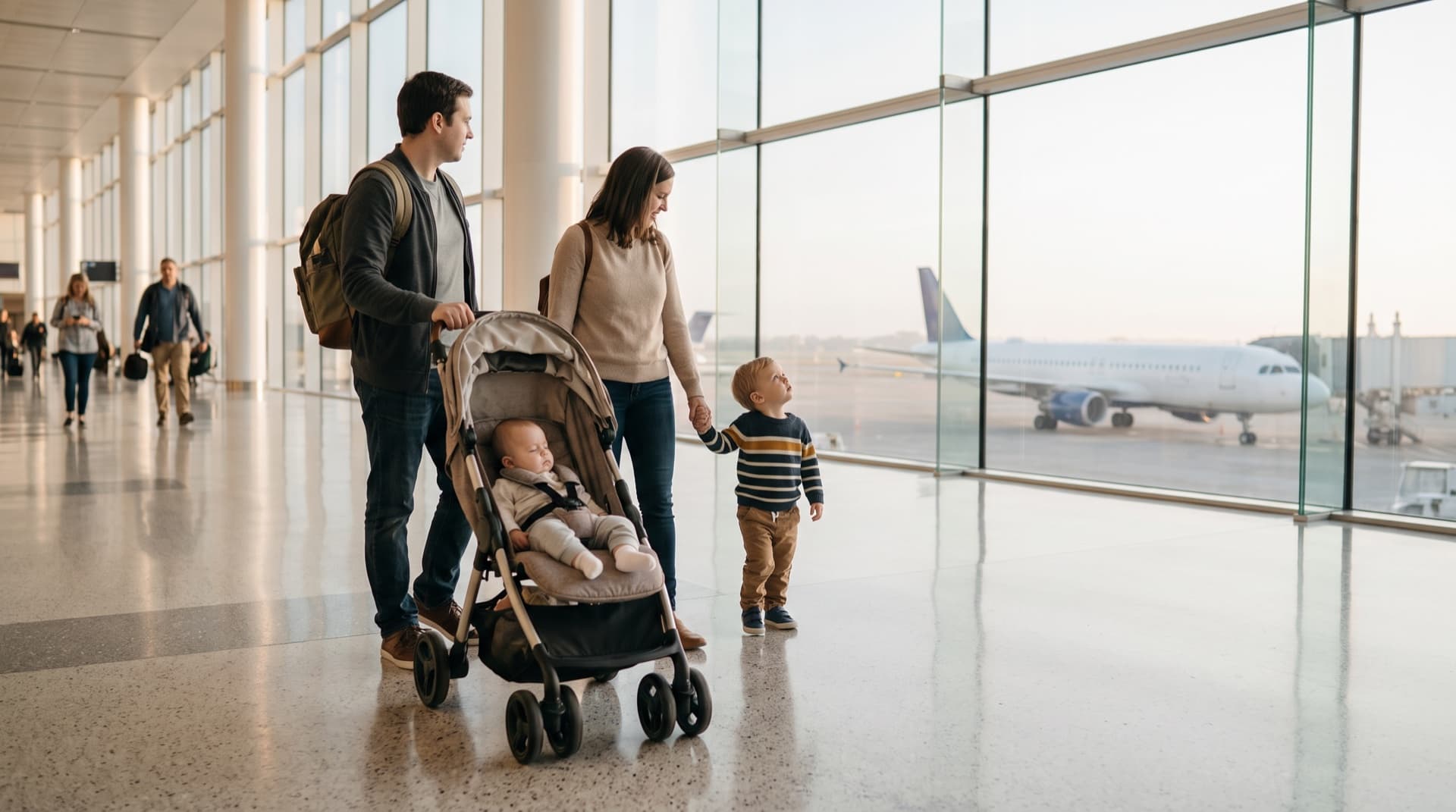
Traveling with Children Through Nashville International Airport: A Family Overview

Nashville International Airport (BNA) has seen dramatic growth alongside Nashville's rise as one of America's most popular travel destinations. A single-terminal airport with multiple concourses, BNA is known for its music-themed atmosphere and improving amenities — making it a lively if busy airport for families passing through Music City.

Family Amenities at Nashville Airport

BNA offers nursing suites, baby changing stations, and family restrooms across its concourses, with clear signage to help parents locate facilities quickly. The airport's recent expansion has brought new dining options that include family-friendly restaurants with children's menus, and the themed décor — including live music installations and Nashville memorabilia — gives kids something engaging to observe between gates. Play areas and open seating zones provide additional space for families during longer waits.

Use this guide to prepare for your family's time at BNA — whether you're departing, arriving, or connecting through Nashville.

Nursing Rooms and Baby Care Facilities at Nashville International Airport


Nursing rooms and breastfeeding facilities


Nashville International Airport (BNA) provides spaces intended to make feeding your baby easier and more private. In many airports, including BNA, nursing rooms (sometimes labeled “lactation rooms” or “nursing suites”) are typically placed past security (airside) so parents can use them while waiting to board, without having to exit and re-clear security. Some airports also have similar options before security (landside) near ticketing or baggage claim, but availability can vary by terminal area and may change with renovations.

When available, these rooms are designed for privacy and usually offer:

  • A door that closes (more private than a public seating area)
  • A chair or bench suitable for nursing or bottle-feeding
  • Counter space for setting down a pump bag or diaper bag
  • Electrical outlets for breast pumps and chargers

If a dedicated room is in use, family restrooms can be a backup option for a quick diaper change, but they are generally not the most comfortable place to feed. Airport staff and information desks can help point you to the nearest nursing room if you’re already in the secure area.


Baby changing stations


Baby changing stations are commonly available throughout BNA in restrooms across the terminal. At most U.S. airports, changing tables are typically found in:

  • Women’s and men’s restrooms (increasingly common in both)
  • Family or companion care restrooms, which are helpful when one parent is traveling alone with multiple children
  • Accessible restroom stalls or accessible restroom areas where layouts allow more space for strollers and diaper bags

For accessibility, family/companion care restrooms are often the easiest choice because they provide more room to maneuver with a stroller and allow one parent to assist another child while still having privacy.


Baby care centers (what to expect)


Airports sometimes offer a dedicated baby care room or lactation suite that functions like a small “care center.” When BNA provides this type of space, it generally includes a combination of the following:

  • Private nursing area (often a separate enclosed space or a single-occupancy room)
  • Changing table with a wipeable surface
  • Sink for handwashing and basic clean-up
  • Trash disposal and sometimes a covered bin for diapers
  • Outlets for pump equipment

These rooms are meant for short stops (feed, change, regroup) rather than long stays, but they can be a calming reset if your toddler is overwhelmed by the noise and crowds.


Bottle warming and formula preparation


Most airports, including BNA, do not provide public bottle warmers throughout the terminal, but parents still have workable options. For formula or expressed milk, the most practical approach is usually:

  • Use a sink in a nursing room, baby care room, or family restroom to prepare bottles and wash hands
  • Ask a food vendor for a cup of hot water to warm a bottle by placing it in the warm water (availability depends on the vendor and how busy they are)
  • Use room-temperature or ready-to-feed formula when warming isn’t possible

If you need to rinse bottle parts, keep expectations simple: airport sinks are best for a quick rinse and handwashing. For thorough cleaning, many parents rely on travel wipes or portable cleaning methods until they reach their destination.


High chairs in restaurants


In the dining areas at BNA, many sit-down restaurants and some cafés typically have high chairs, but the number available can be limited during peak flight banks. High chairs are generally found:

  • Inside full-service restaurants and larger casual dining spots
  • In some food court–style seating areas if the operator provides shared family seating

Availability can vary by location and time of day, so if eating at a specific spot is important for your routine (especially with a toddler), it helps to be flexible about where you sit.


Notable BNA-specific notes (what’s generally true here)


BNA is a modern, busy airport with a terminal layout that supports families with typical U.S. airport amenities. Parents can generally expect multiple restrooms distributed throughout the concourses, which makes it easier to find a changing station without walking far from your gate. Dedicated nursing/lactation spaces may be available and are most useful when located airside so you can stay near your departure area. Because terminal facilities can shift with updates and tenant changes, the most reliable on-the-spot wayfinding is via airport signage and staff at information points once you’re inside the terminal.

TSA Security Tips for Families at Nashville International Airport


Traveling with a Stroller


At TSA security, strollers can go through screening, but your child will need to be taken out before the stroller is checked. The stroller usually goes on the X-ray belt if it fits; if it does not, TSA will screen it by hand (often with a visual inspection and swabbing for trace traces of explosives). Be ready to fold the stroller and remove items stored underneath (like diaper bags, blankets, and toys), since those typically must be screened separately. If you are carrying an infant through the checkpoint, you can do so, but you may be asked to adjust how you hold the child while you walk through the metal detector. Expect a brief pause if the stroller has many pockets or accessories, because extra parts may require additional screening.

  • Take your child out before placing the stroller on the belt or handing it to an officer
  • Remove bags and loose items from the stroller basket so they can be screened separately
  • Fold the stroller if requested to help it fit on the conveyor or for hand inspection


Baby Formula & Breast Milk Rules


Baby formula, breast milk, and toddler drinks are allowed in carry-on bags in amounts greater than the usual 3.4 oz (100 mL) liquid limit when you’re traveling with your child. Tell the TSA officer you have these items before screening and place them separately for inspection, even if they are in a cooler bag. TSA may test the liquid or container (for example, swabbing the outside) and may ask you to open containers; you can request that they use a fresh pair of gloves, and you may choose not to have the liquid opened, though it may require additional screening. These items don’t have to be in travel-size bottles and can be in bottles, cartons, ready-to-feed containers, or storage bags, including frozen breast milk. Ice packs, freezer packs, and gel packs are allowed to keep formula or milk cold, even if partially melted, when used for these baby items.


Dedicated Family Lanes


Some airports offer dedicated family lanes at TSA security, designed to give families with young children a little more space and time to get organized. These lanes are not available at every airport or every checkpoint, and they may not be open all day, so you might only see them during busier periods. If a family lane is available, it is usually marked with signs, and TSA staff may direct you there when they see you traveling with small children, a stroller, or child gear. Expect the screening rules to be the same as other lanes, but the pace may feel calmer and the layout may be more family-friendly for folding strollers and collecting items. If you do not see a marked family lane, families can still use the standard lanes or any available screening option at that checkpoint.


Children’s Footwear at Security


At TSA security checkpoints, children 12 and under can usually keep their shoes on, while older kids and adults are generally asked to remove shoes for screening. Even when shoes stay on, TSA officers may still request extra screening if something alarms, so be ready for a quick check of the child’s footwear. Shoes with lots of metal parts, bulky soles, or accessories can sometimes slow things down, so simple slip-on shoes are often easiest. If shoes do need to come off, they will be placed in a bin and sent through the X-ray like other items. Keep in mind that policies and officer instructions at the checkpoint always apply, so follow the directions given on the day you travel.

Kids' Play Areas at Nashville International Airport


What to Expect at BNA for Kids’ Play


Nashville International Airport (BNA) is a modern, family-friendly airport, but it is not widely known for having large, signature children’s playgrounds the way some mega-hub airports do. Families can still find ways to help kids burn off energy, but it’s best to plan on smaller kid-friendly corners and open seating areas rather than a big, dedicated play park.

Most child-focused spaces at airports (when available) are typically found airside (past security), because that’s where families spend the most time waiting to board. At BNA, if a dedicated play area is present, it will generally be located in a concourse area near clusters of gates and seating—not out by ticketing and baggage claim. Landside (before security), families usually rely on open seating areas and family restrooms rather than true play zones.


Typical Play Features You May See


When an airport provides a children’s play zone, the equipment is usually designed to be quick, safe, and easy to clean—made for short breaks rather than long play sessions. At BNA, families should expect basic, low-profile play options if available, similar to what many U.S. airports offer:

  • Soft-play elements (foam or padded pieces for climbing and crawling), usually aimed at toddlers and preschoolers
  • Small climbing structures with gentle steps and low heights rather than tall playground towers
  • Interactive wall panels (spinners, bead tracks, simple puzzles) that keep little hands busy without needing a lot of floor space
  • Open floor space near seating where kids can stretch, walk, and move while parents stay close
  • Occasional digital or screen-based features in some airports (these vary and may not be present at BNA)

Because airport layouts and amenities can change over time, it’s smart to treat any play feature as a bonus and keep expectations flexible.


Best Ages for Airport Play Zones


Airport play areas are typically designed for younger children, especially those who benefit from safe, contained movement between flights. In general, airport play zones tend to work best for:

  • Toddlers (about 1–3) who need a place to climb and explore safely
  • Preschoolers (about 3–5) who like short, active play while waiting to board
  • Early elementary kids (about 5–7) who can use smaller structures, though they may outgrow them quickly

Older kids often do better with walking the concourse, looking at planes and airport vehicles through the windows, or visiting shops and snack spots with you—activities that don’t depend on a dedicated playroom.


Quiet or Calmer Options for Overstimulated Kids


If your child is overwhelmed by noise and crowds, the calmest “reset” spaces at many airports are not play areas—they’re the quieter edges of gate seating and family-friendly facilities. At BNA, look for:

  • Less-busy gate areas, especially if you can sit a little away from boarding lines and busy walkways
  • Family restrooms, which can be helpful for a quick regroup, diaper changes, and clothing fixes without pressure
  • A seated corner near a window, where watching aircraft can be soothing and engaging without a lot of interaction

Even without a formal “quiet room,” many families find that stepping away from the main traffic flow for a few minutes can make a big difference before boarding.


Airside vs. Landside: Where You’ll Spend Play Time


For most families, the most practical time for kid movement is after you’ve cleared security, because you won’t be rushing to re-enter the checkpoint. If a dedicated play area exists at BNA, it is most likely airside near the concourses. Landside areas (ticketing and baggage claim) are typically designed for moving through the airport, not lingering—so families usually won’t find true playground-style spaces there.


Notable Kid Attractions at BNA


BNA is best known for its music-themed vibe and modern terminal experience rather than a headline children’s attraction. Unlike airports with famous themed playgrounds, slides, or large interactive kids’ zones, BNA does not have a widely recognized, must-see children’s play installation. For many families, the most “special” entertainment is simply plane watching and enjoying the brighter, newer terminal spaces between flights.


Parent Tips for Using Play Areas Before Your Flight

 
  • Use play time as a “boarding prep” tool: let kids move first, then plan a snack, bathroom stop, and calm activity right before boarding.
  • Stay close and keep shoes on if the area is busy: airports are high-traffic spaces, and play corners can fill up quickly.
  • Choose off-peak moments when possible: early mornings and peak departure waves can make small play spaces feel crowded.
  • Bring a simple backup activity: even a small toy car, sticker sheet, or coloring pad helps if the play zone is full or not available.
  • Set a clear time limit (especially with toddlers): a quick “five more minutes” warning helps avoid tears when it’s time to head to the gate.
  • Do a final diaper and hand check afterward: wash hands or use sanitizer before snacks and boarding, since shared surfaces get touched a lot.

With a little planning, even a short play break can help kids settle more comfortably for takeoff—especially on flights that start with a long taxi or a delayed boarding process.

Make Every Family Flight Stress-Free

From car seat policies to packing tips — Velivolo gives traveling families everything they need in one app. Built by parents, backed by certified safety experts.

Family Dining and Kids' Menus at Nashville International Airport

1

Puckett's Grocery & Restaurant

Puckett’s Grocery & Restaurant at Nashville International Airport is an outpost of the well-known Tennessee-born brand that pairs a down-home “grocery” vibe with hearty Southern comfort food and a welcoming, lived-in feel. Families tend to do well here because the atmosphere is casual and forgiving for kids, and there’s typically a kids’ menu alongside familiar options that don’t require adventurous eating. On the table, the brand is especially known for its “Puckett’s Pig” BBQ (a crowd-pleasing pulled-pork favorite), plus classics like biscuits, sandwiches, and other comfort staples that work for both parents and picky eaters. Service is generally straightforward and restaurant-style, but geared to airport timing—hearty portions come out efficiently, making it a solid sit-down break between flights. Expect a mid-range price for an airport meal, roughly $15–$25 per adult depending on what you order, with kids’ plates and shareable portions that can make it fair value for families. Back home, Puckett’s started in the small town of Leiper’s Fork and grew into a beloved Middle Tennessee institution, often associated with local flavor, hospitality, and a bit of Nashville spirit.

2

The Old Spaghetti Factory

The Old Spaghetti Factory is a long-running, family-oriented Italian-American chain known for comforting pasta dinners in a casual, upbeat setting, and at Nashville International Airport (BNA) it brings that same “easy win” meal when everyone’s hungry and you want something familiar. It’s a strong fit for traveling families because the vibe is relaxed and kid-tolerant, staff are used to quick-turn tables, and you can count on a kids’ menu plus the usual family-restaurant basics like high chairs when available. Most families gravitate to crowd-pleasers like spaghetti with meat sauce or meatballs and other straightforward pasta-and-sauce combos that are easy for kids and satisfying for adults. Service is table-style and paced for diners rather than grab-and-go, with hearty portions that often feel shareable—helpful when you’re feeding a group before a flight. Expect roughly $15–$25 per adult (kids less), which is in line with airport sit-down dining and typically good value given portion size and the comfort-food appeal. The brand’s roots go back to 1969 in Portland, Oregon, and its reputation across multiple U.S. locations is built on dependable pasta standards and a welcoming, family-friendly experience.

3

Acme Feed & Seed

Acme Feed & Seed at Nashville International Airport brings a taste of Lower Broadway to the terminal, riffing on the downtown original’s honky-tonk-meets-Southern-eatery vibe with a menu that leans into Tennessee comfort food and bar-friendly classics. For families, the big win is the casual, upbeat atmosphere where a little kid-noise won’t feel out of place, and while a dedicated kids’ menu may not always be available in the airport format, the straightforward plates are easy to share and typically come with familiar options for picky eaters. Parents often gravitate to hearty staples like a hot chicken-style sandwich or other Southern mains, while kids usually do best with simpler items such as fries and basic sandwiches when offered. Service is counter-focused/quick-serve compared with the full downtown experience, so the pace works well when you’re watching boarding time, and portions tend to be generous for splitting. Expect about $15–$25 per adult depending on what you order, which is typical for airport dining and can feel like solid value if you share a couple of larger plates. Acme is best known in Nashville as a lively, multi-level downtown spot tied to the city’s music-and-nightlife scene, and the airport outpost keeps that local personality while staying practical for travelers.

4

Chili's

Chili’s at Nashville International Airport (BNA) brings the familiar, family-friendly feel of this long-running American casual-dining chain to the terminal, with a menu built around Tex-Mex-leaning comfort food, burgers, and big-flavor appetizers. It’s an easy pick for traveling families because the atmosphere is typically lively (and forgiving of kid noise), and you can usually count on kids’ menu staples and the ability to accommodate basics like smaller portions and simple sides. For parents and kids alike, the most popular orders tend to be Chicken Crispers, burgers, and crowd-pleasers like queso and chips, all designed to hit the spot even when you’re eating on a travel schedule. Service is table-service and geared toward turning meals around at a reasonable pace, with portions that often skew generous for the price. Expect $15–$25 per adult in an airport setting (kids less), which can feel like solid value when you want a predictable sit-down meal instead of piecing together snacks. As a brand founded in Texas in the 1970s, Chili’s is known for consistency and approachable flavors, and the BNA outpost delivers that reliable “everyone can find something” experience that works well when the whole crew is hungry and time is limited.

Family Airport Guide FAQ

Where are the baby changing rooms at Nashville International Airport?

Nashville International Airport (BNA) offers Mamava lactation pods for nursing/pumping; locations are past security near the concourses and listed on BNA maps, and staff can help you find the nearest pod.

Can I bring breast milk through BNA security?

TSA allows breast milk, formula, toddler drinks, and baby food in carry-ons in quantities over 3.4 oz when traveling with a child; ice/gel packs are also allowed—declare them at screening and expect possible extra inspection; they don’t need to be in the quart liquids bag.

Is there a play area for children at BNA?

BNA has a kids’ play area located after security; check BNA’s interactive map or family page for the current location/closures.

Can I gate-check a stroller at Nashville International Airport?

You can take a stroller through TSA at BNA; it will be X-rayed if it fits or hand-screened if not, and most airlines allow gate-checking—confirm with your airline.

Does BNA have family-friendly restaurants?

BNA doesn’t consistently advertise a dedicated, always-available family security lane; use standard lanes/PreCheck and ask TSA for assistance if needed; lane availability may vary by time/crowds.

Planning more trips with kids?

Explore our complete list of family airport guides

View all airport guides →

Join the Travel Revolution

Whether you're a first-time flyer or seasoned jet-setter, Velivolo makes family travel simpler, safer, and more joyful.