/family-airport-guide
MCO is built for families heading to theme parks. Find nursing rooms, Mamava lactation pods, baby care stations, stroller-friendly routes, and family dining before your adventure.
Reviewed by:

D. Goren
Head of Content
Updated March, 30
Because airline child policies change — and parents shouldn’t have to hunt for answers.
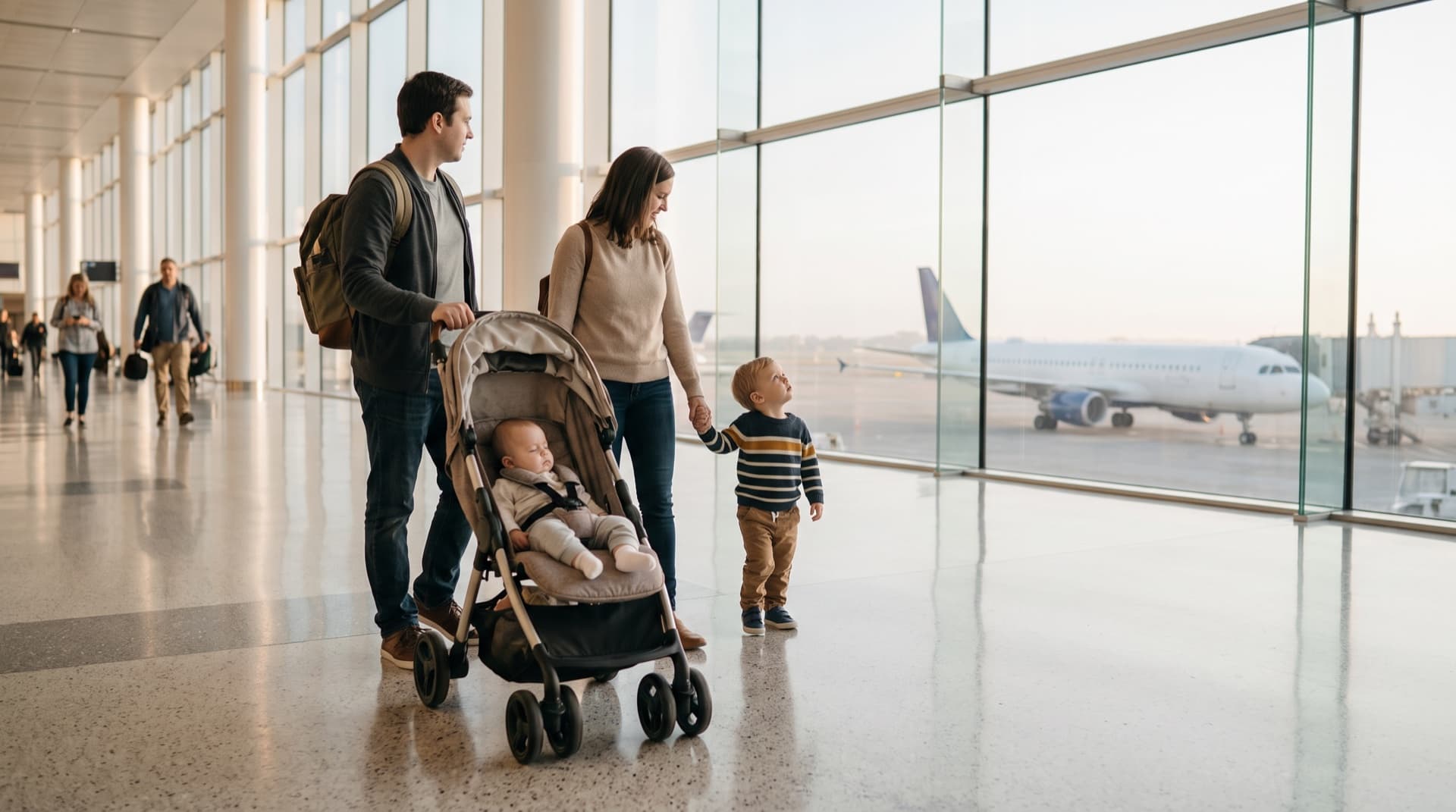
Orlando International Airport (MCO) may be the most family-oriented major airport in the United States. As the gateway to Walt Disney World, Universal Studios, and dozens of other family attractions, MCO is designed with parents and children in mind at nearly every turn. The airport's two main terminals handle an extraordinary volume of family travelers, particularly during school breaks and summer.
MCO's family credentials are well-earned. Dedicated nursing suites, baby care centers, and family restrooms are distributed across both terminals and airsides. Children's play areas give kids a chance to move before or after long flights, and the airport's dining scene reflects its family-focused identity — with many restaurants offering children's menus and high chairs. Stroller-friendly routes and elevators are clearly marked throughout the facility.
Read on for a complete room-by-room breakdown of everything MCO offers families traveling with children.
Orlando International Airport (MCO) is generally well set up for families, and parents who are nursing will find dedicated lactation/nursing rooms in addition to the option of using larger family restrooms. In most airports, including MCO, nursing-friendly spaces can be found on both the landside (before security) and the airside (after security, near gates), so you can usually choose what’s most convenient for your part of the journey.
These rooms are designed for privacy and comfort. They are typically separate from the main restroom area and intended for breastfeeding or pumping. While exact layouts can vary by terminal and concourse, you can expect nursing rooms to provide a quieter space than gate areas and food courts, which is especially helpful if your baby gets distracted easily.
Baby changing tables are commonly available throughout MCO in restrooms. They are typically found in:
Most modern airport changing stations are fold-down, wall-mounted units and are generally placed where staff can maintain them easily. If you’re traveling solo with a baby and a carry-on, family restrooms are often the most practical because they give you room to set items down while keeping your toddler close.
MCO offers family-focused amenities, and in airports with baby care centers/lactation spaces, they are generally designed as a one-stop spot for feeding and changing. Typical features you may find in these dedicated baby care areas include:
In practice, families use these rooms for more than just feeding: a quick outfit change after a spill, calming a baby away from noise, or giving a toddler a moment to reset between flights.
At airports, including MCO, dedicated bottle-warming machines are not guaranteed in public spaces, and many nursing rooms focus on providing privacy rather than appliance-style amenities. The most reliable set-up for formula prep is usually:
For safety, staff generally cannot handle or take your baby’s bottle “behind the counter,” but many food outlets can provide warm water in a cup so you can warm the bottle yourself at the table. If you are mixing formula, it’s best done with clean hands and a clean surface; baby care rooms and family restrooms are usually the easiest places to manage this without feeling rushed.
Throughout MCO, many sit-down restaurants and some quick-service dining areas typically have high chairs available, but availability can vary by location and time of day. When it’s busy, high chairs can be in high demand or temporarily unavailable while being cleaned. Food courts and gate-area seating may not always have high chairs, so families often find it easiest to use restaurants that have staff-managed seating and dining furniture.
MCO is a large, family-heavy leisure airport, and it’s common to see infrastructure that supports parents traveling with young children. While exact locations and room configurations can change over time, families can typically expect:
If you’re deciding between staying landside or heading airside, many parents prefer to use airside facilities once through security so they can settle in near their gate afterward without having to re-clear screening.
Most airlines let families use a stroller through the airport and then gate check it at the boarding gate, meaning staff will take it just before you get on the plane and return it at the aircraft door or in the arrivals gate area (the return spot can vary by airport and airline). If you choose to check the stroller at the ticket counter instead, it will go with checked baggage and you’ll pick it up at baggage claim after landing. At security, you should expect to remove your child and place the stroller on the X-ray belt (or have it inspected if it doesn’t fit), and any bags attached to the stroller must be screened separately. Before handing a stroller over for gate check, it helps to empty items from pockets and storage baskets and be ready to fold it quickly if the airline requires it at the gate. A stroller is treated as an item left with the airline, so keep necessities, valuables, and medications with you in your carry-on before you check it.
Parents can bring breast milk, formula, toddler drinks, and baby food through TSA security in quantities greater than 3.4 oz (100 mL) when traveling with a child, and these items do not need to fit in your liquids bag. Tell the TSA officer at the start of screening that you’re carrying these items, and place them where they can be inspected. Expect that TSA may screen these liquids (for example, by X-ray or additional checks), and they may ask you to open the container for inspection. Ice packs, freezer packs, and gel packs used to keep milk or formula cool are allowed, including when partially frozen or slushy, as part of this process. You may also bring empty bottles, sippy cups, and breast pump supplies through security, and pump items are allowed even if you are traveling without your child.
Some airports offer designated family lanes or allow families with young children to use an assistance/special screening lane to make the security line more manageable. These lanes are airport-checkpoint managed and availability varies by location, staffing, and time of day, so you may still be directed to the regular line. Expect the same TSA screening steps as any other lane, but often with a bit more space and time to handle strollers, car seats, and children. To use a family or assistance lane, look for signs or ask a TSA officer at the line entrance, and be ready to briefly explain you are traveling with an infant or toddler and larger child items. Even in a priority lane, all passengers must be screened, and carry-on items (including a child’s bags) go through X-ray screening as usual.
In standard TSA screening, children 12 and under can usually keep their shoes on while adults typically must remove theirs. Even when kids keep shoes on, all shoes still go through the X-ray if a TSA officer asks, such as during additional screening or if the shoes have bulky soles, metal parts, or set off an alarm. For toddlers who are being carried, you may be asked to briefly place them down so you can step through the scanner, and their shoes stay on unless directed otherwise. If your child does need to remove shoes, expect them to be placed in a bin (or directly on the belt) just like adult shoes; socks can stay on. Slip-on shoes can make this easier, and keeping laces simple helps if removal is needed.

Orlando International Airport (MCO) is a very family-heavy airport because of the region’s theme parks, and it generally offers family-friendly spaces throughout the terminals. However, MCO is not widely known for having large, dedicated “children’s playrooms” in the way some international hubs do. Families most often find kid-friendly relief in small activity corners, open seating areas where kids can move a bit, and themed airport touches rather than a big, fenced indoor playground.
In practical terms, the most helpful kid spaces at MCO tend to be airside (past security), near gates and food courts—where families actually need them during waits—rather than landside. Because terminal layouts and concessions can change, it’s best to think in terms of “near gates and seating clusters” instead of expecting a single signature play zone.
When airports provide play areas or kid corners, they are usually designed to be easy to supervise and quick to use between boarding calls. At MCO, if you come across a designated children’s spot, it is most likely to be a compact area rather than a full playground. Typical features in airports of MCO’s size include:
Most airport play areas are designed with toddlers through early elementary in mind. If you find a play corner at MCO, expect it to fit these age groups best:
If your child gets overwhelmed (noise, crowds, bright lights), airports rarely have “kid quiet rooms,” but you can usually create a calmer moment at MCO by choosing the right spot. Helpful options typically include:
For most families, the most usable kid-friendly areas are airside (past security), because that’s where you’ll spend the longest waiting time near your gate. Landside (before security), you may have more open space in some public areas, but you’ll also need to factor in check-in lines and security timing, which can interrupt play just as kids settle in.
MCO’s most “unique” advantage for children is less about a single famous playground and more about being a high-volume family airport. That typically means you’ll see more strollers, more family restroom options, and staff who are used to helping families. The airport environment often includes travel-themed visuals and plenty of plane-spotting opportunities, which can be a surprisingly effective way to keep kids engaged without needing a formal playroom.
1
Outback Steakhouse at Orlando International Airport (MCO) brings the familiar, casual-dining steakhouse experience to the terminal, serving hearty American fare with an Austrailian-themed brand personality the chain is known for nationwide. It’s a reliable pick for families because the dining room vibe is relaxed and typically lively enough that a bit of kid noise doesn’t feel out of place, and you can expect a kids’ menu with simple crowd-pleasers plus practical family touches like high chairs when available. For many travelers, the can’t-miss starter is the Bloomin’ Onion, and parents often gravitate toward steaks, burgers, or chicken while kids tend to be happy with plainer options like chicken tenders or a small burger. Service is full-service table dining rather than quick counter ordering, so plan for a sit-down meal pace, with generously sized portions that can be easy to share. Expect a mid-range price—roughly $20–$35 per adult (less for kids), which can feel like solid value for families when you’re hungry and want a filling, familiar meal before a flight. Outback is a long-running U.S. chain that became widely popular for making steakhouse-style meals approachable and consistent, which is exactly why it works well in an airport setting.
2
Chili’s at Orlando International Airport (MCO) brings the familiar, crowd-pleasing vibe of this long-running American casual-dining chain, known for Tex-Mex-inspired comfort food, big drinks, and reliable portions. For families, it’s an easy win: the atmosphere is lively and forgiving for kids, and the kids’ menu keeps choices simple and recognizable, with servers accustomed to quick turnarounds and family needs. Parents often gravitate to classics like the Baby Back Ribs or sizzling fajita-style plates, while kids tend to happily stick with crowd-friendly staples such as chicken tenders and cheesy quesadillas. Service is sit-down and typically brisk by airport standards, with food designed to arrive fast and portions that can be filling enough to share (helpful when you’re juggling boarding times and appetites). Expect a mid-range airport check of about $18–$30 per adult (less for kids), which can feel like solid value if you want a full meal instead of snacks before a flight. As a national brand that started in Texas in the 1970s, Chili’s has built its reputation on consistent, family-friendly fare, and the MCO outpost delivers that same recognizable comfort in a busy travel setting.
3
TGI Fridays at Orlando International Airport (MCO) brings the brand’s familiar “casual American bar-and-grill” comfort to the terminal, known for big, craveable portions, a lively vibe, and a menu built around burgers, ribs, chicken, and shareable appetizers. For families, the upbeat atmosphere can be a plus with kids—there’s typically plenty of background noise so little voices don’t feel out of place, and you can expect family-friendly seating with kids’ menu options that stick to crowd-pleasers. The most popular orders tend to be mozzarella sticks, boneless wings, and classic burgers for adults and kids alike, with predictable flavors that work well when you’re feeding picky eaters on a travel day. Service is sit-down and moderately paced, but it’s designed for quick decision-making and fast comfort food, making it a practical “everyone can find something” stop before a flight. Portions are generally generous for the price, and expect about $15–$30 per adult (less for kids), which can feel like decent value if you’re sharing an appetizer or splitting a large entrée. As a long-running U.S. chain that began in New York City in the 1960s, TGI Fridays has become an international staple, and at MCO it’s a familiar, kid-tolerant landing spot when you want a reliable meal rather than a gamble.
4
Landry’s Seafood at Orlando International Airport (MCO) brings the familiar Landry’s Restaurants vibe to the terminal: a sit-down, Gulf Coast–leaning seafood spot known for generous platters and crowd-pleasing classics rather than fussy fine dining. For families, it’s an easy reset during travel with a comfortable, moderately lively dining room, and you can typically count on a kids’ menu plus staff who are used to families and can help with basics like high chairs when available. Parents often gravitate to favorites like fish and chips, fried shrimp, and seafood pasta, while kids usually do best with simpler fried seafood, chicken, or sides, depending on the day’s menu. Service is full-service and unhurried compared with fast food, so it works best when you have a bit of layover time and want a real meal and a breather. Portions tend to be hearty, making it reasonably shareable for lighter eaters or younger kids. Expect about $20–$40 per adult (less for kids), which is typical for airport sit-down seafood and can feel like decent value if you’re splitting plates or want a calmer, more comfortable meal than the concourse crowds. As a well-known U.S. chain under the Landry’s, Inc. umbrella, it has a long-standing reputation for accessible seafood and consistent, family-friendly service across its many locations.
Is Orlando International Airport good for families with babies?
Orlando International Airport provides lactation rooms/“Nursing Rooms” in the terminals and also offers Mamava lactation pods in some areas. Locations can change with renovations, so the most reliable way to find the nearest option is the MCO website’s terminal maps or the airport’s information desks. Nursing rooms are intended for breastfeeding, pumping, and diaper changes in a more private setting.
Can I bring baby food through security at MCO?
Yes—TSA allows formula, breast milk, and other infant liquids in reasonable quantities through security, even if they exceed the standard 3.4 oz (100 ml) limit. You should declare these items to the TSA officer at the start of screening so they can be inspected. They may be screened separately (for example with additional testing), and you are allowed to bring ice packs, freezer packs, and gel packs needed to keep them cold.
Does Orlando International Airport have activities for kids during a layover?
MCO has family-friendly amenities, but it is not known for having large, dedicated children’s play zones like some airports. Families typically rely on open seating areas and terminal space for breaks between flights. For the most up-to-date information on any current play areas, check the airport’s terminal maps or amenities listings.
Is Orlando International Airport stroller-friendly?
You can bring a stroller through TSA security at MCO; you’ll need to take your child out and send the stroller through the X-ray when it fits, or it will be inspected if it doesn’t. Airlines commonly allow strollers to be gate-checked, but the exact requirements (size limits, whether it must be tagged at the counter, and where you retrieve it) depend on your airline. If you’re connecting, ask the airline whether the stroller will be returned at the gate or at baggage claim.
What food options are there for kids at MCO?
MCO can offer family-friendly assistance, but dedicated “family security lanes” are not consistently available and depend on checkpoint operations at the time. TSA screening lanes and queue setups can change by terminal and time of day. For check-in, any special family or priority lines are airline-specific rather than airport-wide.