Reviewed by:

D. Goren
Head of Content
Updated March, 30
Because airline child policies change — and parents shouldn’t have to hunt for answers.
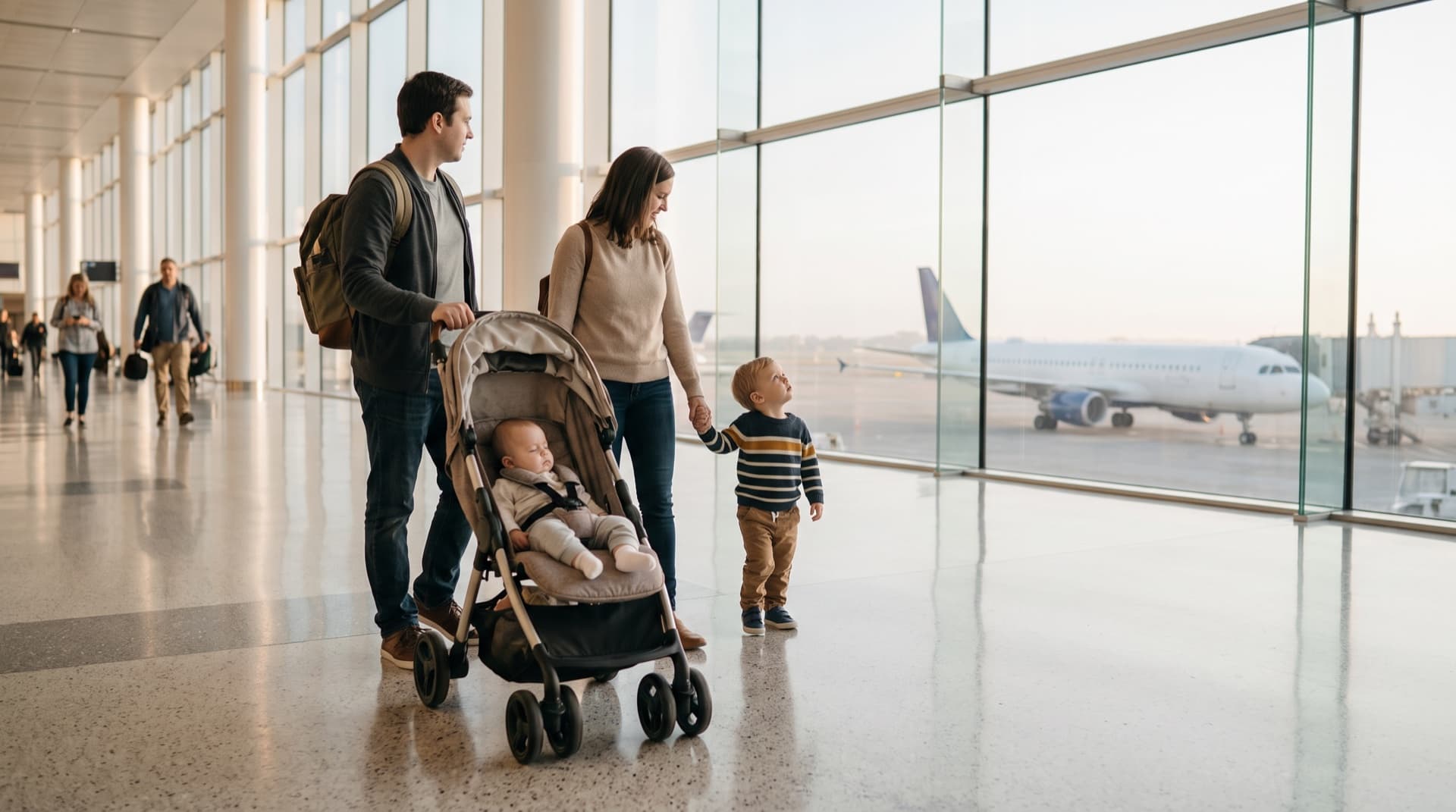
Pittsburgh International Airport (PIT) underwent a major modernization effort to upgrade its facilities and improve the passenger experience. With a classic X-shaped airside terminal and a landside terminal connected by an automated people mover, PIT is well-organized and relatively easy to move through — even with children and gear in tow.
PIT offers nursing rooms, baby changing stations, and family restrooms distributed across its airside concourses. The people mover connection between the landside and airside buildings is smooth and stroller-accessible, and the airport's recent improvements have brought better dining and retail options throughout. Several restaurants in the airside terminal offer children's menus and family-oriented seating.
Read on for a complete guide to family amenities at Pittsburgh International — an underrated airport that's worth knowing about.
Pittsburgh International Airport (PIT) is family-friendly, and nursing parents can usually find a private place to breastfeed or pump beyond a public restroom. At many U.S. airports, nursing spaces are provided airside (after security) so you can use them while waiting near your gate, and PIT follows the same general approach with designated lactation spaces in the terminal.
What to expect from a typical airport nursing space at PIT:
If a dedicated nursing room is occupied, you can still breastfeed in public areas throughout the terminal—this is commonly accommodated in airports—though many parents prefer a quieter space for pumping, latching practice, or calming a fussy baby.
Baby changing stations are commonly available throughout PIT in restroom facilities. In most airports, you’ll find them in both women’s and men’s restrooms, and often in family or all-gender restrooms where available. They are typically placed:
Most airport changing tables fold down from the wall. For safety, keep one hand on your little one and use the provided strap if available. Space can be tight in standard restrooms, so a family restroom can be more comfortable when you have a stroller, diaper bag, and a toddler who wants to “help.”
Some airports provide a dedicated baby care center (sometimes combined with a lactation room). When available at PIT, these spaces are generally intended for quick, practical care—feeding, changing, and resetting between flights. A well-equipped baby care room typically includes:
Even when the airport uses separate spaces (for example, a lactation room plus regular restrooms), the goal is the same: giving parents a clean, calmer option for baby care without having to use a crowded restroom stall.
At PIT, as at most airports, there usually isn’t a public “bottle-warming station” built into the terminal, but families still have workable options. For formula mixing and bottle prep, parents typically rely on:
If your child needs warmed milk, the most reliable method in an airport setting is warming the bottle in a container of warm water (rather than microwaving). Microwaves—when present in public eating areas—can heat unevenly and create hot spots, so many parents prefer water warming for safety.
High chairs are commonly available at sit-down restaurants and many quick-service dining spots in U.S. airports, including PIT. Availability can vary by venue and time of day, but you can generally expect:
If a high chair isn’t immediately visible, staff can often bring one out or direct you to the nearest option.
PIT is a modern airport with a focus on passenger comfort, and families typically benefit from well-maintained restrooms and practical amenities throughout the terminal. While exact locations and layouts can change with renovations or operational updates, parents can generally count on:
Because airports periodically relocate or update family amenities, the most consistent rule at PIT is that you’ll find the best baby-care options after security, where you’ll be spending the most time before boarding.
You can bring a stroller through the airport, but at TSA security you should expect to take your child out and send the stroller through the X-ray when it fits. If your stroller is too large for the X-ray belt, TSA will usually do a hand inspection instead, which may include swabbing parts of the stroller. Before you reach the checkpoint, remove any loose items from the stroller basket (snacks, toys, blankets, cups) and place them in your carry-on or a bin so they don’t slow screening. You may also be asked to collapse or fold the stroller so it can be screened more easily, so clear the seat and pockets to make folding simple. Keep any stroller accessories that contain batteries or electronics in mind, since TSA may ask you to separate them for screening.
Baby formula, breast milk, toddler drinks, and baby food are allowed in carry-on bags in amounts greater than 3.4 ounces (100 mL) when traveling with your child. Tell the TSA officer at the start of screening that you have these items, and remove them from your bag so they can be screened separately. TSA may test the liquid (for example, by swabbing the outside of containers) and may ask you to open containers; you can request that containers not be opened, but be aware that this may require additional screening. These items do not have to fit in a quart-sized liquids bag, and ice packs, freezer packs, and gel packs are allowed to keep them cold (even partially melted) when used for baby items. You can bring empty bottles, sippy cups, breast pump parts, and other feeding supplies through security and fill them after screening.
Some airports offer dedicated family lanes at the TSA checkpoint to help families with young children move through screening with a bit more space and time. If available, you’ll usually see signs for families, strollers, or “Family Lane,” and a TSA officer may direct you there, but not every airport has them and they may not be open at all times. In practice, expect the same TSA screening rules as other lanes, with staff who are used to strollers, car seats, diaper bags, and kids who need a calmer pace. You should be prepared to remove your child from the stroller and place strollers and baby gear on the X-ray belt for screening. Keep small essentials easy to reach so you can quickly place items in bins and keep hands free for your child.
At TSA checkpoints, children 12 and under can usually keep their shoes on during screening. Adults and older children are generally required to remove shoes, so you may see parents taking theirs off while younger kids keep theirs on. Even when shoes stay on, TSA may still do extra screening if the alarm goes off, such as a quick shoe check or additional screening of the child. To make the process smoother, choose easy-on, secure shoes for kids (avoiding complicated laces or bulky footwear that can slow things down). If your child is wearing footwear that’s hard to screen or triggers the equipment, be prepared that TSA may ask for it to be briefly checked.

Pittsburgh International Airport (PIT) is a family-friendly airport overall, but it is not widely known for having multiple large, dedicated children’s play zones in the way some big hub airports do. Families should plan for the possibility that any kid-focused play space may be limited, seasonal, or smaller in scale, and may not be available in every concourse. When airports like PIT do offer play areas, they’re most commonly placed airside (past security) so children can move and play while staying close to your gate.
In practical terms, parents most often find kid-friendly “play” at PIT in the form of small activity corners or informal kids’ spots within seating areas, rather than a full playground. If you do come across a dedicated play area, it will typically be located where families naturally gather: near clusters of gates, along wider concourse walkways, or close to restrooms so you can manage quick bathroom stops without leaving the area.
When PIT (or similar U.S. airports) provides a children’s play zone, it’s usually designed for quick, supervised play—something that helps kids burn energy without needing special shoes or extensive staff oversight. Typical features you might see include:
It’s less common to see large indoor slides or elaborate themed installations at PIT. If you’re expecting a marquee attraction (the kind some mega-airports are famous for), PIT’s children’s facilities tend to be more practical than “destination-style.”
Airport play zones are typically built for younger children—especially those who benefit most from movement breaks during travel. If you locate a play area at PIT, expect it to be most suitable for:
Older kids may still enjoy a break, but they often do better with other options found throughout the terminal, such as walking the concourse, watching aircraft from window areas, or doing a quick snack-and-coloring reset at a table nearby.
If your child gets overwhelmed by noise, crowds, or bright screens, it helps to know that airports don’t always label “quiet zones” specifically for children. At PIT, parents generally have the most success creating a calmer moment by choosing quieter seating pockets away from busy boarding lines and main crosswalks. Good calm-down options typically include:
If you find a play space and your child becomes overstimulated, a good approach is to step out to a nearby seating area for a snack and water, then return for a shorter play burst. Short, predictable play intervals often work better than “one long session,” especially close to boarding time.
Most children’s play opportunities at airports are airside (past security), because that’s where families spend the most time waiting to board. Landside (before security), space is typically focused on check-in, baggage, and ground transportation. At PIT, if there is a play area available during your trip, you should generally expect it to be in the gate concourses after you’ve cleared TSA screening.
Because airport layouts and amenities can change with renovations and airline gate use, the best “on the day” strategy is to keep expectations flexible and plan around what you actually see once you’re in the secure area.
PIT is better known for a pleasant terminal experience and local character than for a signature children’s attraction. Unlike airports famous for headline kid features (like large themed playgrounds or integrated slides), PIT typically offers smaller-scale, functional kid-friendly spaces when available. That said, many families find that PIT’s manageable size and walkable concourses make it easier to do the simplest and most effective “travel play”: a supervised walk, a window-view break, and a short movement session near the gate.
1
Primanti Bros. at Pittsburgh International Airport is a classic Pittsburgh sports-bar-style sandwich spot, best known for its signature “Almost Famous” sandwich—stacked with meat, melty cheese, coleslaw, and French fries right inside the bread. The brand started in Pittsburgh’s Strip District and became a local institution, so grabbing a sandwich here feels like a quick, tasty bite of the city even if you’re only passing through. For families, the casual counter-and-bar feel is forgiving with kids, and you’ll typically find kids’ menu options that keep things simple for picky eaters. Parents often go for the loaded sandwiches, while kids tend to do well with shareable fries and straightforward comfort-food staples that aren’t fussy. Service is geared toward travel-day speed—order, eat, and get back to your gate—with hearty portions that are easy to split if you’re traveling with little ones. Expect $12–$20 per adult (airport pricing can run higher than neighborhood locations), but the big sandwiches and shareable sides can be a solid value for families who plan to split. Overall, it’s a lively, approachable Pittsburgh favorite where the food is filling, familiar, and well-suited to hungry travelers wrangling kids between flights.
2
Bravo! Italian Kitchen at Pittsburgh International Airport is a polished-casual Italian-American chain restaurant known for crowd-pleasing pastas, pizzas, and classic red-sauce comfort food in a lively trattoria-style setting. For families, it’s an easy fit because the dining room energy can cover kid noise, and you can typically count on a kids’ menu plus practical amenities like high chairs when available. Parents often gravitate to familiar favorites like chicken parmesan, while kids tend to do well with simpler pasta dishes and pizza options that feel safe before a flight. Service is full-service sit-down and generally paced for a proper meal rather than a quick grab-and-go, with portions that are usually generous for sharing or splitting with younger eaters. Expect about $15–$30 per adult (plus drinks), which can be a solid value for families when you’re sharing appetizers or larger entrées. As a long-running U.S. chain, Bravo has built its reputation on consistent, broadly appealing Italian fare and a dependable “something for everyone” menu that works when traveling with mixed ages and appetites.
3
Winghart’s Burger & Whiskey Bar at Pittsburgh International Airport brings a well-known Pittsburgh burger-and-bourbon concept into the terminal, with a focus on hearty, made-to-order American comfort food and an impressive whiskey lineup for adults. In its home market, Winghart’s has built a reputation for indulgent, over-the-top burgers and sandwiches, and the airport outpost keeps that same “treat-yourself” spirit in a more travel-friendly setting. For families, the casual pub vibe and upbeat, lively feel make it forgiving with little ones, and you can ask about kids’ menu options and kid-friendly sides while you wait. A safe, crowd-pleasing order is a classic cheeseburger with fries, while parents often gravitate to bigger specialty burgers and a pour of whiskey or a cocktail when time allows. Service is typical airport sit-down pacing—order at your table, food comes out fairly quickly—and portions tend to be filling enough to share or to keep hungrier teens satisfied. Expect about $15–$25 per adult (less for kids), which is in line with airport pricing but can feel like good value when you want a substantial meal rather than a snack.
4
TGI Fridays at Pittsburgh International Airport (PIT) brings the brand’s familiar, casual American bar-and-grill vibe to the terminal, known for big flavors, a broad menu, and a lively atmosphere. It’s a dependable pick for families because it’s typically upbeat and forgiving of kid noise, and you can usually count on a kids’ menu plus standard family-friendly seating like booths and high chairs (subject to availability in the airport space). Crowd-pleasers for parents and children tend to include mozzarella sticks, burgers, chicken tenders, and shareable appetizers that make it easy to feed a group. Service is sit-down and paced for travelers—often efficient but subject to airport rushes—while portions are generally generous and easy to split for younger kids. Expect a midrange airport check of about $15–$30 per adult (less for kids), which can feel like decent value if you’re sharing starters or leaning on hearty entrées. Founded in 1965 in New York City, TGI Fridays grew into an international chain recognized for its red-and-white stripes, casual celebration feel, and a menu that balances comfort food with bar favorites.
Where are the baby changing rooms at Pittsburgh International Airport?
Pittsburgh International Airport provides nursing rooms/lactation spaces; ask staff or check the terminal map. Locations may change with renovations, so confirm on the airport website or at an info desk, and verify whether any are past security. If you need privacy quickly, ask a gate agent or Guest Services for the nearest space.
Can I bring breast milk through PIT security?
TSA allows formula, breast milk, and juice in reasonable quantities for infants/toddlers; they’re exempt from the 3-1-1 liquids rule. Ice/gel packs are allowed even if partially melted. Tell the TSA officer and remove items for inspection; expect possible extra screening and allow extra time.
Is there a play area for children at PIT?
PIT has offered a kids’ play area, but amenities can change; confirm current locations on the airport website or directory. If available, it’s typically airside (after security). Ask an info desk or gate agent; otherwise use quieter gate areas for toddler movement.
Can I gate-check a stroller at Pittsburgh International Airport?
You can bring a stroller through TSA; it will be screened by X-ray or hand inspection. Most airlines let you use it to the gate and gate-check it (often free as a child item), but policies vary. Get a tag at the gate and hand it over where staff directs; check airline rules for large/specialty strollers.
Does PIT have family-friendly restaurants?
Dedicated TSA “family lanes” at PIT aren’t guaranteed and may appear only at certain times/checkpoints. PreCheck/CLEAR can reduce waits if you’re enrolled but aren’t family-specific. Some airlines offer family assistance/priority lines depending on ticket/status; check airline options and TSA signage on arrival.