/family-airport-guide

Flying with Kids at Portland International Airport (PDX): Nursing Rooms, Kids' Play Area & Family Essentials

Family guide to PDX — nursing rooms, baby care stations, a kids' play area airside, diaper changing areas, and family-friendly restaurants across all terminals.

Reviewed by:

D. Goren

Head of Content

Updated March, 30

👉 Download Velivolo Before Your Next Flight

Because airline child policies change — and parents shouldn’t have to hunt for answers.

Family Travel at Portland International Airport: Everything You Need to Know

Portland International Airport (PDX) is consistently ranked among the best airports in North America, and families are a big reason why. Known for its relaxed Pacific Northwest atmosphere, excellent local food vendors, and thoughtful design, PDX offers an airport experience that's genuinely pleasant — even when you're traveling with young children.

Why PDX Works Well for Families

PDX's single-terminal layout with concourses extending from a central hub makes navigation intuitive and manageable. Nursing rooms are well-maintained and available airside, baby changing stations are found throughout the concourses, and family restrooms provide the extra space parents need. The airport's food hall features a wide range of local Portland vendors, many of which serve food that appeals to children and parents alike.

  • Consistently rated one of the top US airports for passenger experience
  • Compact layout — minimal walking distances between gates
  • Strong local food options, including family-friendly picks

Scroll down for a complete breakdown of family-specific facilities at PDX.

Nursing Rooms and Baby Care Facilities at Portland International Airport


Nursing rooms and breastfeeding facilities


Portland International Airport (PDX) has dedicated spaces intended to make breastfeeding and pumping more comfortable. In many airports, these rooms are designed for privacy, with a door and a chair/bench, and they are typically located after security (airside) so you can use them close to your gate without having to exit and re-clear security. It’s also common for airports to provide at least one option before security (landside) near the main ticketing/check-in level, but availability and exact placement can vary as terminals change over time.

When available, nursing spaces generally aim to offer:

  • Private, quiet seating for feeding or pumping
  • A locking door or clearly marked private entry
  • Basic counter space for pump parts and bags
  • Nearby restrooms for handwashing (or a sink inside if it’s a larger baby care room)

Breastfeeding is permitted in public areas of airports, so you can also feed at your gate or in seating areas if that’s easier. For families who prefer more privacy, staff can usually help point you to the nearest nursing room.


Baby changing stations


Baby changing tables are commonly available throughout PDX in public restrooms. You’ll typically find them located:

  • In many women’s and men’s restrooms
  • In single-user/family-style restrooms when those are provided
  • Both before security (near ticketing/baggage claim areas) and after security (near gate concourses)

Most airport changing stations are fold-down wall units. For accessibility, airports generally place at least some changing stations in restrooms that can accommodate strollers and caregivers who need extra space. If you’re traveling with a toddler who needs a little room to move, single-user restrooms are often the least stressful option.


Baby care centers (what they include)


Some airports offer a dedicated baby care center or a larger “mother’s room” that combines multiple baby needs in one place. Where PDX provides these larger spaces, they typically include a mix of the following features:

  • Changing station with a wider surface than standard restroom fold-down tables
  • Sink for washing hands and simple cleanup
  • Private nursing area or curtained/segmented space for feeding or pumping
  • Trash disposal designed for diaper waste
  • Small shelf or counter for organizing wipes, diapers, and pump parts

Even when there isn’t one large, centralized baby care center, airports like PDX often provide a combination of nursing rooms plus well-distributed changing tables so families can handle the essentials close to where they are in the terminal.


Bottle warming and formula preparation


At PDX, as at most airports, dedicated bottle warmers are not guaranteed in public areas. Parents usually rely on simple, realistic options:

  • Ask a café or restaurant for a cup of hot water to warm a bottle by placing it in the cup (staff policies vary, and they may provide hot water rather than warming the bottle directly)
  • Use a thermos of warm water you brought from home (helpful for delays)
  • Mix formula using clean, safe water you’ve obtained after security from concessions or water sources if appropriate for your needs

For formula prep, the most reliable approach in an airport is having pre-measured formula in a dispenser and using bottled water (or water you’re comfortable using) so you can make feeds quickly at the gate. If you are pumping, nursing rooms and larger baby care spaces are often the most comfortable places to assemble parts and store gear, though refrigeration is not typically provided in public nursing spaces.


High chairs in restaurants


Airport restaurants and food courts at PDX commonly offer high chairs, particularly in larger sit-down restaurants and some fast-casual locations. Availability depends on the individual vendor and how busy the terminal is. In general:

  • Most family-friendly dining areas keep a small number of high chairs available
  • High chairs may be limited during peak travel times
  • Some smaller coffee stands may not have seating or high chairs, while nearby shared seating areas may

If a high chair isn’t available, many parents find a corner table with a stroller parked close by works well for short meals or snacks.


Notable, family-helpful features


PDX is widely known for being an easy-to-navigate airport, and families often benefit from practical terminal amenities rather than one single “kids zone.” Expect family needs to be supported through a combination of:

  • Multiple restrooms throughout the terminal with changing stations
  • Dedicated nursing/pumping-friendly spaces intended for privacy
  • Family-oriented dining options where finding kid-friendly food and seating is typically straightforward

Because airport layouts and services can shift with renovations and airline moves, the exact location of nursing rooms and baby care spaces can vary, but the overall level of support for infants and toddlers at PDX is generally strong and geared toward making routine care (feeding, changing, quick cleanup) doable within the terminal.

TSA Security Tips for Families at Portland International Airport


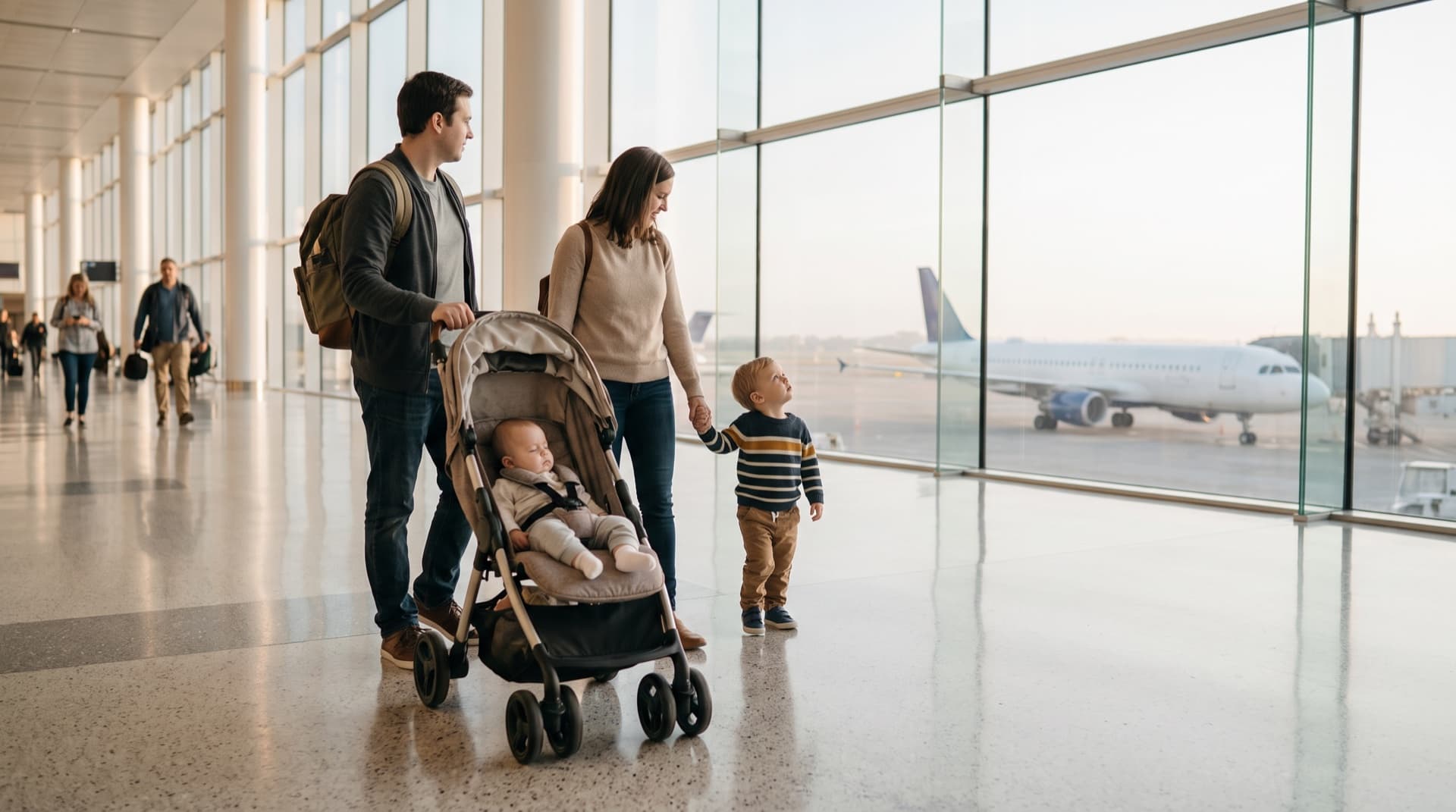
Strollers Through Security


You can bring a stroller to the TSA checkpoint, but it must be screened before you go through. In most cases, you’ll be asked to take your child out, place any bags or loose items from the stroller in bins, and fold the stroller so it can go on the X-ray belt. If your stroller is too large to fit in the X-ray machine, TSA will usually inspect it by hand (often including a swab test for explosives) after you remove your child and belongings. You can carry your child through the checkpoint, and carriers are also screened—sometimes you may be asked to remove the child from the carrier depending on the screening process. To make screening smoother, empty the stroller basket of small items, secure loose toys, and know how to quickly fold and lock your stroller.


Liquids for Infants & Toddlers


At TSA security, baby formula, breast milk, toddler drinks, and baby food are allowed in quantities larger than the usual 3.4 oz/100 mL limit when you are traveling with your child. These items are considered medically necessary liquids, so you can bring what you reasonably need for the trip, even if it won’t fit in a quart-size bag. Expect officers to do additional screening, which may include opening the bag, testing the outside of containers, or screening ice packs, gel packs, and other accessories used to keep these items cold. You can help the process go smoothly by keeping these liquids together and telling the officer you have infant or toddler liquids before screening begins. You do not have to place breast milk or formula in checked baggage, and you may carry them through security in your carry-on.


Family & Accessible Lanes


Some airports offer family lanes or accessible lanes at TSA security, which are designed to give families with young children and travelers needing extra assistance a little more space and time to get organized. If available, you may be directed there by TSA staff or you can politely ask an officer which lane is best for families; availability varies by airport and time of day, so it may not always be open. Expect the same TSA screening rules as other lanes, but with a calmer setup and officers who are used to strollers, car seats, diaper bags, and kids who need a moment. You will still need to place items on the X-ray belt, and your child and any adults will still go through a metal detector or body scanner as directed. If you have a stroller or car seat, it typically must go through the X-ray machine or be checked by an officer, so be ready to fold it and remove any loose items before you reach the front of the line.


Shoe Removal for Young Children


At TSA security, children 12 and under usually do not need to remove their shoes during screening. Your child may keep shoes on while walking through the metal detector, but TSA officers can still ask for extra screening if something triggers an alarm. Adults and older children are generally expected to remove shoes unless they are in TSA PreCheck, so plan for you to take yours off while helping your child through. If your child is wearing shoes with lots of metal, thick soles, or accessories, be prepared that TSA may ask to remove them to clear screening. To make the moment smoother, choose easy-on, easy-off shoes and have socks ready in case the floor feels cold.

Kids' Play Areas at Portland International Airport

Portland International Airport (PDX) is generally a family-friendly airport, but it is not widely known for multiple large, dedicated children’s playrooms in the way some mega-hub airports are. Families will usually find that kid-friendly spaces at PDX are more about convenient walking areas, family facilities, and occasional interactive features rather than a big, centralized playground. When play spaces are available, they are typically positioned where families naturally spend time: past security near groups of gates and seating areas, so children can move around while parents stay close to their boarding area.

Where to look: Most airports place children’s play features either airside (after security) in the concourses near gates, or landside near ticketing where there is more open space. At PDX, families should plan on the most practical option being airside, since that’s where you’ll have access to the majority of seating, restrooms, and food options while waiting to board. If your child needs a break before you go through screening, landside areas can be useful for quick movement and stretching, but they’re usually not as purpose-built for play.


What Play Areas (and Kid-Friendly Installations) Usually Include


If you come across a designated play spot or kid-focused corner, the equipment in airports is typically designed for short bursts of activity rather than long play sessions. Common features you may see include:

  • Soft play elements (padded benches, low foam shapes, small tunnels) that are safer for toddlers and preschoolers
  • Low climbing structures or step-on/step-off features meant to burn energy without being too tall
  • Interactive panels (turn wheels, sliders, bead mazes) that keep little hands busy without lots of running
  • Simple interactive screens in some airports (short games or motion-based activities), usually designed for quick use
  • Open floor space where kids can do “airplane walks” or gentle movement while parents stay seated close by

Because airport layouts and renovations can change, it’s smart to think of PDX as an airport where families may use a mix of small kid-friendly features and practical waiting-area strategies, rather than relying on one guaranteed, large playroom.


Best Ages for Airport Play Spaces


Most airport play zones are aimed at toddlers through early elementary ages. That’s because equipment is usually low to the ground, sized for smaller bodies, and focused on safe, quick activities. In general:

  • Babies (0–12 months): Best suited to a calm corner with space to crawl or do supervised floor play (a small blanket can help if permitted and practical)
  • Toddlers (1–3 years): Typically the main target for soft play and simple climbing features
  • Preschool/early elementary (3–7 years): Often enjoy short climbing elements, interactive panels, and airport “watching” (planes, ground vehicles)
  • Older kids (8+ years): May find play areas too small; they usually do better with walking laps, looking for art displays, or seated activities

Even when there isn’t a formal playroom, a short, purposeful walk along the concourse and back can be one of the most effective “energy resets” before boarding.


Quiet or Calmer Options for Overstimulated Kids


Airports can be loud and visually busy, and many children (especially toddlers) can get overwhelmed. If you need a calmer break at PDX, the most reliable approach is to look for:

  • Less-crowded gate areas a short walk away from the busiest restaurants and main crossroads
  • Seating areas along the concourse edges rather than right next to boarding lanes
  • A family restroom nearby, which can make calming routines (diaper change, handwashing, reset) easier and more private
  • A calm corner for quiet activities (books, small toys, snacks) away from loudspeakers and line-ups

In many airports, the “best calm space” is simply a quieter stretch of the terminal rather than a labeled relaxation room. Planning a few extra minutes to relocate can make a big difference for a child who needs to decompress.


Airside vs. Landside: What Parents Should Expect


Airside (past security) is usually the most practical place for play because you won’t risk losing time re-clearing security, and you’ll be close to your gate when boarding starts. Landside (before security) is most useful if you arrive very early and want to let kids move before you commit to the screening process, but it’s typically less convenient once you’re checked in and timing matters.

For most families at PDX, the easiest plan is to go through security with enough time to settle, then look for any kid-friendly pockets near your concourse and use them in short, supervised bursts.


Notable Kid Appeal at PDX


PDX isn’t famous for a headline children’s attraction like an indoor butterfly garden or large themed playground. What it does offer, in a very practical way, is an environment that many parents find easier to manage than larger, more hectic hubs: clear wayfinding, plenty of seating areas, and good options for food and breaks. For kids, one of the most consistently engaging “attractions” at any airport—including PDX—is aircraft and ramp watching from seating where windows are visible, especially if your child loves vehicles and motion.


Parent Tips for Using Play Time Before Flights

 
  • Keep play sessions short and well-timed: Aim for a burst of movement before boarding, then transition to a calmer activity close to your gate.
  • Stay within easy earshot of announcements: Choose a play spot where you can still track boarding calls and any gate changes.
  • Set a simple boundary: “We can play until this song ends / until we finish this snack,” then move to the gate area early to avoid a rushed transition.
  • Have a hand-cleanup plan: After play, quick hand cleaning helps before snacks and boarding, especially in high-touch areas.
  • Watch for footwear and loose items: Airport floors can be slippery, and small toys can roll; keep essentials secured so you’re not chasing items near foot traffic.
  • Use movement strategically: If there’s no dedicated play space, a walk to a quieter area and back can substitute for a playground while keeping you close to your departure point.

Make Every Family Flight Stress-Free

From car seat policies to packing tips — Velivolo gives traveling families everything they need in one app. Built by parents, backed by certified safety experts.

Family Dining and Kids' Menus at Portland International Airport

1

Burgerville

Burgerville at Portland International Airport is a beloved Pacific Northwest fast-food institution, known for Northwest-sourced ingredients, seasonal specials, and a menu built around burgers, fries, and shakes with a more local, community-minded feel than typical national chains. For families, it’s an easy win: counter service keeps things moving, the atmosphere is casual and kid-tolerant, and there’s a kids’ menu that makes ordering simple for picky eaters. Parents often go for the brand’s burgers and crinkle-cut fries, while kids tend to be happiest with a straightforward cheeseburger or chicken option and a classic milkshake on the side. The experience is quick and no-fuss—order at the counter, grab your food, and settle in—making it practical when you’re managing carry-ons, strollers, or tight boarding times. Portions are generous for a fast-food spot, and the flavors lean familiar rather than fussy, which helps when you’re feeding a mixed-age crew. Expect about $10–$18 per adult (less for kids), with prices in line with airport dining but generally good value considering the ingredient quality and consistency. Founded in Oregon and long associated with the Portland-area food scene, Burgerville has a loyal hometown following for bringing regional products and seasonal rotation into an approachable, family-friendly format.

2

Caffe Umbria

Caffè Umbria at Portland International Airport (PDX) is a polished, Italian-style espresso bar from the Seattle-based Caffè Umbria brand, known for carefully crafted espresso drinks and coffee roasted in the Italian tradition. It’s a solid fit for families because it’s quick, casual, and easy to navigate with kids, and while it’s not a full-service restaurant, you can typically find simple, kid-friendly baked goods; there isn’t a dedicated kids’ menu like you’d see at a sit-down spot. Parents tend to go for a strong cappuccino or latte alongside a pastry, while kids often gravitate to something sweet like a muffin or cookie, and the can’t-miss highlight is the espresso-based drinks that the brand is best known for. Service is counter-order and fast-paced—ideal for tight connections—so portions are snack-sized rather than meal-sized, and seating availability depends on the airport concourse. Expect about $8–$15 per person for a drink and a pastry, with value showing up most for coffee lovers who want something reliably well-made. The atmosphere is more “busy coffee stop” than quiet café, which can actually be a plus with younger kids since a little noise won’t feel out of place. As a Pacific Northwest favorite with roots in Seattle and an Italian coffee identity, Caffè Umbria has earned a reputation for consistency and quality that translates well to an airport setting.

3

Laurelwood Brewing

Laurelwood Brewing at Portland International Airport (PDX) brings a taste of Portland’s craft-beer-and-pub-food culture into the terminal, built around Laurelwood’s long-running reputation as a local Oregon brewpub for easygoing, approachable meals and house-brewed beer (with plenty of non-alcoholic options, too). It’s a comfortable spot for families because the vibe is casual and forgiving, staff are used to travelers, and you can typically get kids’ menu staples and simple sides without a lot of fuss. Parents often gravitate toward hearty pub plates like burgers, sandwiches, and salads, while kids tend to do well with straightforward, familiar items such as chicken tenders or mac-and-cheese when available. Service is sit-down but airport-paced—orders come out relatively quickly, portions are generally generous for sharing, and it’s easy to dip in for a full meal or just a snack between flights. Expect a midrange price similar to many PDX sit-down restaurants—roughly $15–$30 per adult before drinks—so it’s not the cheapest option, but the portion sizes and sit-down comfort can make it good value for families. Laurelwood is an Oregon original known around Portland for its neighborhood-brewpub feel, so even in the airport it reads “local” rather than generic chain, which is nice when you want one last Pacific Northwest bite before boarding.

4

Applebee's

Applebee’s is a longtime American casual-dining chain known for a big, crowd-pleasing menu of burgers, sandwiches, salads, and grill-and-fry comfort food, and the PDX location delivers that familiar “neighborhood bar & grill” feel for travelers who just want something predictable. It works well for families because the vibe is relaxed and a bit lively, and the kids’ menu keeps ordering simple for picky eaters; in typical Applebee’s fashion you can generally expect family-friendly seating and staff used to serving quick, hungry groups. For parents, staples like riblets, burgers, and chicken tenders are among the most popular choices, while kids often gravitate to the classic fries-and-finger-food options. Service is sit-down and paced like a standard chain restaurant (order at the table, food brought out in courses), with portions that usually run hearty enough to share if your timing is tight. Expect a mid-range price similar to most casual chains—roughly $15–$30 per adult before drinks and tip—making it a decent value when you want a full meal rather than a snack. As a brand, Applebee’s is one of the better-known U.S. casual dining chains, built around accessible comfort food and broad appeal rather than a local Portland specialty.

Family Airport Guide FAQ

Does Portland International Airport have a nursing room airside?

PDX provides lactation/nursing rooms for parents who need to breastfeed or pump, and at least some are located inside the secure (post‑security) areas of the terminal. You can find current locations by checking the PDX airport map/directory or asking an information desk once you know your concourse. If you’re meeting someone outside security, there are also family restrooms around the terminal that can work for nursing in a pinch.

What are the rules for baby food at PDX security?

Yes—TSA allows formula, expressed breast milk, and baby food in reasonable quantities through security at PDX even if they exceed the usual 3.4 oz liquid limit. Tell the TSA officer you’re traveling with these items before screening; they may be screened separately (including additional testing). You may be asked to remove them from your bag for inspection, so keeping them together and easy to access helps.

Where can kids play at Portland International Airport?

PDX has a kid-friendly play area designed for families traveling with children. It’s located airside (past security) and is easiest to reach once you’re in the main concourse areas. Because locations can shift with terminal changes, confirm the nearest play area on the airport map or with staff for the most up-to-date gate proximity.

Where do I pick up a stroller at PDX?

Strollers are allowed through TSA screening at PDX, but they must be screened—typically by sending the stroller through the X‑ray if it fits, or by additional inspection if it doesn’t. You can usually use your stroller all the way to the gate and then gate-check it with your airline, where it’s tagged and loaded for you. Policies on stroller size limits and whether it’s returned at the aircraft door or baggage claim vary by airline, so check your carrier’s rules.

Are there high chairs at Portland International Airport restaurants?

PDX does not consistently offer dedicated “family” security lanes, and availability can vary by checkpoint and time of day. Families can use standard TSA screening lines (including TSA PreCheck if eligible) and request assistance from officers if needed. Airlines at PDX generally use their regular check-in counters and kiosks rather than a universal airport-run family check-in line.

Planning more trips with kids?

Explore our complete list of family airport guides

View all airport guides →

Join the Travel Revolution

Whether you're a first-time flyer or seasoned jet-setter, Velivolo makes family travel simpler, safer, and more joyful.