/family-airport-guide

Flying with Kids at Rome Fiumicino Airport (FCO): Nursing Rooms, Baby Care & Family Essentials

Flying with kids through FCO? Find nursing and baby care rooms airside, children's play areas, family restrooms, stroller-friendly routes, and dining at Rome Fiumicino.

Reviewed by:

D. Goren

Head of Content

Updated March, 30

👉 Download Velivolo Before Your Next Flight

Because airline child policies change — and parents shouldn’t have to hunt for answers.

Traveling with Children Through Rome Fiumicino Airport: A Family Overview

Rome Fiumicino Airport (FCO), officially Leonardo da Vinci International Airport, is Italy's largest airport and the primary gateway to Rome and central Italy. As one of Europe's major hubs, FCO handles a large volume of family travelers — particularly during summer, Easter, and school holidays when Rome's cultural attractions draw visitors from around the world.

Family Facilities at FCO

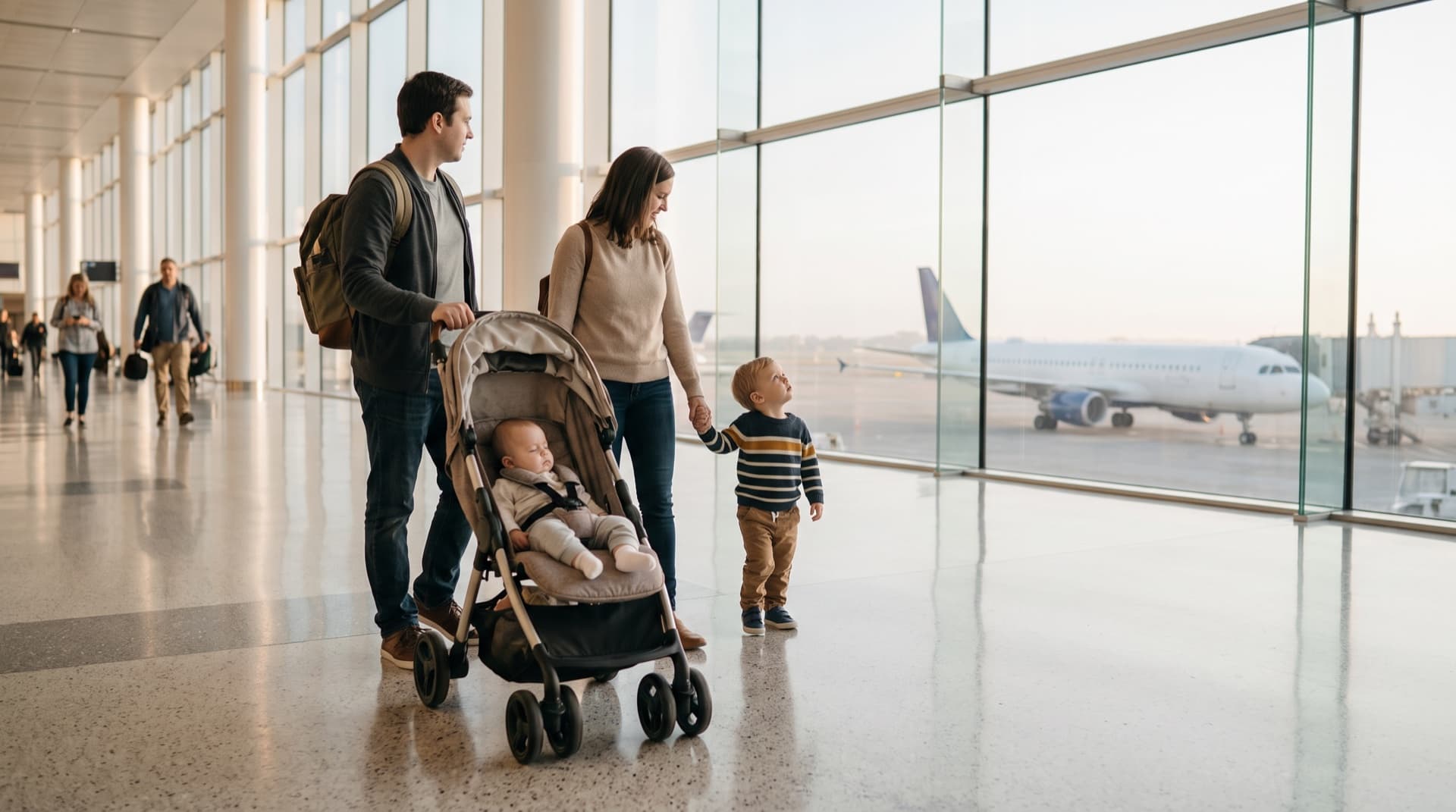
FCO provides nursing rooms, baby care stations, and family restrooms across its terminal complex (Terminals 1, 2, and 3, with T3 handling most international flights). Family security lanes are available at select checkpoints, and the airport's dining options — spanning Italian cuisine and international brands — include family-friendly choices with space for groups and high chairs available at many restaurants. The main terminal's spacious layout and good signage make stroller navigation manageable throughout.

Use this guide to navigate Fiumicino Airport with your family — the first step in any Roman adventure.

Nursing Rooms and Baby Care Facilities at Rome Fiumicino Airport


Nursing rooms and breastfeeding facilities


Rome Fiumicino Airport (FCO) offers family-friendly spaces for feeding and changing, and you will usually find dedicated baby-care rooms rather than a single central “mother’s room.” In large terminals like FCO’s, these rooms are typically placed both before security (landside) and after security (airside), so you can care for your baby whether you are arriving, departing, or in transit.

For breastfeeding, parents generally have two workable options:

  • Private or semi-private baby-care rooms where you can sit and feed in a calmer space away from the main walkway
  • Quieter seating areas around the terminal if you prefer to stay near your gate; privacy varies, so many parents choose a dedicated room when they want more calm

Privacy can differ from room to room (some are fully enclosed; others are small, designated spaces). If privacy is important to you, look for a door signposted for baby care, nursing, or families, or ask staff to point you to the nearest suitable room.


Baby changing stations


Baby changing stations are commonly available in accessible restrooms and family/companion bathrooms throughout the airport. At FCO, like most major European airports, you should expect changing tables in:

  • Most women’s and men’s toilet areas in the main passenger zones
  • Accessible toilets (useful when you need extra space for a stroller or a sibling)
  • Family-focused restrooms where available

Changing stations are generally designed to be easy to use, but space around them varies. If you are traveling with a larger stroller, an accessible restroom is often the most comfortable option.


Baby care centers (what they usually include)


In airports of FCO’s size, the baby-care rooms you find are typically set up to help with the most common needs in one stop. While the exact layout can vary by terminal area, these rooms usually include:

  • A baby changing table with a wipe-clean surface
  • A sink for washing hands and cleaning up
  • A seat or small bench/chair suitable for feeding
  • Bins for diapers (availability and type can vary)

These spaces are meant for quick care and short breaks rather than extended stays, and they can be busiest around peak departure waves.


Bottle warming and formula preparation


At FCO, as in many international airports, dedicated bottle warmers are not guaranteed in every baby room. Many parents warm bottles by using safe, practical options available in the terminal:

  • Asking a café/restaurant to provide a cup of hot water to warm a sealed bottle (staff can often help, although they may not handle the bottle directly)
  • Using a thermos of warm water you already have for mixing formula or warming (common for families on the move)
  • Preparing formula with bottled water when appropriate for your routine, then cooling/warming as needed

If you need to prepare formula, baby-care rooms with a sink make it easier to rinse items and wash hands. For hygiene and safety, it’s best to mix and warm feeds in a clean area, away from diaper-changing surfaces.


High chairs in restaurants


High chairs are commonly available in many sit-down restaurants and some larger cafés inside the terminal areas at FCO, especially in family-heavy zones. Availability can depend on the time of day and how busy a venue is, so you may need to ask staff or wait briefly for one to free up. In smaller grab-and-go spots, high chairs are less common, but staff will usually help you find a nearby seating area that’s easier with a toddler.


Notable features to expect at FCO


FCO is a large, modern airport, and the most helpful practical “feature” for families is that baby facilities are spread across the terminal rather than located in a single area. This usually means:

  • You can often find a changing table without walking far, especially near main restroom blocks
  • There is usually an option both landside and airside, which is reassuring if you need to feed or change right after check-in or once you reach your gate area

Because terminal layouts and gate areas can change with operations, the exact nearest baby room may vary on the day. Airport staff and information points can direct you to the closest baby-care space based on where you are in the terminal.

Security and Check-In Tips for Families at Rome Fiumicino Airport


Traveling with a Stroller


You can bring a stroller through TSA security, but it must be screened before you go to the gates. In most cases, you’ll take your child out and send the stroller through the X-ray; if it’s too large to fit, TSA will inspect it by hand and may swab it for additional screening. Be ready to remove bags, blankets, toys, and any loose items from the stroller so it can go through screening cleanly and quickly. If your stroller folds, it helps to fold it before you reach the belt, and place any small parts in a bin so nothing gets left behind. After screening, you can put your child back in the stroller and continue to your gate.


Baby Formula & Breast Milk Rules


Baby formula, breast milk, toddler drinks, and baby food are allowed through TSA security in reasonable quantities, even if they are more than 3.4 oz/100 mL. Tell the TSA officer before screening that you’re carrying these items, and keep them separate from the rest of your liquids so they can be inspected more easily. Expect that these items may need additional screening (for example, visual inspection or testing of the container) and you may be asked to open the container, but you can request that it not be opened. Ice packs, freezer packs, and gel packs are allowed when needed to keep formula or breast milk cool, even if partially melted, as part of the screening. To make screening smoother, have bottles, storage bags, and any cooling packs easy to reach and ready to place in a bin if requested.


Dedicated Family Lanes


Some airports offer Dedicated Family Lanes at TSA security, which are screening lines designed to give families with young children a bit more space and time to get organized. These lanes are not available at every airport or every checkpoint, and they may only operate during certain hours, so you may be directed to a standard lane if the family lane is closed. In practice, you can expect the same security screening rules, but with staff who are used to strollers, car seats, diaper bags, and children moving at a slower pace. Look for signs that say Family Lane or ask the nearest TSA officer where families with strollers are being sent. Having your child’s items grouped together and ready to place on the belt (like jackets, shoes, and any separate baby gear) can help the line move smoothly.


Children’s Footwear at Security


At TSA security, children 12 and under can usually keep their shoes on, while most travelers ages 13–75 must remove shoes for screening unless they are in TSA PreCheck. In practice, this means your young child will typically walk through the metal detector wearing their shoes, but an officer may still ask for shoe removal or additional screening if the alarm sounds. Boots, shoes with metal parts, and some light-up footwear can sometimes trigger the detector, so be prepared for a quick check. If asked to remove your child’s shoes, they will be placed in a bin to go through the X-ray, and your child may be asked to walk through again in socks or bare feet.

Kids' Play Areas at Rome Fiumicino Airport


What to expect at FCO: are there kids’ play areas?


Rome Fiumicino (FCO) is a large, modern hub and does offer family-friendly facilities, but it is not as widely known for big, signature playgrounds as some “showcase” family airports. Parents should plan for smaller kids’ play corners and child-friendly waiting spaces rather than a large indoor playpark. Where available, these areas are most often found airside (after security), because that is where families spend the longest time waiting to board.


General locations (without chasing exact gate numbers)


At major airports like FCO, children’s play zones or play corners are typically placed in:

  • Airside departure areas near clusters of gates, where there is room to pause without blocking foot traffic
  • Family service areas close to baby-changing facilities, restrooms, or family-friendly seating
  • Quieter side corridors off the main shopping and dining lanes, so children can move a little without being in the busiest flow

Because terminal layouts and gate assignments can change, it’s best to treat play areas as “look-for” spaces near seating nodes rather than a single fixed point that every flight will pass.


Typical play equipment you may see


When FCO (or similar large European hubs) provides play areas, the focus is usually on compact, safe-to-clean installations designed for short bursts of energy:

  • Soft-play features such as padded benches, low foam shapes, or small crawl-through pieces
  • Climb-and-balance elements that are low to the ground (mini steps, gentle ramps, small “mountain” mounds)
  • Interactive panels or simple touch/press activity boards (less common than in dedicated children’s museums, but sometimes present)
  • Ride-on or rocker toys designed for toddlers, placed on a soft or rubberized surface
  • Open floor space where kids can stretch, do a few hops, or play quietly with a small toy

Don’t expect large tube slides or tall multi-level structures. In busy international terminals, play zones are usually small, visible, and designed for quick supervision.


Best ages for airport play zones


Most airport play areas, including the type commonly found at FCO, are best for:

  • Toddlers (about 1–3 years) who need a safe place to toddle and climb a little
  • Preschoolers (about 3–6 years) who benefit from short active breaks between sitting

Older kids often find these spaces “too little,” but they can still be useful for a quick movement break. For children under 1, parents typically use the area more as a soft, contained spot for a cuddle and reset rather than active play.


Quiet or calm spaces for younger or overstimulated children


Even when a dedicated “quiet room” is not clearly signed as a children’s feature, families at FCO can usually find calmer options. Helpful places to look include:

  • Prayer/meditation rooms (where available), which are intended to be quiet and can be a good reset space if your child can stay calm
  • Less busy seating areas away from the main retail spine, especially at the far ends of gate piers
  • Family restrooms and baby-care facilities (when present), which can offer a short break for feeding, changing, and calming down

For overstimulated kids, a calm corner with a snack, water, and a familiar activity (book, small toy, headphones) often works better than forcing more play when the terminal is loud.


Airside vs. landside: where you’ll actually be able to use them


Most useful play spaces are airside, after security, because that’s where you wait to board. Landside (before security), space is often focused on check-in, baggage processes, and transport connections, so children’s play options are typically more limited. If you see a play corner landside, it’s usually intended for short use while one adult handles check-in or baggage while the other supervises.


Notable kids’ attractions (what FCO is and isn’t known for)


FCO is better known for being a well-equipped international airport with dining and shopping than for a single headline children’s attraction (for example, a signature slide or a big themed playground). Families should expect practical, smaller-scale children’s facilities rather than a destination play experience.


Practical tips for parents using play areas at FCO

 
  • Use play time as a “movement break”: aim for 10–20 minutes of active play before you switch back to calm activities near the gate.
  • Time it around boarding: many kids get upset when play ends suddenly. Try to stop a little before boarding starts so you can do shoes, bathroom, and a drink without rushing.
  • Keep essentials in a small pouch: wipes, a spare diaper/pull-up, hand sanitizer, and a small snack help you stay relaxed if the play corner is not right next to facilities.
  • Plan for visibility: choose a seat where you can see the whole area easily. Airport play zones are usually open (no doors), so children can wander fast.
  • Have a backup plan: if the play area is crowded or closed for cleaning, a simple “terminal walk,” window-watching for planes, or a quiet picnic-style snack at a side seating area can work just as well.
  • Watch for cleaning cycles: small play installations may be temporarily closed for maintenance or sanitizing; having a lightweight distraction ready prevents frustration.

Make Every Family Flight Stress-Free

From car seat policies to packing tips — Velivolo gives traveling families everything they need in one app. Built by parents, backed by certified safety experts.

Family Dining and Kids' Menus at Rome Fiumicino Airport

1

Sapori d'Italia

Sapori d’Italia at Rome Fiumicino (FCO) is an Italian casual-dining spot aimed at giving travelers a quick taste of familiar national classics—simple pastas, panini, and café staples—rather than a long, formal meal. It’s an easy fit for families because the setup is typically relaxed and come-as-you-are, and while a dedicated kids’ menu isn’t always clearly advertised at airport outposts, the menu is naturally child-friendly with straightforward options and fast ordering. Parents often go for crowd-pleasers like pasta al pomodoro or other basic pasta plates, while kids tend to be happiest with pizza-style slices or panini that are easy to share and eat on the go. The experience is designed for airport timing: service is brisk, portions are generally sensible (often shareable for little ones), and turnover is quick without feeling rushed if you’re just waiting at the gate area nearby. Expect typical airport pricing—about €15–€25 per adult depending on whether you add drinks or dessert—which can feel pricey but is fairly standard for FCO and can be good value when you split a couple of larger items among children. Atmosphere-wise it’s lively and a bit noisy at peak hours, which actually helps with toddlers (no one expects whisper-level dining), though seating comfort can vary with terminal crowding. “Sapori d’Italia” is a common Italian dining concept name used to signal broad, regional “flavors of Italy,” so the appeal here is familiarity and convenience rather than a single famous chef or long local history.

2

Ristorante Il Sorpasso

Ristorante Il Sorpasso at Rome Fiumicino (FCO) is an Italian sit-down restaurant concept focused on familiar Roman and broader Italian comfort food, designed for travelers who want a proper meal rather than a quick snack. For families, it’s a practical choice because the dining room vibe is typically relaxed and lively enough that children don’t feel out of place, and you can usually request a kids’ menu and basic family essentials like high chairs depending on the unit’s setup. Parents tend to gravitate to classics like pasta dishes and simple mains, while many kids are happiest with straightforward pasta and pizza-style options when available. Service is table-based and can move at a steady “airport pace,” with shareable portions that make it easy to order a couple of plates for the table. Expect a mid-range airport spend, roughly €20–€35 per adult (more with drinks), which is not cheap but can feel like decent value if you’re feeding the family a real hot meal. The brand trades on an Italian trattoria feel rather than being a global fast-food chain, aiming to deliver a taste of Italy that’s approachable for international families in transit.

3

Obikà Mozzarella Bar

Obikà Mozzarella Bar at Rome Fiumicino (FCO) is part of the Italian Obikà brand known for a modern, fast-casual take on Southern Italian ingredients—especially fresh mozzarella—served in a bright “mozzarella bar” setting. For families, it’s an easy win when you want something better than typical airport food: the open, casual layout handles strollers well, the menu is straightforward to share, and while a dedicated kids’ menu isn’t always a given at Obikà, there are plenty of child-friendly options and staff are used to quick requests. Parents often go for the mozzarella tasting or burrata with prosciutto, while kids tend to be happiest with simple pizza, pasta, or plain mozzarella with bread. Service is counter-to-table or quick table service depending on the unit, with a generally fast pace geared to flight schedules and portions that work well for sharing. Expect a price range of about €15–€30 per person (more if you add wine or multiple plates), which can feel like good value for a family when you split a few high-quality dishes. Obikà started in Italy and built its reputation by spotlighting authentic mozzarella and regional Italian specialties, making it a familiar, reliable choice for a last taste of Italy before you fly.

4

TGI Fridays

TGI Fridays at Rome Fiumicino (FCO) brings the familiar American casual-dining vibe to the terminal, known for a big, crowd-pleasing menu of burgers, ribs, chicken, and Tex-Mex-leaning comfort food in a lively sports-bar-style setting. For families, it’s an easy choice because the space is typically upbeat and forgiving of kid noise, and you can usually count on a kids’ menu and staff used to serving groups with children (high chairs are commonly available at the brand, though exact availability can vary by day and seating). Parents often gravitate to hearty staples like burgers and chicken dishes, while kids tend to be happiest with simpler picks like chicken strips or pasta-style options when offered. Service is sit-down and paced for a proper meal rather than a quick grab-and-go, with generous portions that can work well for sharing when little appetites fade mid-flight. Expect a mid-range airport price—roughly €20–€35 per adult depending on what you order, with kids’ meals typically cheaper—so it’s not bargain dining, but it can feel like decent value if you want a reliable, filling meal before boarding. The brand itself is an international chain that started in the U.S. and built its reputation on a fun, “Friday night” atmosphere and approachable comfort food, which is exactly the kind of predictability many traveling families appreciate.

Family Airport Guide FAQ

Where are the baby changing rooms at Rome Fiumicino Airport?

Rome Fiumicino (FCO) has baby-care facilities airside in several terminals, including dedicated “Nursery”/baby-changing rooms and family rest areas where you can breastfeed in more privacy. These are located after security in the departures areas, but availability varies by terminal and pier. Ask at an information desk or check the airport maps/signage for the nearest “Nursery” or baby-care room.

Can I bring breast milk through FCO security?

Yes—baby formula, breast milk, and baby food are allowed through security at FCO in quantities needed for the journey, even if they exceed the usual liquids limit. You should present them separately at screening and be prepared for additional checks. Declaring them proactively to the security staff generally helps the process move smoothly.

Is there a play area for children at FCO?

FCO has dedicated children’s areas in parts of the departures zones, but they are not available in every terminal area or at every gate. Facilities and locations can change, and some “kids areas” may be seasonal or temporarily unavailable. Check the airport’s terminal maps or ask staff after security for the nearest children’s play space.

Can I gate-check a stroller at Rome Fiumicino Airport?

You can usually take a stroller through security at FCO, but it must be screened (often by X-ray or by separate inspection if it doesn’t fit). Whether you can bring it all the way to the gate depends on your airline and the aircraft/route, but gate-checking is commonly allowed. Confirm with your airline at check-in or the gate, as policies and tags are handled by the carrier.

Does FCO have family-friendly restaurants?

FCO sometimes operates dedicated lanes (including priority/assisted lanes), but there isn’t a consistently branded “family-only” security lane across all checkpoints. Some airlines provide family-friendly or priority check-in options, yet this depends on the airline, ticket type, and time of day. If available, signage at the terminal and guidance from staff at the entrance to security/check-in will indicate the fastest lane you can use with children.

Planning more trips with kids?

Explore our complete list of family airport guides

View all airport guides →

Join the Travel Revolution

Whether you're a first-time flyer or seasoned jet-setter, Velivolo makes family travel simpler, safer, and more joyful.