/family-airport-guide

Flying with Kids at Salt Lake City International Airport (SLC): Nursing Rooms, Play Area & Family Essentials

Family travel guide to SLC — nursing rooms, diaper changing stations, a children's play area, stroller-friendly routes, and dining with children's menus at SLC Airport.

Reviewed by:

D. Goren

Head of Content

Updated March, 30

👉 Download Velivolo Before Your Next Flight

Because airline child policies change — and parents shouldn’t have to hunt for answers.

What Families Need to Know About Salt Lake City International Airport

Salt Lake City International Airport (SLC) has completed a major redevelopment, replacing its older facilities with a modern, state-of-the-art terminal complex. The new SLC is widely praised for its clean design, efficient layout, and improved amenities — all of which benefit family travelers who need comfort and clarity when navigating with children.

The New SLC: Built with Families in Mind

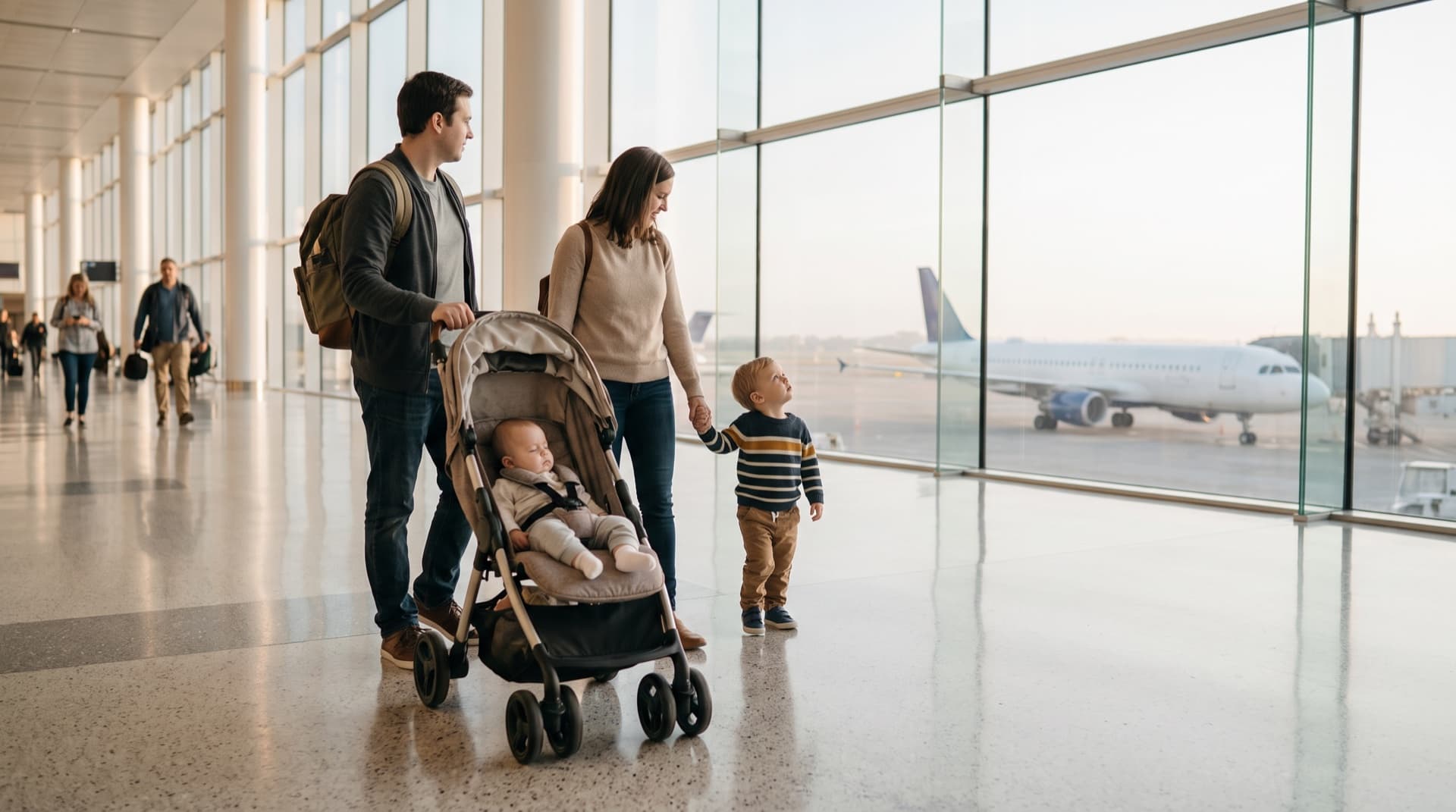
The redesigned terminal features nursing suites, baby changing stations, and family restrooms spread across the new concourses. The open, airy design makes stroller navigation much easier than before, and the airport's family security lanes help streamline the checkpoint process. Dining options in the new terminal include a wide variety of choices, many with children's menus — and the mountain views through the terminal windows give kids something to enjoy while waiting.

Read on for a full guide to family amenities in SLC's new terminal — a major improvement over what was there before.

Nursing Rooms and Baby Care Facilities at Salt Lake City International Airport


Nursing rooms and breastfeeding facilities


Salt Lake City International Airport (SLC) is designed with families in mind, and you can generally expect dedicated nursing/lactation spaces in the terminal. These rooms are intended to give breastfeeding and pumping parents a private, quieter alternative to seating areas and restrooms.

  • Airside vs. landside: At many U.S. airports (including large hubs like SLC), lactation rooms are typically located post-security (airside) so you can use them without leaving your gate area. Some airports also provide options pre-security (landside) for families arriving early or meeting someone.
  • Privacy: Nursing rooms are usually enclosed and separated from public areas. Expect a door/partition and a more calm environment than a busy concourse.
  • What you’ll usually find inside: Comfortable seating, a small counter or shelf for pump parts, and electrical outlets are common. Cleanliness is generally good, but bringing sanitizing wipes can help for quick touch-ups on surfaces.


Diaper changing stations


At SLC, as at most modern airports, diaper changing stations are commonly available in restrooms throughout the terminal. They’re intended for quick, practical changes when you’re between check-in, security, and the gate.

  • Where they’re typically found: In most terminals, you’ll see fold-down changing tables in many women’s and men’s restrooms. It’s also increasingly common for airports to include them in family/companion restrooms when available.
  • Accessibility: Family/companion restrooms are especially helpful if one parent is traveling alone with multiple children or if you need more space for a stroller. These rooms usually offer more privacy and room to manage bags, coats, and a curious toddler safely.
  • Plan for busy times: Around peak departure waves, nearby restrooms can be crowded. If the closest restroom is full, walking a short distance to the next set can save time and stress.


Baby care centers (what they usually include)


Some airports offer a dedicated baby care center or family room-style facility. When available, these spaces are designed to combine a few essentials in one spot so you’re not juggling everything in a restroom stall.

  • Typical features: A sturdy changing table, an easy-to-clean counter, a sink for handwashing, and a more private area or chair for feeding.
  • Why families like them: They’re generally more comfortable and private than standard restrooms, and they’re better suited to organizing diapers, wipes, spare clothes, and bottles without rushing.

If you don’t immediately see a dedicated baby care room, using a family/companion restroom can provide a similar “one door/extra space” setup for feeding and changing.


Bottle warming and formula preparation


Airports typically do not provide staffed bottle-warming counters, but you can still manage feedings comfortably at SLC with a few practical options that match standard airport services.

  • Warm water requests: Many cafés and quick-service restaurants can provide a cup of warm (not boiling) water that you can use to gently warm a bottle by placing it in the cup. Availability can vary by vendor and how busy they are.
  • Hot water safety: If you’re offered hot water, let it cool slightly before using it near a baby. Avoid microwaving bottles in public spaces unless a vendor specifically offers a safe option, as heating can be uneven.
  • Mixing formula: For the cleanest prep, use a clean, flat surface (a family room counter if available) and wash hands first. When a sink isn’t convenient, sanitizing wipes and hand sanitizer help bridge the gap.


High chairs in restaurants


Within the terminal, sit-down restaurants and many family-friendly dining spots often carry high chairs, though the exact availability depends on the specific venue and how busy it is.

  • What to expect: High chairs are generally shared on a first-come basis and may be limited during peak meal times.
  • Quick check: If you see a host stand or counter staff, asking early helps you avoid settling in and then needing to move again.


Notable features to know at SLC


SLC is a modern, recently redeveloped major airport, and that typically means family essentials like updated restrooms, more spacious concourses, and improved passenger amenities compared with older terminal layouts. Families often notice that newer airport designs make it easier to navigate with strollers and carry-ons, and restrooms tend to be more consistently equipped with changing stations than in older facilities.

Because exact locations and the mix of nursing rooms/family rooms can change over time, the most reliable approach onsite is to look for “Family Restroom” and “Lactation/Nursing Room” signage in the concourses and near major restroom clusters.

TSA Security Tips for Families at Salt Lake City International Airport


Folding Your Stroller at the Checkpoint


At the TSA checkpoint, you should expect to take your child out of the stroller and place the stroller on the X-ray belt so it can be screened. If your stroller doesn’t fit through the X-ray machine, TSA may inspect it by hand and may use additional screening (such as a swab test) while you hold your child. Before you reach the front of the line, empty the stroller basket and remove any attached items (like cup holders, toys, or organizer bags) so they can go in a bin. Be ready to fold the stroller quickly, since TSA needs it flat and clear of loose items to pass through screening. If you have a child in a carrier, you may be asked to remove the carrier for screening depending on the screening process in use, so plan to have hands free for a moment.


Infant Formula & Milk Exceptions


TSA allows baby formula, breast milk, toddler drinks, and baby food in carry-on bags in quantities greater than 3.4 oz/100 mL when you are traveling with your child. These items do not have to fit in a quart-sized bag, but you should separate them from the rest of your carry-on for screening. At the checkpoint, officers may inspect the liquids (for example, by X-ray or other screening methods) and may ask you to open containers or pour a small amount into a separate container. You can bring these items chilled or with gel/ice packs, and TSA also allows other child-related liquid and gel items needed for the trip. Expect a brief extra step at security, and allow a little more time if you have multiple bottles or pouches.


Using Family Security Lanes


Some airports provide family security lanes designed to give parents with young children a little more space and time while screening strollers, diaper bags, and child items. These lanes are not available at every airport or at every checkpoint, and when they do exist, they may be marked with signs or directed by staff. If you use a family lane, expect the same TSA screening steps as any other lane, including sending bags through the X-ray and following instructions for screening items like baby formula, breast milk, or toddler drinks. Be ready to fold or collapse your stroller if asked, and remove your child before the stroller goes through screening. If a family lane is not open, TSA may guide families to the regular line, and your family will still be screened following the same rules.


Do Kids Have to Remove Shoes?


Children age 12 and under usually do not have to remove their shoes at TSA security screening. Your child can typically keep shoes on while walking through the metal detector, unless a TSA officer asks for additional screening. Adults and older kids generally must remove their shoes in standard lanes, but this may be different if you are in a lane that allows shoes to stay on. If your child’s shoes set off an alarm or cannot be cleared, you may be asked to take them off so they can be screened. In practice, it helps to choose shoes that are easy to slip on and off, just in case you’re asked to remove them.

Kids' Play Areas at Salt Lake City International Airport

Salt Lake City International Airport (SLC) is a large, modern airport and generally family-friendly, but it is not as widely known for big, highly themed “destination” playgrounds as a few famous hubs. Families can still often find kid-focused spaces and small activity areas in the terminal environment, and the airport’s newer layout tends to include more open seating zones that can help kids move a bit when they need a break.


Are there dedicated kids’ play areas, and where are they usually located?


At many major U.S. airports, children’s play spaces (when available) are usually placed airside (after security), because that’s where families spend the most time during layovers and gate waits. At SLC, families should expect any kid-friendly activity spaces to be within the concourses near clusters of gates rather than in check-in areas. If you don’t immediately see a marked play spot, it’s still worth checking nearby gate seating zones, wider corridor areas, or family restrooms, as airports sometimes provide small “play corners” rather than a single large playground.

  • Most likely location style: airside, in concourses near gate seating areas
  • Less common location style: landside near ticketing (typically limited space and fewer amenities once you’ve cleared security)


What kinds of play features you can typically expect


When airports provide play areas, the equipment is usually designed for quick energy burns and easy supervision rather than long, complex play. Features commonly seen in airport play zones include:

  • Soft-play elements (padded steps, low platforms, foam shapes) for safer climbing and hopping
  • Small climbing structures or low tunnels designed to avoid heights and reduce fall risk
  • Interactive panels (spinners, sliders, texture boards) that keep hands busy without needing lots of space
  • Simple themed decor (aviation, mountains, local imagery) that makes the area feel kid-focused even if the equipment is minimal
  • Open floor space for stretching, toddler waddling, or a calm “movement break” when kids can’t sit anymore

Interactive screens are sometimes used in airports, but they vary by location and are often intended for short engagement. If you do see screens, they’re typically placed where adults can still supervise easily and where kids won’t block main walking paths.


Best age ranges


Airport play areas are most often designed for toddlers through early elementary. In practical terms:

  • Babies: benefit most from a nearby clean-ish open space and seating for parents rather than equipment
  • Toddlers (about 1–3): usually the best match for soft-play and low climbing features
  • Preschool/early elementary (about 3–7): enjoy interactive panels, small climbing elements, and short bursts of active play
  • Older kids: may find airport play areas “too little,” but can still use them for a quick reset before boarding

Even when a space isn’t formally labeled by age, you can usually tell from the height of structures and whether surfaces are padded and low to the ground.


Quiet or calmer options for overstimulated kids


Airports can be loud and bright, so it helps to know what calmer alternatives often work well at SLC-style terminals. While a dedicated “quiet room” isn’t guaranteed in every concourse, parents can typically find lower-traffic seating pockets away from busy gate podiums and food lines. Good calm-down options commonly include:

  • Family restrooms (more space for an adult and child, and often a calmer reset moment)
  • Quieter gate areas at the end of a concourse or away from major restaurants
  • Less crowded seating zones where kids can read, snack, or do quiet activities without constant foot traffic

If your child is getting overwhelmed, a “calm corner” strategy often works better than pushing through a busy play zone: find a seat slightly away from the main flow, offer water/snack, reduce noise if possible, and give a few minutes of predictable downtime.


Airside vs. landside: what to plan for


For most families, the most useful play opportunities are airside (past security), because you can relax without worrying about the timing of the checkpoint. Landside areas (before security) are usually focused on check-in, baggage, and ground transportation and are less likely to have kid-specific play features. If you arrive early, it’s generally easiest to clear security (when appropriate for your flight timing) and then look for play/calm spaces near your departure gates.


Notable kid-specific attractions at SLC


SLC is best known for being a modern, spacious airport rather than for a single famous children’s attraction like large slides or extensive themed playgrounds. That said, families often appreciate airports like SLC for practical comforts: wider walkways where kids can move safely while holding hands, plenty of seating, and a layout that can make it easier to find a spot to pause without feeling in everyone’s way.


Parent tips for using play areas before flights or during layovers

 
  • Use play time as a “boarding prep tool”: a short burst of movement before boarding can help kids sit more comfortably on the plane.
  • Keep it short and predictable: set a simple expectation like “we’ll play until we finish this snack” or “until it’s time to refill water,” so leaving doesn’t become a surprise.
  • Supervise for safety and space: airport play areas can be busy, and kids may dart; stay close and keep shoes on if the space is not clearly a shoes-off soft-play zone.
  • Have a backup plan nearby: if the play area is crowded or overwhelming, switch to a calmer alternative—finding a quieter seating pocket, doing a short “walk and look for planes” loop, or reading a book together.
  • Time it with real needs: bathroom first, then play; snacks and water after play—this sequence often reduces mid-boarding emergencies.

Make Every Family Flight Stress-Free

From car seat policies to packing tips — Velivolo gives traveling families everything they need in one app. Built by parents, backed by certified safety experts.

Family Dining and Kids' Menus at Salt Lake City International Airport

1

The Pie Pizzeria

The Pie Pizzeria at Salt Lake City International Airport is an outpost of a beloved Utah pizza institution, best known for hearty, topping-packed pies and a casual, no-fuss vibe that feels distinctly local. It works well for families because it’s naturally kid-friendly—pizza is familiar, the room can handle a little chatter, and most airport setups make it easy to share slices; ask the counter about kids’ menu options and any available high chairs. The can’t-miss order is the “Holy Shiitake” (a mushroom-lover’s favorite), while classic pepperoni and cheese are reliable crowd-pleasers for picky eaters. Service is typically quick and counter-oriented, which helps when you’re watching the clock, and portions are generous enough that one pie can feed a small crew. Expect a mid-range airport spend of about $12–$20 per person depending on how you order, with good value if you’re sharing a larger pie. The brand has long been part of Salt Lake City’s comfort-food scene—especially around its near-university roots—and the airport location lets families grab a taste of Utah without leaving the terminal.

2

Communal Restaurant

Communal Restaurant offers a warm, modern dining experience built around seasonal, locally inspired dishes and a strong emphasis on sharing and togetherness. The atmosphere is bright and inviting, with a relaxed, communal feel that makes it especially comfortable for families—large tables and a welcoming staff help create an easygoing environment where kids are just as at home as adults. For ordering, many families gravitate toward shareable plates, fresh salads, roasted vegetables, and hearty mains like chicken or pasta, often served in a way that encourages passing dishes around the table. While there may not always be a dedicated kids’ menu, there are usually simple, kid-friendly options or flexible dishes that can be adapted for younger diners. Service is full-service and attentive, with a smooth, unhurried pace that suits a relaxed group meal. Portions are moderate to generous depending on the dish, and the menu is designed for mixing and matching a variety of flavors. Budget-wise, expect around $20–$35 per adult, reflecting the quality ingredients and thoughtful preparation. Overall, Communal Restaurant delivers a cozy, family-friendly setting with a focus on shared experiences and fresh, satisfying food.

3

Cafe Zupas

Café Zupas at Salt Lake City International Airport is a fast-casual spot known for made-to-order soups, salads, and sandwiches in a fresh, health-leaning American café style, part of a Utah-founded regional chain that’s especially popular along the Wasatch Front. For parents, it’s an easy win because the counter-service setup keeps things moving, the bright, casual dining room can handle kid energy, and there’s a kids’ menu geared toward simpler portions. Families often gravitate to the “You Pick Two” combo (mix-and-match soup, salad, or sandwich), which makes it easy to satisfy different tastes without over-ordering. The menu tends to work well for picky eaters and grown-ups alike, with familiar options like grilled cheese, turkey sandwiches, and creamy soups alongside more veggie-forward salads. Expect a quick pace—order at the counter, grab a number, and food comes out promptly—plus generally generous portions that can be shareable for younger kids. Pricing is typically about $12–$18 per adult (less for kids), which is on par for airport dining but usually feels like good value given the portion sizes and the ability to build a balanced meal. As a homegrown Utah brand that expanded across the West, Café Zupas has built its reputation on consistent, customizable comfort food that still feels a bit lighter than typical fast-food fare.

4

Chili's

Chili’s Grill & Bar at Salt Lake City International Airport (SLC) is the familiar, crowd-pleasing national chain known for casual Tex-Mex/American comfort food—think big flavors, generous portions, and a lively bar-and-grill vibe that feels like a reset between flights. For families, it’s an easy fit: the atmosphere is upbeat and forgiving of kid noise, and the kids’ menu plus typically available high chairs make it practical for traveling with little ones. Parents often stick to favorites like fajitas, burgers, and hearty salads, while many kids are happiest with simple classics such as chicken tenders and macaroni & cheese (availability can vary by airport menu). Service is table-seated and usually paced for travelers—quick enough to get you back to the gate, but still more relaxed than fast food—while portions are filling and shareable if you’re trying to keep things simple. Expect about $15–$30 per adult depending on what you order (airport pricing can run higher), with kids’ meals generally landing below adult entrées, making it decent value for a sit-down option. Chili’s has been a staple of American chain dining since the 1970s, and what you get at SLC is that same dependable, no-surprises experience families recognize from locations across the U.S. and beyond.

Family Airport Guide FAQ

Where is the nursing suite at Salt Lake City International Airport?

SLC has designated nursing rooms/lactation spaces in the terminal for breastfeeding or pumping. Locations can change with construction or concourse changes, so the most reliable way to find the nearest one is to check the airport map/screens in the terminal. You can also ask any information desk or airport staff for the closest lactation room.

Do I need to declare formula at SLC security?

Yes—TSA allows formula, breast milk, and toddler drinks in reasonable quantities through security at SLC, even if they exceed the usual 3.4 oz (100 ml) liquid limit. You should remove these items from your bag for screening and tell the TSA officer you’re carrying them. They may be screened separately, including X-ray or additional inspection.

What is there to do for kids at Salt Lake City International Airport?

SLC offers a children’s play area in the terminal. Availability and exact location can vary, so check terminal signage or the airport directory once you arrive. If it’s temporarily closed, nearby gate areas still have open seating space where kids can move around before boarding.

Can I rent a stroller at Salt Lake City International Airport?

Yes, you can bring a stroller through TSA security at SLC. Strollers typically go through the X-ray machine if they fit, or they may be inspected by hand if they don’t. Most airlines allow you to gate-check a stroller at no charge, but the exact policy can depend on the carrier.

Does SLC have a family lounge?

SLC may offer dedicated screening lanes depending on TSA staffing and time of day, but a permanent, always-open “family lane” isn’t guaranteed. TSA generally accommodates families by allowing extra time and providing assistance during screening when needed. For check-in, some airlines offer family or special-assistance options, but these vary by airline rather than being airport-wide.

Planning more trips with kids?

Explore our complete list of family airport guides

View all airport guides →

Join the Travel Revolution

Whether you're a first-time flyer or seasoned jet-setter, Velivolo makes family travel simpler, safer, and more joyful.