/family-airport-guide

Flying with Kids at San Francisco International Airport (SFO): Nursing Rooms in Every Terminal & Family Essentials

Everything parents need at SFO — nursing rooms in every terminal post-security, kids' play areas, family restrooms, stroller access, and child-friendly dining at SFO.

Reviewed by:

D. Goren

Head of Content

Updated March, 30

👉 Download Velivolo Before Your Next Flight

Because airline child policies change — and parents shouldn’t have to hunt for answers.

Traveling with Children Through San Francisco International Airport: A Family Overview

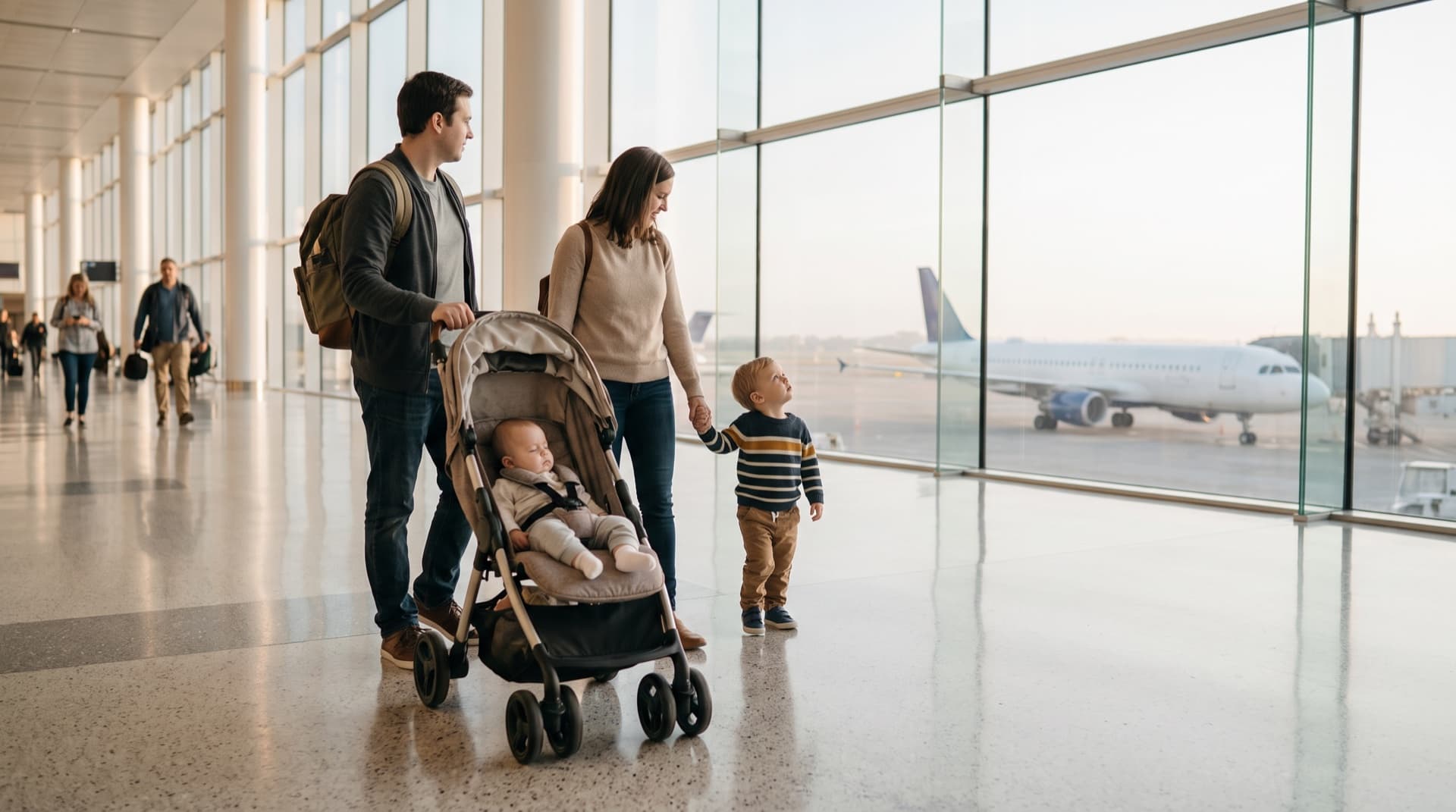
San Francisco International Airport (SFO) consistently ranks among the more family-friendly major airports in the United States. Located about 14 miles south of downtown San Francisco, SFO connects the Bay Area to destinations worldwide and sees steady family traffic year-round. The airport is organized into four terminals — with an international terminal anchoring the layout — and is served by AirTrain for inter-terminal connections.

Why Families Appreciate SFO

SFO stands out for its thoughtful passenger amenities, and families benefit from this directly. Nursing rooms are available in each terminal, baby changing stations are well-maintained and accessible, and family restrooms are spread throughout the building. The airport also offers a children's play area and a rotating collection of museum-quality art exhibitions — both of which help pass time during layovers. Dining options cover a wide range, and several restaurants offer children's menus.

Scroll down for a full breakdown of every family facility at SFO — mapped by terminal so you can plan your visit efficiently.

Nursing Rooms and Baby Care Facilities at San Francisco International Airport


Nursing rooms and breastfeeding facilities


San Francisco International Airport (SFO) provides dedicated nursing/lactation rooms designed for breastfeeding and pumping in a more private space than a public seating area. These rooms are typically available on the secure (airside) side of the airport in multiple terminals, so families can use them without having to exit security once you’re on your way to the gates. In some cases, a nursing space may also be available before security (landside), but most parents find the airside locations the most practical for connections and boarding time.

In general, SFO’s nursing rooms aim to offer privacy with a door and a calmer environment than the concourse. Inside, you can usually expect seating and a small surface for personal items. Cleanliness and comfort can vary by location and time of day, but SFO is known for maintaining family facilities to a strong standard.


Baby changing stations


Baby changing stations are widely available at SFO. You’ll typically find them in the majority of public restrooms throughout the terminals, including men’s, women’s, and many all-gender/family restrooms. They are most common:

  • Near gates and main restroom clusters in each terminal/boarding area
  • By food courts and central walkways where there are larger banks of restrooms
  • Close to baggage claim/restroom areas on the arrivals level for diaper changes right after landing

For accessibility, changing tables are generally installed at a height intended for adult use and are designed to fold down from the wall. If a restroom is busy or the counter space is limited, an all-gender/family restroom can be a more comfortable option when traveling with multiple children or with a stroller.


Baby care centers (what they include)


In addition to standard restroom changing tables, SFO offers baby care/lactation spaces that are closer to a small care room than a typical restroom setup. While exact features can vary by location, these spaces commonly include:

  • A private or semi-private nursing area (often with a door for privacy)
  • A changing table with a bit more room than a restroom fold-down station
  • A sink for handwashing and basic cleanup (availability can vary by room)
  • A chair/bench and small shelf or counter for bags and pump supplies

These rooms are best for a calmer diaper change, nursing session, or a quick reset with a toddler. If you’re using a breast pump, having a more private room can make routines much easier between flights.


Bottle warming and formula preparation


SFO does not generally provide public, dedicated bottle-warming machines across the airport, so it’s safest to plan on simple, practical options. For formula preparation and bottle care:

  • Sinks in baby care rooms (when available) or restrooms can help with rinsing bottles and washing hands.
  • Restaurants and cafes may be able to provide a cup of hot water on request for warming a bottle (policies vary by vendor, and they may not handle the bottle directly).
  • Water bottle refill stations are commonly found throughout modern terminals and can be useful for filling water bottles; for infant feeding, parents typically use their own preferred method for ensuring safe water for formula.

Because heating options are inconsistent, many parents find it easiest to bring an insulated bottle/bag or use ready-to-feed formula when possible, then use airport-provided hot water only as a backup.


High chairs in restaurants


Many sit-down restaurants and some fast-casual dining locations at SFO offer high chairs, especially in larger, family-friendly seating areas. Availability varies by time of day and how busy the terminal is, so high chairs can be limited during meal rushes. If a high chair isn’t available, staff can often suggest a table with more space for a stroller or help you find a spot that’s easier with a toddler.


Notable family-friendly features at SFO

 
  • Multiple terminals with family facilities after security, helping parents avoid leaving the secure area during layovers.
  • A strong mix of all-gender/family restrooms in many areas, which can be more comfortable for diaper changes and managing a stroller.
  • Modern terminal design in many areas, which often means better restroom coverage, clearer signage, and more frequent placement of changing stations compared with older layouts.

TSA Security Tips for Families at San Francisco International Airport


Traveling with a Stroller


You can bring a stroller through the airport, but at the TSA checkpoint you should expect to take your child out and place the stroller through screening. Most strollers go on the X-ray belt after you remove loose items such as diaper bags, toys, blankets, cup holders, and any personal items stored underneath. If your stroller is too large to fit on the belt, TSA will typically screen it by hand, which may include a visual inspection and a swab test for explosives residue. Parents and children walk through the checkpoint separately from the stroller, and TSA may ask you to collapse or fold it so it can be screened. Keeping pockets and baskets clear and knowing how to fold your stroller quickly can make this step smoother.


Baby Formula & Breast Milk Rules


When traveling with a baby or toddler, baby formula, breast milk, toddler drinks, and baby food are allowed in carry-on bags in amounts greater than 3.4 oz (100 mL). Tell the TSA officer you’re carrying these items before screening starts, and place them in a bin for inspection. These liquids usually receive extra screening, which may include X-ray, additional testing, or asking you to open containers, but you can request that certain items not be opened when possible. You may also bring ice packs, freezer packs, and gel packs to keep these items cool, even if they are partially melted, as long as they’re used to cool formula/breast milk. Expect a brief delay for this inspection, so keep these items together and easy to reach.


Dedicated Family Lanes


Some airports have dedicated family lanes at security, designed to give parents with strollers, car seats, and small children a little more space and time. These lanes are not available at every airport or every checkpoint, and they may be open only during certain hours, so you may still be directed to the regular line. If a family lane is offered, you can expect checkpoint staff to route families there, but the same TSA screening rules still apply for shoes, liquids, and items in your bags. Before you reach the screening area, have boarding passes and IDs ready, and gather your child travel gear (stroller, carrier, diaper bag) so it can be screened smoothly. If you don’t see clear signs, you can politely ask the officer at the line entrance whether a family lane is available.


Children’s Footwear at Security


At TSA security, children 12 and under can usually keep their shoes on, while adults and most older children (generally ages 13–74) are typically asked to remove shoes for screening. Even when shoes stay on, they still must go through the metal detector or body scanner with your child, and bulky footwear can sometimes cause an alarm. If an alarm happens, TSA may do a quick additional check, which can include a brief pat-down of the area or a hand-held detector screening. Expect TSA officers to give simple instructions at the checkpoint, and follow their guidance if they ask for shoes to be removed in a specific situation. To make the process smoother, choose easy-on, easy-off shoes and avoid footwear with lots of metal parts.

Kids' Play Areas at San Francisco International Airport

San Francisco International Airport (SFO) is well known for being family-friendly and it does have dedicated children’s play areas. These are not scattered randomly around the terminal; they are typically placed inside the secure (airside) concourses, so families can use them after security while waiting to board. In general, you’ll find children’s play zones near gate areas where there’s enough open space for kids to move safely without blocking walking paths.


Where to find play areas (general location)


At SFO, the children’s play zones are generally airside (past TSA/security screening). That’s helpful because once you’ve cleared security with strollers, snacks, and little ones, you can settle into a gate area and let children burn off energy without having to repack and move back through the checkpoint.

  • Most play areas are near gates within secure concourses, designed to be visible from nearby seating so parents can supervise comfortably.
  • Landside (before security) play spaces are less common at major airports, and at SFO families should plan as if the main play options are after security.


What the play zones are like


Airport play spaces are designed for short, high-value play breaks during a travel day. At SFO, you can expect a compact but engaging setup built for quick supervision and easy in-and-out use.

  • Soft-play elements such as padded structures or low, cushioned features meant for safer climbing and crawling.
  • Climb-on shapes and small structures that encourage gross-motor movement (climbing, stepping, balancing) without being overly tall.
  • Interactive features (often tactile panels or simple built-in activities). Some airports also use screens, but many family areas focus on hands-on play that doesn’t require volume.
  • Open play floor space so kids can stretch, move, and reset after a long time sitting.

Because these areas are inside an airport, the equipment is typically easy to wipe down, visually open for supervision, and designed to keep children within a defined space rather than running into the concourse.


Ages these play areas work best for


SFO’s play zones are generally most useful for toddlers and younger elementary-age children. They’re usually designed for kids who want to climb a little, explore, and move around, rather than full playground-scale structures.

  • Best fit: toddlers through early grade-school (roughly preschool to around age 7–8).
  • Babies/non-walkers: can still benefit if there’s padded space, but supervision is close and continuous because foot traffic and older kids can be nearby.
  • Older kids: may use the space briefly, but many outgrow the equipment quickly; they often do better with a walk along the concourse and a snack break.


Quiet or calm options for overstimulated kids


Not every child wants a busy play zone—especially after a long flight, during nap time, or when the terminal feels loud. While an airport play area itself can get energetic, SFO typically offers other family-friendly ways to calm down nearby.

  • Choose seating slightly away from the play zone (still within sight if you’re supervising a child playing) to reduce noise and foot-traffic stress.
  • Look for quieter gate areas a few minutes’ walk from the busiest clusters; many concourses have pockets that are noticeably calmer.
  • Use family restrooms for a quick reset (diaper change, hand/face wash, clothing swap). These are often less stressful than crowded standard restrooms when a child is overwhelmed.

If your child is sensitive to noise, a simple routine helps: a snack or water, a bathroom break, then a few minutes of movement or a short calm activity (book, coloring) before boarding.


Notable kid-friendly touches at SFO


SFO is often recognized for its family-friendly amenities overall, and its dedicated play areas are part of that. While SFO isn’t known for a single massive, iconic children’s attraction on the scale of the world’s largest hub airports, many parents appreciate that SFO’s family facilities are set up in a practical, travel-day-friendly way: play spaces placed where families actually need them—near gates, after security, and close to seating and restrooms.


Parent tips for using play areas during layovers

 
  • Plan play time after security so you’re not rushing a child away from the play zone to re-clear the checkpoint.
  • Use the play area early in your wait, then transition to snacks, bathroom, and boarding prep—kids are often calmer once they’ve had a chance to move.
  • Keep essentials accessible: wipes/hand sanitizer, a small snack, and a spare top for younger kids. Play breaks can quickly turn into snack-or-spill situations.
  • Set a simple boundary kids understand (for example, “You can play until we finish this snack,” or “five more minutes, then shoes on”). Airports are full of transitions, and clear expectations reduce meltdowns.
  • Do a quick hand clean before and after play, especially right before eating or boarding.
  • Watch the clock for boarding announcements, and aim to leave the play area a bit earlier than you think you need—little ones often need extra time for shoes, bathroom, or last-minute emotions.

Make Every Family Flight Stress-Free

From car seat policies to packing tips — Velivolo gives traveling families everything they need in one app. Built by parents, backed by certified safety experts.

Family Dining and Kids' Menus at San Francisco International Airport

1

Napa Farms Market

Napa Farms Market at SFO is a grab-and-go California market and café that leans into local flavors, stocking assorted snacks, beverages, and prepared foods alongside Bay Area–style gifts and pantry items. For families, it’s an easy stop because the vibe is casual and quick, with no pressure to keep kids perfectly quiet, though seating can be limited and it’s more “market counter” than full-service restaurant. You won’t find a traditional kids' menu, but there are usually plenty of kid-friendly picks like fruit, yogurt, baked goods, and simple sandwiches that work for picky eaters. Parents tend to appreciate the California-leaning prepared foods and café staples, and a signature dish for many travelers is a quick, satisfying sandwich or salad paired with a coffee or juice for the flight. Service is counter-based and fast, portions are generally “airport lunch” sized, and it’s designed for boarding-time convenience rather than a long, lingering meal. Expect about $12–$25 per person depending on whether you’re grabbing a full meal and drink or just snacks; it’s typical SFO pricing but can feel like decent value when it replaces multiple smaller purchases. The brand is associated with showcasing Northern California food products and travel-friendly provisions, fitting right in at SFO as a practical taste-of-the-region stop between gates.

2

Yankee Pier

Yankee Pier at SFO is an upscale-casual seafood spot best known for East Coast–style fish and shellfish (think lobster, crab, and oysters) presented in a polished brasserie setting that feels a step above typical airport food. Even with the more grown-up menu, it can work for families because the dining room is lively enough to mask kid noise, and servers are generally accustomed to helping with families—ask for high chairs when you arrive. For parents, a safe bet is a lobster roll or a simply prepared fish entrée, while kids often do well with simpler options like chowder, fries, or a straightforward grilled protein when available. Service is full-service sit-down, so expect a slower, more relaxing pace than grab-and-go, with portions sized like a standard restaurant meal rather than tiny “airport plates.” Prices are on the higher end for terminal dining—roughly $30–$60 per adult depending on seafood choices—so it’s best viewed as a treat rather than an everyday family value stop. If you need something explicitly kid-focused, it’s worth asking about a kids’ menu (availability can vary by airport operator), but the kitchen’s straightforward preparations make sharing easy. As a brand, Yankee Pier is associated with the Bay Area and has been known as a seafood-and-raw-bar concept with a classic, slightly old-school American vibe that translates well to a preflight “proper meal.”

3

Cat Cora's Kitchen

Cat Cora’s Kitchen at SFO is a chef-driven airport spot built around Cat Cora’s approachable Mediterranean-inspired cooking, with a polished-but-casual vibe that feels like a step up from typical terminal food. It can work well for families because the room is generally lively enough that kids don’t feel out of place, and you can typically expect high chairs and a kids’ menu geared toward simpler plates. Parents often gravitate to recognizable Cat Cora signatures like Greek-style dishes and a “mezze” approach (small plates such as spreads and salads), while kids tend to do best with straightforward options like grilled chicken, pasta, or breakfast-style items when those are available. Service is usually sit-down and paced for travelers—orders come out fairly quickly, portions are moderate, and it’s easy to share a few plates if you’re juggling picky eaters. The price point is airport-upscale, with most adults spending roughly $25–$45 per person before drinks and tip, which can feel pricey but offers more “real restaurant” value than many quick-service counters. Cat Cora is best known nationally as an Iron Chef and TV personality, and her airport kitchens have become a familiar, reliable brand for travelers looking for fresher flavors and a more comfortable place to land with kids between flights.

4

Lark Creek

Lark Creek at SFO is an airport outpost of the Bay Area–rooted Lark Creek Restaurant Group, known for California cuisine that leans on seasonal ingredients and a polished-casual, grown-up tavern feel. It works well for families because the dining room is comfortable and relatively lively (so small kid noise doesn’t feel out of place), and you can typically count on a kids’ menu plus the usual family basics like accommodating seating and a quick, attentive approach when flights are looming. Parents often gravitate to hearty, familiar plates like mac and cheese and burgers, which also tend to be easy wins for kids who want something recognizable. The experience is full-service restaurant dining rather than fast-casual, with portions that usually skew generous enough to share when you’re feeding a family on the go. Expect about $25–$40 per adult (plus more for drinks), which is in line with SFO sit-down pricing and can feel like solid value if you want a calmer meal and higher-quality ingredients than typical grab-and-go. As a local Northern California brand (with Bay Area roots and airport locations), Lark Creek has a reputation for bridging “nice enough for adults” with approachable comfort food that still feels distinctly West Coast.

Family Airport Guide FAQ

Where are the nursing rooms or lactation pods at San Francisco International Airport (SFO)?

SFO provides lactation rooms in each terminal, generally located post-security near restrooms, and they are intended for nursing and pumping. Locations are listed on terminal maps and SFO’s amenities directory, and signage in the concourses also points you to them. If you need help finding the nearest one, airport information desks can direct you.

Can I bring formula or breast milk through TSA security at SFO, and do I need to declare it?

Yes—TSA allows breast milk, formula, and juice for infants and toddlers in reasonable quantities through security at SFO, even if they exceed the normal 3.4 oz liquids rule. You should tell the TSA officer you’re carrying these items before screening begins. They may be screened separately (for example, via X-ray or additional inspection), and you may request that they not be X-rayed, which can trigger alternative screening.

Are there any kids’ play areas or children’s zones inside SFO terminals?

SFO has children’s play areas in some terminals, designed for kids to move around before a flight. These are listed on SFO’s terminal maps/amenities pages and are typically located post-security in boarding areas. Availability and exact locations can vary by terminal and concourse.

Can I bring a stroller through security and gate-check it at San Francisco International Airport (SFO)?

Yes, you can bring a stroller through TSA security at SFO. Large strollers typically need to be folded and sent through the X-ray machine, and you may be asked to remove your child and any bags attached to the stroller. Most airlines allow you to gate-check a stroller before boarding, with tagging handled at the gate.

Does SFO have a family security lane or family check-in line for travelers with kids?

SFO does not consistently offer a dedicated “family” security lane across all checkpoints. TSA screening is handled by checkpoint, and lane options depend on staffing and travel volume, with occasional priority lanes for eligible travelers. Check-in lines are managed by individual airlines, and family-specific lines are not standard across the airport.

Planning more trips with kids?

Explore our complete list of family airport guides

View all airport guides →

Join the Travel Revolution

Whether you're a first-time flyer or seasoned jet-setter, Velivolo makes family travel simpler, safer, and more joyful.