/family-airport-guide

Flying with Kids at Seoul Incheon International Airport (ICN): Baby Care, Play Areas & Family Essentials

Your family guide to ICN — baby care rooms in both terminals, kids' play areas airside, family restrooms, and child-friendly dining at Seoul Incheon International Airport.

Reviewed by:

D. Goren

Head of Content

Updated March, 30

👉 Download Velivolo Before Your Next Flight

Because airline child policies change — and parents shouldn’t have to hunt for answers.

Flying with Kids at Seoul Incheon International Airport: What Families Should Know

Seoul Incheon International Airport (ICN) is consistently recognized as one of the world's best airports and is the main hub for Korean Air and Asiana Airlines. Located on Yeongjong Island about 70km west of Seoul, ICN handles enormous family traffic on routes between East Asia, North America, and Europe — and its facilities are among the most impressive of any airport on earth.

Exceptional Family Facilities at ICN

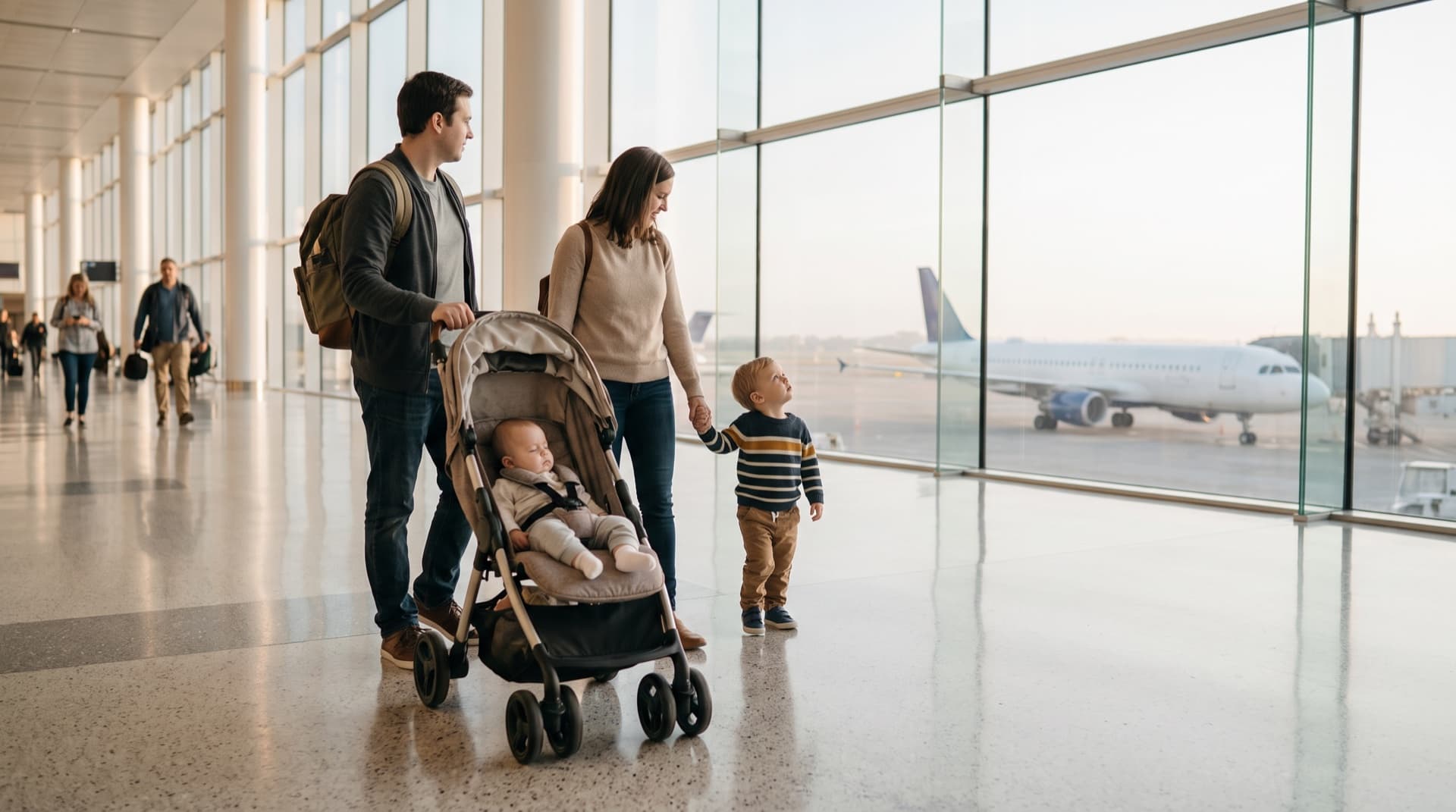
ICN sets a global benchmark for family-friendly airport design. Nursing rooms are found throughout both Terminal 1 and the newer Terminal 2, baby care centers are comprehensive and thoughtfully designed, and children's play areas are large, well-maintained, and engaging for multiple age groups. The airport also offers a cultural experience zone with traditional Korean activities, an indoor ice rink, and a children's museum — making long layovers genuinely enjoyable for families. Family security lanes and stroller-friendly routes are clearly marked throughout.

This guide covers everything families need at Seoul Incheon International Airport — one of the world's most rewarding airports to travel through with children.

Nursing Rooms and Baby Care Facilities at Seoul Incheon International Airport


Nursing rooms & breastfeeding facilities


Seoul Incheon International Airport generally provides dedicated nursing rooms (also called baby care rooms) designed for feeding and calming babies in a quieter space. You can typically find these in both landside (before security) and airside (after security, in the departure areas), which is helpful if you need to feed right before boarding or during a connection.

Most nursing spaces are set up for privacy and comfort: they are separate from the main restroom area, and they usually include an enclosed or semi-enclosed nursing spot so you can breastfeed away from foot traffic. Lighting is typically soft and the rooms are kept warm compared with the main terminal.


Baby changing stations


Baby changing stations are commonly available throughout ICN, most often inside family/accessible restrooms and frequently in women’s restrooms. In many modern airports like Incheon, it’s also common to have at least some changing tables in men’s restrooms, but availability can vary by area.

  • Where you’ll usually see them: restroom clusters near check-in halls, main shopping/dining corridors, and gate areas.
  • Accessibility: family/accessible restrooms generally provide extra space for a stroller and room to help a toddler without feeling rushed.
  • Convenience: in busy periods, the family restroom option can be the quickest way to change a diaper without waiting for a nursing room.


Baby care centers (what they include)


Incheon is known for having purpose-built baby care areas in addition to standard changing tables. These baby care centers/rooms are typically more fully equipped than a restroom changing station. While exact layouts differ by terminal and zone, you can usually expect:

  • Changing tables with a wider surface than basic fold-down restroom tables
  • A sink for handwashing and cleaning bottles or small items (useful after snacks or messy diaper changes)
  • Private or semi-private nursing seats for breastfeeding
  • Space to park a stroller inside or just outside without blocking the hallway

These rooms are especially helpful with infants and toddlers because you can do a full “reset” (feed, change, wash hands) in one place instead of moving between facilities.


Bottle warming & formula preparation


Many airport baby care rooms are designed to support feeding routines, and it is common for them to include a designated counter area and access to warm and cold water for preparing formula. Some baby care rooms may have bottle-warming equipment, but this is not guaranteed in every location, so it’s best to plan as if you’ll be using warm water to heat a bottle.

  • Warm water access: typically via a hot-water dispenser or warm tap in baby care rooms or nearby lounge/food areas (availability varies by spot).
  • Hygiene tip built into the facility design: sinks and counter space make it easier to wash hands and keep bottle parts together while you prepare feeds.


High chairs in restaurants


Across ICN’s family-heavy dining areas, many sit-down restaurants and some food court vendors commonly provide high chairs. Availability can depend on how busy it is and the specific outlet, but it’s typical to see high chairs in family-friendly dining zones and larger restaurants. If a high chair isn’t immediately visible, staff can often bring one from storage when available.


Notable family-friendly features at ICN (helpful to know)

 
  • Family facilities are generally well distributed throughout passenger areas, reflecting Incheon’s reputation as a modern, well-serviced hub.
  • Cleanliness and upkeep in restrooms and baby care rooms are typically a strong point at major Korean airports, which can be reassuring when you’re handling feeds and diaper changes on the go.
  • Clear signage is common in the terminal environment, and baby care areas are typically marked with recognizable baby-care icons near restroom clusters and main walkways.

Security and Check-In Tips for Families at Seoul Incheon International Airport


Stroller & Car Seat Policy


At TSA security, most strollers and car seats are allowed, but they must be screened before you can take them to the gate. In practice, you should expect to take your child out and send the stroller (and any detachable parts) through the X-ray when it fits; if it does not fit, TSA will do a hand inspection and may swab it for a quick explosives test. Car seats are screened the same way: they usually go through the X-ray, and larger models may be inspected by hand if needed. Everything stored in the stroller (like toys, blankets, or snacks) generally needs to be removed and screened separately, so keeping items in a small bag makes this step faster. Be ready to fold the stroller if it is collapsible, and follow officer instructions for where to place it, since procedures can vary slightly by checkpoint setup.


Formula, Breast Milk & Baby Food


You may bring formula, breast milk, toddler drinks, and baby food through TSA security in quantities over 3.4 oz (100 mL) when traveling with a child, and these items do not have to fit in your quart-size liquids bag. Tell the officer at the start of screening that you have these items, and be ready to take them out for separate inspection. TSA may screen them in different ways, such as X-ray, visual inspection, or testing the outside of containers, and they may ask you to open containers for additional screening. Ice packs, freezer packs, gel packs, and other cooling accessories are allowed to keep these items cold, even if you don’t have the baby with you, as long as they’re used for these baby liquids. Pack them where you can reach them easily and keep containers sealed and clearly organized to help screening go smoothly.


Family Security Lanes


Some airports offer family security lanes (sometimes called “family” or “special assistance” lanes) meant to give families with young children a little more space and time during screening. These lanes are not available at every checkpoint, and airport staff may direct you to use them based on the airport’s setup and how busy security is. In practice, you should expect the same TSA screening rules as other lanes, including placing items on the belt and following officer instructions, but with an environment that can be easier to manage with strollers, car seats, and carry-on bags. Be ready to collapse strollers and place them on the X-ray belt when asked, and remove your child from the stroller before it goes through screening. Keep liquids for your child easy to reach so you can tell the officer and present them for separate screening if requested.


Removing Kids’ Shoes


At TSA security, children age 12 and under can usually keep their shoes on during screening. Adults and older children typically must remove shoes, so you may see other families doing something different depending on ages and the checkpoint’s instructions. Expect a TSA officer to tell you whether your child should keep shoes on or take them off, especially if the shoes are bulky or have metal parts that could set off the alarm. If shoes do need to come off, they go in a bin on the conveyor belt with other items for X-ray screening. Shoes can also be removed if additional screening is needed after the walk-through metal detector.

Kids' Play Areas at Seoul Incheon International Airport


Where to Find Kids’ Play Areas


Seoul Incheon International Airport (ICN) is well known for being family-friendly, and it typically offers dedicated children’s play areas designed to help kids burn off energy before a flight. At ICN, these play spaces are generally found in passenger areas of the terminals, most often airside (after security) near clusters of departure gates, where families spend the most waiting time. Depending on the terminal and concourse, you may also find family-oriented spaces in other public areas, but the most practical play options are usually past security for departing passengers.


What the Play Areas Are Like


Kids’ play areas at major international airports like ICN are typically set up for short, safe play sessions that work well during boarding waits. You can usually expect a mix of:

  • Soft-play zones with padded flooring and gentle structures suitable for younger children
  • Small climbing elements (low ramps, tunnels, mini-slides) designed to reduce fall risk
  • Interactive features such as wall panels, touch-based activities, or simple screen-based games (availability varies by location)
  • Themed décor or kid-friendly visuals that make the space feel welcoming and easy for children to understand as a “play” area

These areas are usually open-plan and visible, so parents can supervise easily while keeping an eye on carry-ons and strollers nearby. Seating for adults is often close to the boundary of the play space, though it can fill up during peak departure times.


Age Groups: Who They’re Best For


Most airport play areas are designed primarily for toddlers through early elementary ages (roughly preschool to around 7–8 years old). The equipment tends to be low height and focused on safe, simple movement rather than challenging obstacle play.

  • Babies and young toddlers: Often do best in the soft-play section or on padded flooring with close supervision
  • Toddlers and preschoolers: Usually get the most value from climbing, crawling spaces, and mini-slides
  • Older kids: May enjoy interactive elements, but some may outgrow the equipment quickly and use the space more for stretching and movement than “play”


Quiet or Calmer Options for Overstimulated Kids


Airports can be bright and busy, so it helps to know you’re not limited to high-energy play. While a dedicated “quiet room” specifically for children is not guaranteed in every area, ICN is generally built with rest-friendly spaces that can work well when a child needs a reset. Calm options you may be able to use include:

  • Seated waiting areas slightly away from the main walkway (often quieter than the central gate seating)
  • Family-oriented facilities such as nursing/infant care rooms (intended for feeding and changing, but also helpful for a brief calming break when available and appropriate)
  • Less crowded corners of the concourse, especially farther from major retail and dining clusters

If your child is sensitive to noise, choosing a play area during a less busy time (or stepping out after a few minutes) can make the experience much smoother.


Airside vs. Landside: Timing Your Visit


For most families, the most useful play areas are airside (past security), because you can let children play without worrying about leaving enough time to re-clear security. Landside public areas can be helpful if you arrive very early or are meeting someone, but for a typical departure day, it’s usually best to plan playtime after you’ve cleared security and found your gate area.


Notable Kid-Friendly Attractions at ICN


ICN is widely recognized for offering a pleasant terminal experience with a focus on passenger comfort. In addition to children’s play spaces, families may notice airport-run cultural and relaxation-style features in the terminal environment that can be interesting for kids in a calmer way (for example, visually engaging public areas and occasional exhibits). Specific offerings can vary by terminal and season, so it’s best to treat any “special attraction” as a bonus rather than the main plan, and rely on the play areas and family rooms for predictable needs.


Practical Tips for Parents (Layovers and Before Boarding)

 
  • Use the play area in short bursts: 10–20 minutes of active play often works better than a long session, especially close to boarding time.
  • Visit before snack time: Let kids move first, then wash hands and eat—this can help everyone settle for the flight.
  • Keep essentials within arm’s reach: Bring wipes/hand sanitizer, a small snack, and a spare top for younger kids in case of spills.
  • Choose the right moment: If the play area is crowded, consider waiting a few minutes or trying again after a boarding wave—busy periods can be overwhelming for toddlers.
  • Plan a “calm-down” transition: After play, move to a quieter seating spot near your gate so children can cool down before lining up to board.
  • Supervise for shared-space manners: Airport play areas are communal—staying close helps prevent bumps, disputes over toys, and lost shoes or comfort items.

Make Every Family Flight Stress-Free

From car seat policies to packing tips — Velivolo gives traveling families everything they need in one app. Built by parents, backed by certified safety experts.

Family Dining and Kids' Menus at Seoul Incheon International Airport

1

Bibimbap House

Bibimbap House at Seoul Incheon International Airport (ICN) is a casual Korean counter-style spot focused on the airport classic: bibimbap, the colorful rice bowl topped with vegetables and usually a choice of protein, brought together with gochujang (chili paste) on the side so you can mix it to your preferred heat level. It’s a dependable, straightforward concept rather than a destination fine-dining name, and it’s popular with travelers who want something distinctly Korean that still feels approachable and filling. For families, the quick ordering and relatively calm, cafeteria-like setup make it easy to manage young kids, and while a dedicated kids’ menu isn’t typically the focus at places like this, the simple “rice + toppings” format is naturally easy to customize for picky eaters. Parents often go for the classic mixed bibimbap or a hot-stone style when available, while many children do best with a milder bowl—plain rice with vegetables and an egg, keeping sauce separate. Service is fast, portions are satisfying, and you’ll usually get your food quickly (helpful when you’re watching the boarding clock), with table turnover geared to travelers rather than lingering meals. Expect about ₩12,000–₩18,000 per person depending on the bowl and add-ons, which is typical for airport dining and decent value when you want a balanced hot meal that can feed both adults and kids.

2

Tosokchon Samgyetang

Tosokchon Samgyetang at Seoul Incheon International Airport brings the feel of one of Seoul’s most famous samgyetang houses—best known for samgyetang (ginseng chicken soup), a comforting Korean classic built around a whole young chicken stuffed with glutinous rice and simmered in a herbal broth. The brand is closely associated with its flagship restaurant near Gyeongbokgung in Seoul, long popular with both locals and visitors for its traditional, restorative soup and steady, no-nonsense service. For families, it’s an easy fit: the dining room is typically calm and orderly, hot soup arrives quickly, and while a dedicated kids’ menu isn’t a core part of the concept, the mild broth and rice make it approachable for many children (and staff are generally used to families). Parents often go straight for the samgyetang, while kids tend to do well with the simple sides like rice and banchan, and everyone can tailor the flavor with salt, pepper, and optional ginseng notes. Service is counter-to-table and efficient—designed for travelers—yet portions are filling enough that one bowl per adult can feel like a full meal on a long airport day. Expect a mid-range airport price, roughly ₩18,000–₩25,000 per person, which can be good value for families if you want something substantial, warm, and reliably Korean before a flight.

3

Lotteria

Lotteria at Seoul Incheon International Airport (ICN) is a familiar Korean fast-food stop, part of the long-running Lotteria chain (operated by Lotte) known across South Korea and parts of Asia for quick, affordable burgers with a distinctly local spin. For families, it’s an easy win: the setting is casual and bright, service is counter-order and fast, and you can typically count on a kids’ menu and family-friendly basics like straightforward seating and a naturally kid-tolerant noise level for wiggly little travelers. The most recognizable pick is the Bulgogi Burger, a sweet-savory mainstay that tends to suit younger palates, alongside familiar choices like fries, drink combos, and other classic burgers that feel safe when kids are tired or picky. Expect a quick pace with food arriving soon after ordering, portions that are standard fast-food sized, and a no-fuss experience that’s more about convenience than lingering. Price-wise, plan on roughly KRW 8,000–15,000 per person depending on whether you order a set meal, which is generally good value at an airport when you need everyone fed quickly. As one of South Korea’s best-known homegrown burger chains dating back to the late 1970s, Lotteria has a bit of local nostalgia, and at ICN it’s a dependable “we know what we’re getting” option between flights.

4

Outback Steakhouse

Outback Steakhouse at Seoul Incheon International Airport (ICN) brings the familiar, casual-dining steakhouse experience of the global brand founded in the U.S., known for hearty portions, a fun “Australian-themed” vibe, and crowd-pleasing comfort food. It’s an easy win for families thanks to a relaxed, booth-friendly dining room, generally kid-tolerant noise levels, and a kids’ menu (with typical child-sized mains and sides) plus high chairs that make little ones more manageable between flights. Parents often gravitate to a Bloomin’ Onion-style appetizer and steaks, while many kids are happiest with simpler picks like chicken, burgers, or pasta-style options depending on the location’s offerings. Service is table-service and usually paced for sit-down dining rather than grab-and-go, so it works best when you have a bit of airport time to spare. Portions tend to be generous and shareable, which can help when you’re feeding multiple kids or splitting plates to save money. Expect a mid-to-upper range airport meal, roughly ₩25,000–₩50,000+ per adult depending on steaks and add-ons, with solid value if you share appetizers and sides. Overall, it’s a dependable “everyone can find something” stop that feels more like a familiar family restaurant than a rushed terminal eatery.

Family Airport Guide FAQ

Does Seoul Incheon International Airport have nursing rooms?

Incheon International Airport has nursing rooms (Baby Care Rooms/수유실) in both terminals, landside and airside after security; check terminal maps, signs, or info desks for the nearest location (often near restrooms/family facilities).

Can I bring formula through security at ICN?

Baby formula, pumped breast milk, and baby food are typically allowed through security in reasonable quantities beyond liquid limits; present separately for screening. Ice/gel packs to keep them cool are generally permitted but may be inspected.

Does ICN have a kids' play area?

Incheon Airport provides children’s play areas, including some airside after security; exact locations vary by terminal/concourse—use terminal maps and signage. Airside areas are for ticketed passengers.

Are strollers allowed at Seoul Incheon International Airport?

Strollers can be brought through security and will be screened (X-ray if possible or manual). Often you can use a stroller to the gate and gate-check it, subject to airline policy and stroller size—confirm with your airline.

Does Seoul Incheon International Airport have family security lanes?

Priority/assistance options for travelers with young children may exist, but dedicated family security lanes/check-in counters aren’t consistently available everywhere; look for posted priority signage and ask staff if a family/assistance line is operating.

Planning more trips with kids?

Explore our complete list of family airport guides

View all airport guides →

Join the Travel Revolution

Whether you're a first-time flyer or seasoned jet-setter, Velivolo makes family travel simpler, safer, and more joyful.