
CARES Harness by Amsafe: The Only FAA Accepted Aviation Harness at 1 Pound
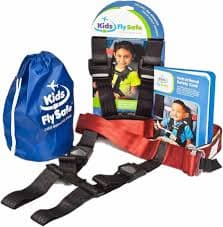
The CARES Harness is the only FAA approved aviation child restraint harness, weighs 1 lb, and fits children 22–44 lbs who are under 40inches tall. For aircraft use only.
Flying with a car seat? Our Certified Child Passenger Safety Technicians are ready to help.
They'll walk you through every step — from choosing a seat that's safe for your child and convenient for your family, to getting it from the car, to the gate, and onboard the plane.
FAA Acceptance
YES
The CARES is the only harness-style restraint certified for use on commercial aircraft. Recognized on many international airlines.
yesChild Range
22–44 lbs, up to 40" tall
Appropriate for children who weigh between 22-44lbs and who measure under 40" inches tall.
yesNot for Vehicle
NO
Designed exclusively for aircraft use; cannot be installed in rental cars, taxis, rideshares, or any ground vehicle.
noPacked Size
1 lb in small pouch
Fits in a diaper bag, purse, or seat-back pocket.
yesVelivolo Video
Yes
Learn how to install the CARES Harness on the airplane. Watch our Velivolo instructional video below.
yesCARES Harness Specifications
The CARES Harness manufactured by Amsafe is the only FAA TSO-C100b-approved aviation child harness device — meaning it's the only harness-style restraint certified for use on commercial aircraft. At 1 pound and just $85, it's lighter and more affordable than most travel car seats, and packs into a small pouch. It's approved for children 22–44 lbs and under 40 inches tall. Worth noting: children should still use a car seat on the aircraft both before reaching the CARES weight range and after outgrowing it. Best for families who have a car seat waiting at their destination.
- The CARES Harness is the only FAA TSO-C100b-approved Aviation Child Safety Device.
- The CARES fits children 22–44 lbs and under 40inches.
- Per AmSafe, the harness weighs 1 pound and packs in an approximately 6-inch zippered pouch.
- The CARES is not FMVSS 213 certified and cannot be used in motor vehicles — aviation use only.
CARES Harness Specifications
Important — Car Seat Information
Child restraint information changes frequently. Airline policies, seat dimensions, and compatibility requirements are updated on an ongoing basis. For the most current and accurate information, please consult with one of our Certified Child Passenger Safety Technicians (CPSTs) inside the Velivolo app before you fly.
FAA TSO-C100b Certification
- Confidence:
- Not verified this session
- Label location:
- Strap webbing of the CARES Harness
- Regulatory:
- FAA TSO-C100b authorization under 14 CFR 91.107 / FAA AC 120-87C; certified to AS 8043
- FMVSS 213:
- No
- FMVSS 213a:
- not applicable
Airworthiness note
The CARES Harness holds FAA TSO-C100b certification as an Aviation Child Safety Device — a fundamentally different certification path from FMVSS 213, which governs motor-vehicle child restraints. TSO-C100b certification is issued under 14 CFR 91.107 and FAA AC 120-87C, with the device certified to aviation standard AS 8043. The CARES is not a car seat and cannot be used in motor vehicles. It is the only harness-type child restraint approved for US commercial aircraft.
Aviation Fit & In-Flight Use
Per AmSafe's published documentation and FAA AC 120-87C, the CARES Harness works only with a forward-facing aircraft seat that has a standard lap belt and an upright seat-back. It loops around the aircraft seat-back and clips to the buckled lap belt, creating a harness that holds the child in the seat during turbulence and crash events. The harness is prohibited in all seating locations that prohibit child restraint systems and car seatss.
The CARES Harness is the lightest FAA accepted child restraint at 1 pound .
- Install Method
- Aircraft lap belt + upper strap looped around seat-back (TSO-C100b)
- Economy Fit
- Fits (armrests as noted)
- Gate-Check
- Cabin-carry preferred
- Recline-Friendly
- No
How to Install the AMSAFE CARES Harness
Complete Installation Walkthrough
Watch our full guide for installing the AMSAFE CARES Harness
Velivolo Travel Score
1 pound; fits in a 6-inch pouch in your diaper bag. Installs on any standard forward-facing economy seat with an upright seat-back.
No gate-check needed — the CARES travels inside your bag and installs at the seat after boarding.
Cannot be used in any motor vehicle. The CARES is aviation-only — pair with a separate vehicle restraint at the destination.
1 pound in a 6-inch pouch; the most portable FAA accepted child restraint by a wide margin.
Velivolo Score
The CARES Harness by Amsafe is the only FAA TSO-C100b-approved aviation child harness device — meaning it's the only harness-style restraint certified for use on commercial aircraft. It loops around the aircraft seat-back and clips to the buckled aircraft lap belt, creating a 5-point-equivalent harness for children 22–44 lbs. It fits most aircraft seats that have access behind. Per FAA AC 120-87C, the harness is approved for use in standard forward-facing economy seats with upright seat-backs. At 1 pound, it is the lightest FAA accepted child restraint available.
The CARES Harness is often marketed as the convenient solution for flying with toddlers, but it falls short in several key ways. Most families still need a car seat at their destination for ground transportation, making the "travel light" argument largely moot. The harness also doesn't change how the aircraft lap belt sits on the child — meaning submarining risk remains a real concern in a forward impact. Children can escape it easily, and it only fits a narrow window of a child's growth, requiring a proper car seat both before and after that stage anyway. If you need a car seat at your destination, you might as well bring one that actually works on the plane too.
Watch the Velivolo Aircraft Installation Instruction Video for instructions. The CARES Harness does not prohibit the passenger seated behind from using their tray table or entertainment center. You may need to ask that passenger to lower and raise their tray table so you can install/uninstall. The CARES Harness installs quickly.
Aviation-only — cannot be used in motor vehicles. Not FMVSS 213 certified. It cannot be installed in rental cars, taxis, rideshares, or any ground vehicle. Families who need both air and ground restraint should pair the CARES with a separate vehicle-approved child restraint at the destination — such as a travel booster, RideSafer vest, or lightweight convertible car seat.
The CARES Harness (Part No. 4082) holds TSO-C100b certification as an Aviation Child Safety Device under 14 CFR 91.107 and FAA AC 120-87C, certified to aviation standard AS 8043. CARES is not regulated under NHTSA FMVSS 213 because it is not a motor-vehicle restraint.
Babies and Infants should use a car seat on the airplane before using the CARES Harness, and older toddlers should also use a car seat onboard after they've outgrown the CARES Harness. The height and weight ranges covers a short window in a child's growth. Older toddlers max out at 44lbs OR 40inches tall.
One pound, packs in a six-inch pouch; the lightest FAA accepted restraint available. The CARES Harness weighs 1 pound and packs in an approximately six-inch zippered pouch that fits in a diaper bag, purse, or seat-back pocket. This makes it by far the lightest and most portable FAA accepted child restraint — compared to the WAYB Pico at approximately 8 lbs or a standard convertible car seat at 20–30 lbs. For families who fly frequently with toddlers in the 22–44 pound window, the CARES eliminates the need to haul a full car seat.
Pros & Cons
- The only FAA approved aviation child harness — no other harness-type restraints are permitted.
- Weighs ~1 pound and packs in a 6-inch pouch; the lightest and most portable FAA accepted restraint by far.
- Installs in approximately 2–3 minutes on any standard forward-facing economy seat with an upright seat-back.
- Does not interfere with the passenger sitting behind the child using the CARES, but they will need to look at it. The passenger behind will still have access to their tray table, and entertainment center.
- Cannot be used in motor vehicles — aircraft-only; families need a separate ground-transport restraint at the destination.
- Prohibited in aircraft seating locations that do not permit child restraint system installation.
- This restraint does not alter the way the aircraft lap belt fits across a child's abdomen. Therefore, it is conducive to submarining and children tend to slouch underneath the belt.
- Designed for children 22–44 lbs and under 40 inches tall. Children should still use a car seat on the aircraft both before reaching the CARES weight range and after outgrowing it.
- Young infants tend to reach toward the caregiver beside them, and the resulting leaning, squirming, and slouching can quickly compromise proper positioning.
- Older toddlers who grow restless during the flight can often escape the harness with little effort, a known limitation of this style of restraint.
- At $85 it's an additional travel gear expense for children who should use a car seat onboard the aircraft before and after the CARES Harness.
Best For
Families who have chosen not to bring their car seat onboard
The CARES is the lightest FAA accepted restraint at 1 pound. For families who have chosen not to bring their car seat onboard, this is a safer alternative to the aircraft lap belt alone.
Parents who have a car seat waiting at their destination
For families traveling to a vacation home, grandparents house, or other friends or family who may have a car seat available for your child upon arrival to the airport.
Parents who can safely rely on public transportation at destination
If you're relying exclusively on public transportation like subways, and buses at your destination, the CARES Harness may make sense for your family.
Key Features
TSO-C100b Aviation Certification
Per FAA TSO authorization records, the CARES Harness (Part No. 4082) holds TSO-C100b certification as the only Aviation Child Safety Device approved for US commercial aircraft. This certification evaluates the harness's ability to restrain a child during aviation-specific turbulence and crash deceleration events under 14 CFR 91.107 and FAA AC 120-87C, certified to aviation standard AS 8043.
One-Pound Packed Weight
Per AmSafe's published documentation, the CARES Harness weighs just under 1 pound and packs in an approximately 6-inch zippered pouch. This makes it by far the lightest FAA accepted child restraint available — compared to the WAYB Pico at approximately 8 lbs or a standard convertible car seat at 20–30 lbs. The pouch fits in a diaper bag, purse, backpack, or airline seat-back pocket.
Seat-Back Loop Installation
The CARES Harness installs by looping the upper strap around the aircraft seat-back and routing the aircraft lap belt through the lower loops.
Short Life-Span
The CARES covers children 22–44 lbs and who are under 40inches. Velivolo recommends using a child restraint for infants before the CARES Harness, and older toddlers after the CARES Harness.
Real-World Scenarios
Visiting Grandparents
Flying to grandparents house where they have an appropriate car seat for us, and will pick us up from the airport upon arrival.
Short domestic hop with 3-year-old at 38 lbs
Quick install, quick removal. The CARES makes even a 90-minute flight safer than the aircraft lap belt alone for a toddler.
Business-class lie-flat seat
Per Delta One (and most other airline business class) the CARES is not permitted on lie-flat seats.
Rental car at destination
The CARES is aviation-only and cannot be used in any motor vehicle. Pair it with an appropriate car seat for ground transport.
How It Compares
Per WAYB's published documentation, the Pico is an 8-lb FAA accepted 5-point harness seat that works both on aircraft and in vehicles. The CARES at 1 lb and $75 is aviation-only but dramatically lighter and cheaper. Choose the Pico for dual-purpose air+car use; choose the CARES if you only need aircraft restraint and have a separate ground-transport solution.
Read full reviewPer Doona's published documentation, the Doona+ is an FAA accepted infant car seat that converts to a stroller. It covers infants 4–35 lbs — a different and younger age range than the CARES at 22–44 lbs. The Doona+ weighs approximately 17 lbs versus the CARES at 1 lb. Choose the Doona+ for infant air+ground travel; choose the CARES for toddler-only aircraft restraint.
Per Chicco's published documentation, the KeyFit 35 is an FAA accepted infant car seat covering 4–35 lbs. It works both on aircraft and in vehicles but weighs approximately 10 lbs (carrier only). The CARES at 1 lb is dramatically lighter but aviation-only and covers 22–44 lbs. Choose the KeyFit 35 for infants who need dual-purpose air+car restraint; choose the CARES for toddlers who only need in-flight harness.
Read full reviewAirport & In-Flight Tips
Request Non-Bulkhead Seat
Per FAA AC 120-87C, the CARES requires a seat-back forward of the child's seat to anchor the upper strap. Bulkhead rows have no forward seat-back. When booking, request a non-bulkhead seat specifically and note the child restraint requirement. Some airlines auto-assign bulkhead for families — override this at booking or check-in.
Practice the Strap Routing
Practice the two-strap routing at home using a dining chair with a back to build muscle memory before the first flight.
Verify Weight and Height Before Each Trip
Toddlers grow quickly. Measure the child before each flight to ensure it's still safe for use.
Pair with Ground-Transport Restraint
The CARES is aviation-only and cannot be used in rental cars, taxis, or rideshares. Pair it with an appropriate car seat at your destination.
Keep in Diaper Bag for Quick Access
At 1 pound in a 6-inch pouch, the CARES fits in a diaper bag or personal item. Keep it accessible for installation after boarding rather than buried in overhead luggage. Install at the seat, adjust the shoulder straps, and buckle the aircraft lap belt through the lower loops.
Frequently Asked Questions
Is CARES the only FAA accepted airplane harness?
The CARES Harness manufactured by Amsafe is the only FAA TSO-C100b-approved aviation child harness device — meaning it's the only harness-style restraint certified for use on commercial aircraft. This is distinct from FAA accepted car seats, which carry FMVSS 213 certification plus an FAA acceptance sticker. The CARES is aviation-only — it is not a car seat and cannot be used in motor vehicles. Other FAA accepted child restraints exist (car seats with FAA stickers), but the CARES is the only harness device approved for aircraft use.
What are the weight limits on CARES?
The CARES Harness is rated for children weighing 22–44 pounds, measuring up to 40 inches tall, and at least 12 months old who can sit upright unassisted. Children exceeding 44 lbs should transition to a different child restraint system. The upright-sitting requirement excludes infants who cannot support their own head and torso.
Can I use CARES at the bulkhead row?
Like all FAA-approved child restraints, the CARES Harness comes with seating restrictions. It cannot be used in an exit row or aisle seat. Bulkhead rows are sometimes permitted, but airline policies vary. The CARES is also prohibited in any seat where a traditional car seat would be — including lie-flat seats in business and first class.
Can I use CARES in a car?
The CARES Harness is designed exclusively for aircraft use and is not certified to FMVSS 213 for motor-vehicle use. It cannot be installed in rental cars, taxis, rideshares, or any ground vehicle.
How long is CARES good for before it expires?
The CARES Harness expires seven years from the date of manufacture. The date-of-manufacture information is located on a tag sewn on the harness webbing.
CARES or WAYB Pico for flying?
Both are FAA accepted child restraints but serve different needs. The CARES at 1 pound and $85 is aviation-only — it cannot be used in cars. The WAYB Pico at approximately 8 lbs and $379–399 is a dual-purpose 5-point harness seat that works on aircraft and in vehicles. Choose the CARES if you only need in-flight restraint and have a separate ground-transport solution ready for you at the destination. Choose the Pico if your child is over 2, and you need one device for both aircraft and rental-car use.
Can my 3-year-old at 41 inches tall use CARES?
The CARES Harness has a strict 40-inch height limit. A child measuring 41 inches or taller exceeds this limit and cannot use the CARES on aircraft. For children over 40 inches tall or 44 lbs, an FAA Medical Exemption is required. The exemption is obtained by submitting a formal request to the Federal Aviation Administration and receiving written approval. This process takes several months.
How do I install CARES on the airplane?
See Velivolo's Installation video. First, loop the upper shoulder strap around the top of the aircraft seat-back and pull to tighten. Second, route the aircraft lap belt through the lower harness loops on both sides. Third, place the child in the seat and adjust the shoulder straps so they sit snugly on the child's shoulders with no slack. Fourth, fasten the aircraft lap belt and the chest clip. The installation takes approximately two to three minutes with practice.
Sources
- 1KidsFlySafe — CARES Safety Harness Product Page (2026) — Specifications, weight limits, installation instructions, TSO-C100b certification. Source
- 2FAA Advisory Circular AC 120-87C (2019) — FAA guidance on child restraint systems in aircraft, CRS categories, seat restrictions. Source
- 3Velivolo Installation Video — CARES Harness (2026) — Step-by-step installation guide for the CARES Harness on aircraft seats. Source
Last updated: 2026-09-03

Velivolo Editorial Team
Family Travel Experts
Our editorial team combines certified child passenger safety technicians, frequent-flying parents, and automotive safety researchers to deliver independent, data-driven car seat reviews for traveling families.
Related Travel Restraints
.webp&w=3840&q=75&dpl=dpl_inqJ4L7UrVUMh9KgfmfeaAUpUNKq)
.webp&w=3840&q=75&dpl=dpl_inqJ4L7UrVUMh9KgfmfeaAUpUNKq)
Legal Disclaimer
The car seat information provided on this page is intended for general informational purposes only and is subject to change without notice. Velivolo makes no representations or warranties, express or implied, regarding the accuracy, completeness, or timeliness of any car seat data, airline compatibility information, or related recommendations displayed on this platform.
Velivolo is not liable for any damages, injury, loss, or harm arising from reliance on incorrect, outdated, or incomplete car seat information or recommendations. Parents and caregivers are solely responsible for verifying all child restraint information with the relevant airline, the car seat manufacturer, and a Certified Child Passenger Safety Technician (CPST) before travel.
Affiliate Disclosure: Some product links on this page may be affiliate links. Velivolo may receive a commission if you make a purchase through one of these links, at no additional cost to you. This does not influence our content, recommendations, or editorial decisions.
Use of this information does not constitute professional child passenger safety advice. For personalized guidance, consult a Certified Child Passenger Safety Technician (CPST) through the Velivolo app.
Ready for the Only FAA Accepted Harness?
Velivolo helps families pick the right child restraint for every flight — from 1-pound aviation harnesses to dual-purpose car seats — so your toddler flies safely in their own seat.